
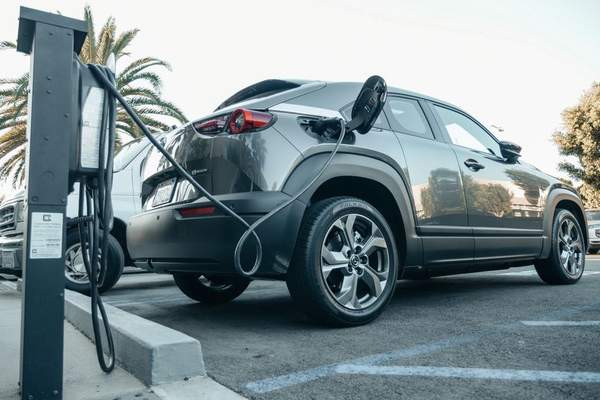
Is a 15m ev charging cable type 2 practical for home use?
A 15m ev charging cable type 2 is practical when your chargepoint and parking position are genuinely far apart. The extra reach can solve awkward driveway layouts, but it also means more cable to lift, uncoil, keep off vehicle paths and store after every charge, so longer is not automatically better.
A 15 m cable is mainly a reach decision, not a charging-speed upgrade. If 10 m already reaches the car comfortably without pulling tight or crossing a route people use, the shorter cable will usually be easier to handle day to day.
The right starting point is the basic type 2 ev charging cable: check the connector, current rating, phase rating and the maximum AC charging rate supported by both the car and chargepoint before choosing length.
How far can a 15 m Type 2 cable realistically reach?
A 15 m cable gives you more freedom than a 10 m cable, but you should not plan around the full 15 m as if it were a straight measuring tape. Real driveways need slack at both ends, bends around the car and enough loose cable to avoid strain on the plugs.
Measure the route the cable will actually take from the chargepoint socket to the vehicle inlet. Follow the edge of the parking space or driveway rather than measuring diagonally through a space where somebody will walk, a second car will park or a garage door will close.
Leave enough slack that the lead does not pull sideways on either connector. If the inlet is on the far side of the car, measure the route around the vehicle rather than straight to it.
This is where a 10m ev charging cable type 2 can be the better choice. Ten metres may sound less flexible, but if it reaches every normal parking position with a little slack, the remaining 5 m on a 15 m cable becomes material that has to be moved and stored rather than useful reach.
| Daily-use point | 10 m Type 2 cable | 15 m Type 2 cable |
|---|---|---|
| Useful reach | Better for a chargepoint close to the normal parking position | Better for long or awkward driveways and variable parking positions |
| Handling | Less cable to lift, uncoil and gather | More cable to manage at every charging session |
| Storage | Smaller coil and easier boot or wall storage | Needs more space and a larger, neater coil |
| Trip and drive-over risk | Easier to keep within a short controlled route | More likely to cross a walking or vehicle route if badly planned |
| Best fit | Fixed parking position with comfortable 10 m reach | Car inlet or parking position regularly sits beyond comfortable 10 m reach |
Is a 15 m Type 2 cable too heavy for daily use?
Not necessarily, but 15 m can feel cumbersome if you carry the whole cable between the house and car every day. The exact weight depends on the cable’s current rating, number of phases, conductor size, insulation and plug design, so the product specification matters more than length alone.
Comparing only the metre figure can therefore be misleading: cables of the same length can have noticeably different bulk and weight.
Think about storage as well as reach. A cable kept on a wall holder may be manageable, while one lifted into the boot after every charge can become noticeably more awkward.
- Check the manufacturer’s stated cable weight before buying.
- Look at the cable’s amp rating and whether it is single-phase or three-phase.
- Make sure the storage hook, bag or holder can take the full coil without sharp bends.
- If lifting is difficult, choose the shortest length that reaches every normal parking position safely.
The alternate search phrase ev charging cable type 2 10m often points to the practical middle ground: enough reach for many driveways without carrying an additional 5 m that may never be used.
Does a 15 m cable affect charging power or efficiency?
Length alone does not set the charging power. A correctly specified Type 2 cable must still match the chargepoint and vehicle, and the car’s onboard AC charger can limit the rate even when the chargepoint is capable of more.
All cable has electrical resistance, but a purpose-built EV cable is specified for a stated current and charging mode. Judge it by that rating rather than assuming that 15 m automatically means slow charging.
For example, a 7.4 kW home chargepoint cannot make a car charge at 11 kW simply because the cable is rated for more. In the other direction, a cable that is not rated for the current you want to use can become the limiting component. Check the markings and manufacturer’s specification instead of relying on connector shape alone.
UK government technical guidance for residential charging specifies Type 2 socket outlets for AC charging equipment and references BS EN 62196 Mode 3 charging. That makes compatibility and rating the key checks. If you are replacing a damaged cable or are unsure whether an existing cable suits the installation, use the vehicle, chargepoint and cable manufacturer’s specifications rather than adapting or repairing the cable yourself.
If you are comparing another length under the same setup, the related ev charge cable type 2 article is the more useful place to compare connector and charging compatibility before making length the deciding factor.
What is the safest way to store a 15 m charging cable?
Store it clean, supported and loosely coiled so the plugs are protected from impact and the cable is not repeatedly kinked in the same place. A 15 m cable needs more wall or boot space than a shorter lead, so decide where the full coil will live before buying it.
During charging, lay out only a route that does not put the cable under a tyre, garage door, sharp edge or repeated foot traffic. Do not make a tight coil beside the chargepoint just to take up spare length; follow the cable manufacturer’s instructions on laying out and storing the lead.
- Keep both connector ends clean and protected when not in use.
- Do not pull the cable by the lead to remove a connector; use the plug body.
- Avoid tight knots, crushed sections and repeated sharp bends.
- Inspect the sheath and plugs before use if the cable has been driven over, trapped or dropped.
- Stop using a cable that has visible damage, exposed conductors, a loose connector or signs of overheating.
Outdoor suitability does not make poor routing harmless. Keep the lead where it will not be crushed, stretched or turned into a trip line.
When does a 15 m Type 2 cable not solve the problem?
A 15 m lead does not fix a parking arrangement that is unsafe or outside your control. If the cable has to cross a public pavement, shared entrance, neighbour’s parking space or a route used by pushchairs and wheelchairs, extra length can simply create a longer obstruction. Do not assume that a loose cable or a temporary cover makes that arrangement acceptable; local-authority rules and property permissions may apply.
It also does not help if the car can only be parked beyond 15 m once realistic routing and slack are included. In that case, buying an even longer portable cable may be the wrong answer. A different chargepoint position or an approved on-street solution may be needed instead.
In a rented home, flat or managed development, the practical decision may sit with the landlord, freeholder, managing agent or local authority. The photograph of a cable neatly stretched across an empty drive may look simple, but daily life includes doors, bins, rain, visitors, second cars and people walking across the route. Plan for those conditions, not the photograph.
Frequently asked questions
Can I use a 15 m Type 2 cable with a 7 kW home charger?
Yes, if the cable is compatible with the chargepoint and vehicle and is rated for the required current. The 15 m length does not by itself change a 7 kW chargepoint into a different power class.
Is a 15 m Type 2 cable better than a 10 m cable?
Only if you need the extra reach. If a 10 m cable reaches comfortably with safe routing and some slack, it is usually easier to lift, coil and store.
Can a 15 m charging cable be left outside?
Follow the cable manufacturer’s storage instructions and the product’s environmental rating. Even with outdoor-suitable equipment, protect the connectors from damage and avoid leaving the cable where vehicles, doors or repeated foot traffic can crush it.
Can I join two Type 2 cables together for more reach?
Do not improvise a longer run by joining charging cables or using unapproved adapters. Use a single compatible cable of the required length or have the charging arrangement assessed by a competent installer.
Will a 15 m cable fit in an EV boot?
Usually it can be stored in a boot, but the space needed varies with cable thickness, plug size and how loosely it is coiled. Check the product dimensions and weight if the cable will travel in the car every day.
A 15 m Type 2 cable is worth choosing when the extra 5 m solves a real parking or inlet-position problem. If 10 m already reaches safely, the shorter cable reduces the amount you have to lift, route and store without giving up useful charging performance.