
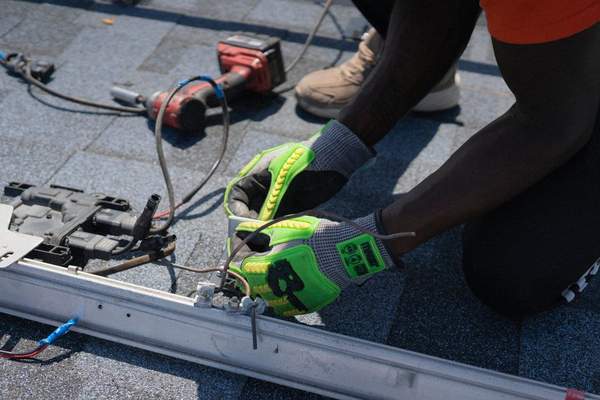
Can do it yourself solar panel kits be fitted safely?
Do it yourself solar panel kits can be planned and partly assembled by a competent homeowner, but roof condition, mounting loads, component compatibility and grid connection all need proper checks. Keep roof work, fixed electrical work and mains connection within the limits of your skills, and use qualified trades where the job moves beyond safe DIY.
A solar project is easier to manage when planning, mechanical work and electrical connection are treated as separate jobs. The aim is not to prove that every stage can be DIY, but to identify the parts that can be completed without creating a roof or electrical risk.
Definition: A do-it-yourself solar panel kit is a packaged set of photovoltaic modules and matched system parts intended to simplify planning and installation. It does not remove the need to check the roof, verify the electrical design or use competent trades for safety-critical work.
What comes with do it yourself solar panel kits?
Most kits bundle the main generation components, but contents vary. Check the parts list against your proposed layout rather than assuming a boxed kit includes every fixing, cable, isolator or protection device your property needs.
A typical solar panel kit may include photovoltaic modules, an inverter, mounting rails, clamps, connectors and DC cable. A solar panel roof mounting kit must also suit the actual roof covering, whether that is tile, slate or metal sheet.
- Panels: Confirm quantity, rated output, dimensions and connector type.
- Inverter: Check that its DC voltage, current and string limits suit the panels.
- Mounting: Match rails, hooks, brackets and clamps to the roof construction.
- Protection: Confirm which isolators, protective devices and enclosures are included.
- Documents: Keep data sheets, instructions and warranty terms before work starts.
The label diy solar panel kits describes packaging, not a promise that every stage is suitable for DIY. A solar panel kits uk listing still has to match the roof, inverter and connection route.
How do you check that solar kit components are compatible?
Start with the electrical limits in the panel and inverter data sheets, then check connectors, cable ratings, battery interfaces and mounting hardware. A kit is coherent only when those parts work together within their stated operating limits.
Do not mix components because the plugs appear to fit. Panel open-circuit voltage, string current and inverter input limits all matter, while battery equipment needs the correct voltage range and communications support. If you cannot verify the design from manufacturer documentation, involve a competent solar electrician or designer.
For battery-inclusive work, solar panel and battery kit guidance is relevant because the inverter and battery need to be designed as one system.
Plan the job in this order
- Measure the usable roof area: Record panel dimensions, roof edges and obstructions before deciding how many modules fit.
- Confirm the mounting method: Match brackets, hooks or rails to the roof construction and manufacturer instructions.
- Check panel and inverter data: Verify string voltage, current, input limits and connector requirements.
- Map the cable route: Plan where DC cable, inverter equipment and any battery will sit without exposed or crushed wiring.
- Separate DIY from trade work: Keep roof access, structural concerns and fixed electrical work with competent people where needed.
- Confirm the grid route: Establish what your Distribution Network Operator requires before the system is energised.
- Keep the paperwork: Save data sheets, test results, certificates and network correspondence.
This sequence exposes problems before equipment is fixed to the roof. It also helps you judge whether a diy solar panel kits guide or retailer bundle genuinely matches your house.
For a worked break-even example only, assume a quoted installation figure of £6,500 and 2,600 kWh a year of solar electricity used in the home instead of imported electricity. At 24.5p/kWh in the July 2026 cap period, 2,600 kWh × £0.245 = £637 a year; £6,500 ÷ £637 = 10.2 years. This is an illustration, not a quote or forecast for a particular roof.
Which solar installation tasks should not be DIY?
Do not treat work at height or mains electrical work as a learning exercise. If a task requires unsafe roof access, structural judgement, fixed wiring changes or connection to the consumer unit, use an appropriately competent professional.
Solar DC can remain live when panels are illuminated, and poor isolation or termination can create shock and fire risks. A plug-shaped connector does not make the circuit harmless.
- Do not improvise roof anchors, brackets or penetrations outside the mounting manufacturer’s approved method.
- Do not modify a consumer unit unless you are competent and legally permitted to carry out that work.
- Do not energise an inverter against the mains before the required tests, protection and network process are complete.
- Do not combine panels, inverters, optimisers or batteries that the manufacturers do not approve together.
Planning and measuring can often be done from ground level; safety-critical roof and electrical tasks belong with the right trade. That keeps a solar panel kits uk project focused on a sound installation rather than on doing every task personally.
How should roof condition be assessed before fitting panels?
The roof must be capable of carrying the proposed system and accepting its specified mounting method. If there is doubt about damage, movement, rot, corrosion or structural capacity, get the roof checked before equipment is ordered or lifted into place.
Look for leaks, sagging lines, damaged coverings, chimneys, vents and roof windows. Use a competent roofer or structural professional where condition or loading cannot be established safely. Re-roofing after panels are fitted adds avoidable labour.
The mounting plan also needs a durable route for cable entry. Do not assume sealant alone makes a poor penetration weatherproof; use the roof covering and mounting manufacturer’s intended method.
What should be checked before connecting a system to the mains?
Before connection, the system needs appropriate electrical testing, isolation, protection, labelling and network paperwork. The inverter settings and connection route must match the equipment and the requirements that apply to your supply.
In Great Britain, small generators are commonly handled through the Distribution Network Operator process associated with G98 or G99, depending on system design and capacity. Do not guess which route applies; a competent installer or designer can confirm the correct application or notification path.
If you expect export payments, check the evidence your provider asks for before installation is finished. Keep commissioning records, electrical certification and network correspondence.
When does a DIY solar kit not make sense?
It does not make sense when the parts look straightforward in a product photograph but the property removes the easy assumptions. A rented home is the clearest example: the landlord controls alterations to the roof and fixed electrical system, so permission is not optional. A flat can be just as unsuitable if you do not own the roof or the freeholder controls external changes.
A listed building, poor roof condition, awkward access, heavy shading or uncertain structure can turn a neat boxed kit into the wrong project. The same is true if the break-even time is longer than you expect to remain in the property. In the worked example above, £6,500 divided by £637 a year at 24.5p/kWh in the July 2026 cap period is 10.2 years, assuming 2,600 kWh a year of solar electricity displaces imported electricity. If your real quote, self-use or roof output is worse, the result stretches further. The kit photograph does not show those constraints, yet they often decide the job.
Frequently asked questions
Can I buy the panels first and choose the inverter later?
That is a poor sequence because panel voltage, current and string design must fit the inverter’s permitted inputs. Choose the electrical design as a system before ordering hardware, then check the exact model data sheets.
Do I need permission to put solar panels on my roof?
Planning and building requirements depend on the property and location, and listed buildings or unusual sites can need additional consent. Check the rules that apply to your home before fixing equipment to the roof.
Can I install the mounting rails myself and hire an electrician later?
Only if the roof work is safe, the mounting design is correct and the professional you expect to commission the system is willing to verify the work. Agree that split before installation starts rather than assuming someone will sign off unseen work later.
Is a battery necessary with a home solar kit?
No. A solar system can operate without a battery, while a battery changes the inverter, controls, space and electrical design. Decide from your usage pattern and system objectives rather than adding storage simply because the kit supports it.
What paperwork should I keep after installation?
Keep component data sheets, warranties, test and commissioning records, electrical certification, network correspondence and export-related documents. They are useful for faults, warranty claims, house-sale questions and later system changes.
A safe DIY solar project is mostly about knowing where DIY stops. Measure carefully, verify components against manufacturer data, treat the roof and mains connection as safety-critical, and bring in competent trades before a planning shortcut becomes a permanent installation problem.
The boxed kit is only one part of the job; the property, network connection and documentation decide whether the finished system is sound.