
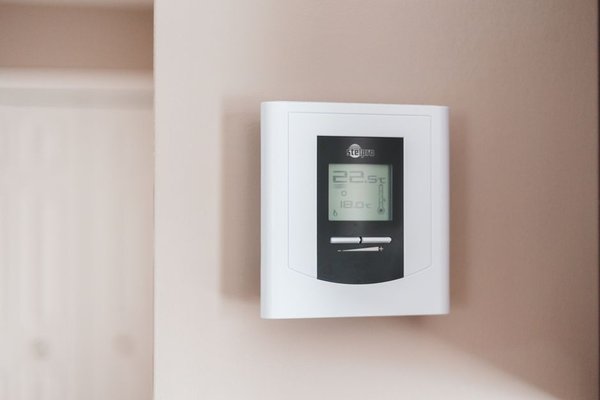
What is the ideal central heating temperature?
For most healthy adults, an ideal central heating temperature is the lowest setting that keeps occupied rooms comfortable, usually around 18–21°C. Start near 20°C while sitting still, then adjust according to how the room actually feels. Bedrooms can often be cooler overnight, but babies and people vulnerable to cold need different safeguards.
A thermostat setting does not guarantee that every room reaches that temperature. Compare a comfortable occupied setting with an overnight or away setting, checked using a thermometer rather than guesswork.
What temperature is comfortable in a living room?
For many adults, 18–21°C is a sensible starting range, with 20°C often comfortable for sitting and reading. The right setting depends on draughts, clothing, activity, and whether the room reaches the temperature shown on the control.
Moving around may make 18°C feel adequate; sitting beside a cold window can make 20°C seem chilly. Measure the air near your seat before turning the dial upwards. A thermostat in a warmer hallway may switch the heating off while the living room remains cold.
Distinguish central heating temperature from boiler water temperature. The room thermostat requests an indoor air temperature; the boiler flow setting controls how hot the radiator water becomes. Our guide to central heating temperature explains that distinction, while boiler central heating temperature concerns the separate boiler control.
Try one setting over several similar evenings. A higher target does not make a conventional central heating system warm the room faster.
Should bedrooms be set cooler at night?
Healthy adults often find a cooler bedroom comfortable under suitable bedding, so daytime settings need not continue unchanged overnight. Do not copy this approach automatically for someone aged 65 or over, with limited mobility, or with a condition aggravated by cold.
A programmer can reduce the requested temperature while you sleep or are out. Citizens Advice suggests a setback around 2–3°C below the occupied setting, while avoiding excessively cold rooms. Bedroom radiator valves can adjust individual rooms but cannot override the main thermostat’s call for heat.
| Room or routine | Occupied-period setting | Sleep or away-period setting |
|---|---|---|
| Living room used for sitting | Try 20°C; adjust within roughly 18–21°C | Lower demand when empty if the home stays safe |
| Healthy adult’s bedroom | Comfortable while awake, often 18–20°C | A cooler room may suit suitable bedding |
| Home office | Check for 18–21°C at desk height | Reduce demand outside working hours |
| Older or cold-sensitive occupant | At least 18°C, warmer if advised or needed | Avoid a cold overnight room; health takes priority |
| Baby’s sleeping space | Measure this room, not just the hallway | Aim for safer-sleep guidance of 16–20°C |
These are starting points, not energy forecasts. A useful schedule keeps people comfortable without persistently cold rooms or condensation.
How should settings change for babies or vulnerable people?
Use health and safer-sleep guidance before adopting lower temperatures. A setting suitable for a healthy working adult can be inappropriate for an older resident, someone with a heart or lung condition, or a sleeping baby.
UK cold-weather guidance recommends keeping commonly used rooms at least 18°C, particularly for people aged 65 and over, those with reduced mobility and those with relevant conditions. Some need more warmth; ask their GP or care team about individual requirements rather than relying on a generic chart.
For babies, the NHS and Lullaby Trust advise a sleep-room range of 16–20°C with suitable light bedding. Use a thermometer in that room, avoid overheating and follow safer-sleep guidance. Cool hands alone do not reliably indicate a baby’s body temperature.
- Measure where the person spends time, not only the hallway.
- Check conditions overnight when the programme lowers demand.
- Follow any individual advice given by a health professional.
Does lowering the thermostat by one degree always cut usage?
No fixed percentage or cash amount follows from a one-degree change in every home. Lower targets can reduce heating demand, but results depend on weather, insulation, operating hours and how the heating system responds.
A misplaced thermostat, radiators already turned down, or a system that never reaches its target can upset simple predictions. Heat pumps may also work most efficiently with steadier schedules, so gas-boiler habits are not universal.
Put a price against measured energy, not a thermostat guess
Ofgem’s average Great Britain standard-variable direct-debit rates for 1 July–30 September 2026 were 7.33p/kWh for gas and 26.11p/kWh for electricity, including VAT; rates vary by region and payment method. If matched gas-meter readings show 100 kWh less gas over a comparable 30-day period, the unit-charge difference at the July–September 2026 rate is 100 × 7.33p = 733p, or £7.33. This assumes the entire 100 kWh difference is real; a one-degree change does not prove it.
For the required wattage calculation, consider a separate illustrative 2,000 W electric heater running two hours a day. The working is 2,000 W ÷ 1,000 = 2 kW; 2 kW × 2 hours × 90 days = 360 kWh; 360 kWh × 26.11p/kWh = 9,399.6p, or £94.00 for 90 days at the July–September 2026 cap-period average. At two hours daily for 365 days, 1,460 kWh × 26.11p/kWh = £381.21 for a hypothetical year at that same July–September 2026 rate, not a forecast of future tariffs. A gas boiler’s electrical label does not represent its gas consumption.
Log energy-meter kWh, indoor temperatures, heating hours and similar outdoor conditions. Measured units are more useful than assuming what temperature should central heating be set at has one universal financial answer.
How can you measure actual room temperature accurately?
Use a separate room thermometer in the occupied space and compare its reading with the thermostat after conditions settle. Keep it away from sunlight, radiators and draughts, which distort readings.
Place it at a representative height, near where people sit or sleep. Measure the living room while occupied, the bedroom before sleep and again in the morning, and the baby’s sleeping space separately. Repeat observations across several days.
- Record the thermostat target and independent room reading together.
- Note whether heating is active and radiators are warming.
- Check for curtains, furniture or lamps affecting the sensor.
- If rooms disagree, inspect radiator valves before raising the whole-house target.
When a window-side seat feels cold despite a 20°C reading, investigate draughts rather than demanding 23°C everywhere. For boiler-water adjustments see central heating water temperature; work on gas appliances belongs with a Gas Safe registered engineer.
When does choosing a lower thermostat setting not solve the problem?
It does not repair a cold, poorly insulated flat, a badly located thermostat or heating that cannot warm the farthest room. A neat phone schedule looks convincing in a photograph; it is useless if the bedroom stays cold all night. Some rented homes have fixed controls or building-wide heating that tenants cannot change. Do not interfere with a landlord’s installation or override its safety settings.
Lower settings can also be unsafe for an older person, someone with a health condition or a household managing a baby’s sleeping environment. If occupants are cold, condensation is worsening or mould is appearing, chasing a one-degree reduction is the wrong priority. A prepayment meter adds another constraint: exhausted credit can interrupt heating despite a correctly programmed thermostat.
Nor does a summer trial prove a winter bill reduction. Without comparable weather, operating hours and meter readings, claims about a particular saving are guesswork. If radiators stay cool, rooms never reach their set temperature or a boiler reports faults, arrange a professional check. Gas appliance work must be done by a Gas Safe registered engineer.
Frequently asked questions
Is 22°C too high for central heating?
It is above the usual 18–21°C starting range, but comfort and health needs vary. Check actual room temperature and draughts before deciding whether to lower it.
Will setting the thermostat to 25°C warm my home more quickly?
No: an ordinary room thermostat sets the point at which heating stops, not the speed of warming. A high target can leave heating active after the room feels comfortable.
Should I turn the heating off every time I go out?
A lower scheduled demand can suit an empty home, but the setback depends on the building, heating technology and frost protection. Follow the manufacturer’s guidance and protect vulnerable occupants.
Are radiator valve numbers the same as degrees Celsius?
Usually not: thermostatic radiator valve numbers indicate approximate settings, not precise room readings. Use a thermometer and the valve maker’s instructions to judge the result.
Does lowering boiler flow temperature change the room thermostat target?
No: flow temperature concerns radiator water, while the room thermostat measures indoor air. A lower flow setting can affect how quickly rooms warm and must suit the heating and hot-water system.
Choose the lowest occupied-room temperature that is genuinely comfortable, then test a sensible overnight or away schedule without compromising health. Record room readings and energy units before attributing a cost difference to the thermostat.