
What temperature should central heating be set at in winter?
For most UK homes, what temperature should central heating be set at? Start with a room thermostat setting of 18–21°C while you are at home, choosing the lowest temperature that feels comfortable. Aim for at least 18°C in regularly used rooms, particularly for older people or anyone with a health condition. Adjust the schedule, not just the dial.
The number on a room thermostat is a target for the air around that thermostat, not the temperature of the water moving through your radiators. Your insulation, draughts, activity level and who lives with you all affect what feels comfortable.
What room setting suits a typical occupied home?
For many households, 18–21°C is a sensible starting range during occupied hours. Try 19°C or 20°C first, then adjust by 1°C after allowing the rooms time to settle. A temperature that suits someone moving about the house may not suit someone sitting still for hours.
Six useful winter thermostat settings
- 18°C for regularly used rooms: A practical lower starting point, especially when you are active and adequately dressed.
- 19°C for a typical daytime routine: Worth trying if 18°C leaves seated occupants feeling chilly.
- 20°C for long, sedentary evenings: A reasonable comfort target when you spend hours reading or working at a desk.
- 21°C when extra warmth is genuinely needed: Use it if 20°C still feels uncomfortable rather than treating it as an automatic winter default.
- At least 18°C for vulnerable occupants: Protect comfort and health before attempting a colder setting, including during the night.
- A modest setback while the home is empty: Use a timed reduction appropriate to your heating system rather than a universal temperature for every property.
These are starting points, not six official standards. The ideal central heating temperature is the lowest comfortable occupied-room setting for the people who actually use the home. A room thermometer can help you check whether the space where you sit matches the reading shown at the controller.
Our guide to central heating temperature explains how a room thermostat fits alongside radiator valves and boiler controls. Turning the room target higher does not make the heating warm up faster.
Should the thermostat be lower overnight?
For a healthy adult who is comfortable under suitable bedding, a lower setting overnight can be reasonable. The bedroom itself still needs to be comfortable, and households with older, less mobile or medically vulnerable people should aim for at least 18°C in rooms they use. Avoid an automatic deep setback if it leaves someone cold for hours.
Think about your bedroom rather than the number displayed in the hall. A hallway thermostat might read 18°C while a north-facing bedroom is several degrees colder, particularly with doors shut. Check the bedroom with a separate thermometer near sleeping height, away from a window or radiator.
How does a programmable schedule affect comfort?
A programmable thermostat changes the target temperature at chosen times, so you do not have to adjust it every morning and evening. It works best when its occupied periods match your actual routine and the heating starts early enough to warm the rooms you use. A schedule is not proof of a particular saving without measured energy use.
To put energy use into pounds and pence, take a clearly hypothetical boiler using 10,000 W of gas input continuously for two hours. The calculation is 10,000 W ÷ 1,000 × 2 hours × 7.97p/kWh = 159.4p, or £1.59 for those two hours, using Ofgem’s average gas Direct Debit unit rate for October–December 2026. That is fuel input, not useful heat delivered, and it excludes the standing charge.
For an illustrative annual heating pattern of two hours a day on 180 days, 10,000 ÷ 1,000 × 2 × 180 × 7.97p = 28,692p, or £286.92 at 7.97p/kWh (October–December 2026 cap), holding that quarter’s rate constant solely to show the arithmetic. Actual annual tariffs change across cap periods, and real boilers cycle on and off. You cannot turn a 1°C thermostat change into a reliable £ figure without knowing the reduction in metered kWh.
Use your own gas usage readings before and after a schedule change, and compare similar weather and occupancy. The Ofgem rate is a Great Britain average for default tariffs paid by Direct Debit; your region, payment method and fixed tariff may differ. Our related article on boiler central heating temperature deals with boiler-side settings rather than room targets.
Should older or medically vulnerable people use different settings?
Yes, health and mobility can make a higher or steadier room setting necessary. NHS guidance recommends keeping regularly used rooms at a comfortable temperature, ideally at least 18°C, especially for people with health conditions. Someone who remains still for long periods may need a warmer room than an active household member.
Do not assume a single central thermostat guarantees that temperature everywhere. Check bedrooms and living rooms independently, particularly in homes with unheated extensions or cold upstairs rooms. If one occupant needs steady warmth, set the schedule around that person’s needs rather than making them adapt to the coldest possible setting.
The phrase central heating temperature uk does not describe one legally required household setpoint. If a clinician has given a specific recommendation, follow that guidance instead of a general online figure. Faults involving combustion, flues or boiler internals require a Gas Safe registered engineer, not an improvised adjustment by the householder.
How do you tell if draughts are causing cold spots?
A draught is likely when the room thermometer reads near the target but you feel a stream of cold air beside a door, window or floor edge. Cold external walls and poorly placed radiators can also make a room feel uncomfortable without the thermostat being inaccurate. Identify the affected area before raising the target for the entire house.
- Check whether furniture is blocking radiator airflow or the room thermostat.
- Look for one particularly cold radiator, but do not dismantle heating components.
- Inspect visible condensation and damp rather than sealing every gap indiscriminately.
- Keep extractor fans, trickle vents and other required ventilation working.
Check central heating water temperature separately if the radiators remain lukewarm and rooms never reach the target; room setpoint and water temperature answer different questions. A landlord or managing agent should be told about persistent heating faults in rented accommodation. Closing all ventilation to stop a draught is not a safe remedy.
When will turning the thermostat down not solve the problem?
It will not fix a room that never reaches the temperature already selected. In a poorly insulated rental, a thermostat set to 20°C may run the heating for long periods while the bedroom remains cold. Changing the number on the display does not repair defective windows, missing insulation, an undersized radiator or a failing boiler. The photograph of a smart controller at 18°C tells you nothing about the temperature of the person sitting beside a draughty window.
Night-time reductions also fail as universal advice. They may leave a vulnerable occupant below 18°C, while a slow-recovery property can still be cold when someone gets up. A heat pump may perform better with a steadier target than a conventional gas-boiler schedule. A single hallway sensor cannot guarantee safe warmth throughout the home.
If you rent, report heating faults, severe draughts and damp through the appropriate landlord or agent process; do not make unauthorised alterations. If the property remains cold despite sensible settings, the next step is evidence: room readings, times, photographs of visible defects and a record of the fault. The problem may be the building, not how you operate the dial.
Frequently asked questions
Does turning the thermostat to 25°C heat a room faster?
No. On a conventional on-off room thermostat, a higher target tells the heating to continue for longer, not to warm the room faster. If you want 20°C, select 20°C and allow enough time.
Is 17°C too cold for a living room?
It can be, particularly for someone with a health condition or reduced mobility. NHS guidance advises aiming for at least 18°C in rooms used regularly, so check the actual room temperature rather than relying only on the hallway display.
Should thermostatic radiator valves match the main thermostat?
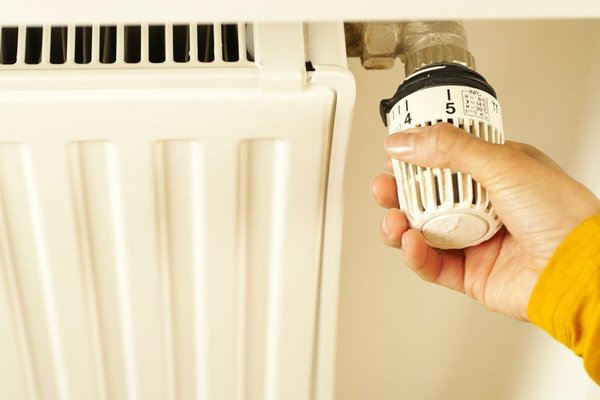
Not necessarily. Radiator valves limit heating in individual rooms, while the main room thermostat controls a call for heat from the system. Their markings are not always precise room temperatures, so consult the valve instructions and check with a thermometer.
Why does my thermostat show 20°C when I still feel cold?
The sensor may be in a warmer position than where you sit, or you may be feeling draughts and cold surfaces. Measure the occupied area separately and check airflow before increasing the target for the whole home.
Is the thermostat setting the same as the boiler flow temperature?
No. Room temperature is the indoor air target, whereas boiler flow temperature refers to the water sent through the heating circuit. Changing one setting does not directly set the other to the same number.
Start at a comfortable occupied-room target within 18–21°C, then check actual temperatures in the spaces people use, including overnight. Make small changes to the schedule, protect anyone vulnerable to cold and investigate draughts or heating faults before blaming the thermostat setting.