
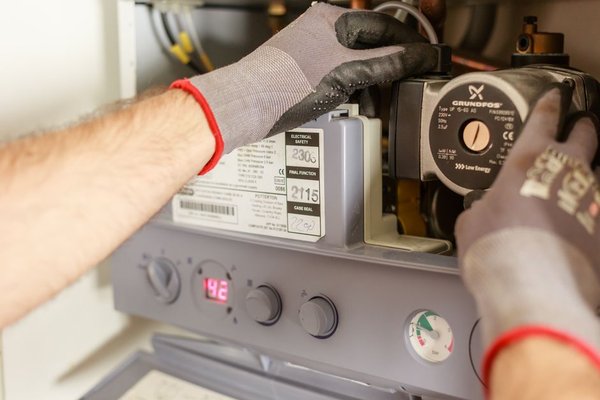
What are the main central heating pump problems?
The most common central heating pump problems are poor circulation, trapped air, sludge, incorrect speed settings, noisy bearings and electrical or control faults. Cold radiators do not automatically mean the pump has failed. Check visible controls and fault messages first, then ask a qualified heating engineer to test the system rather than replacing parts on suspicion.
A pump moves heated water from the boiler around your radiators and back again. Its symptoms can overlap with a boiler fault, closed valve or poorly balanced radiator, so identifying the cause matters.
This is an illustrative 40 W pump running eight hours daily for 365 days, not a claim about your model. The working is 40 W ÷ 1,000 = 0.04 kW; 0.04 × 1 hour × 26.32p/kWh = 1.0528p per hour; and 0.04 × 8 × 365 × £0.2632 = £30.74 a year. Ofgem’s 26.32p/kWh reference is the average October–December 2026 electricity rate for standard-variable-tariff Direct Debit customers in England, Scotland and Wales, excluding VAT. Your tariff, actual wattage and hours may differ; boiler fuel and standing charges are excluded.
What are the most common central heating pump problems?
The clearest clues are radiators that stay cold, a humming pump with little heat movement, strange sounds or a boiler that repeatedly stops heating. These symptoms suggest circulation trouble, but none confirms that the motor needs replacing.
- Cold radiators throughout the house: Circulation may be inadequate, though a boiler or control fault can look identical.
- One radiator remains cold: A radiator valve, local air pocket or blockage is often the better suspect.
- Humming without useful flow: The motor may be energised while air or a blocked rotor prevents movement.
- Grinding or rattling: Persistent central heating pump noise may indicate worn parts, debris or pipe vibration.
- Gurgling after maintenance: Air can interrupt circulation following draining, refilling or radiator work.
- Fault lights or codes: Some modern pumps detect dry running, blockage or electrical problems; meanings vary by model.
- Visible leaking: A seal, union or nearby pipe may need urgent attention, without necessarily indicating a failed motor.
- Heat that fades intermittently: Controls, restricted flow or a sticking rotor may be involved.
Understanding the role of the central heating pump helps distinguish symptoms from causes. Record which rooms are affected, whether hot water works and any boiler error code before contacting an engineer.
Why can a pump run but fail to circulate water?
A running motor does not guarantee that water is passing through the radiators. Trapped air, a seized rotor, closed valves and sludge can interrupt flow even when the unit vibrates or hums.
Air and contamination
An airlock may develop after the system has been emptied and refilled. Some circulators manage air automatically; others require a particular procedure, so check the manufacturer’s guidance rather than loosening pump fittings. A heating engineer can decide whether venting is appropriate.
Magnetite sludge and other deposits can restrict passages or jam internal components. A new motor installed into contaminated water may meet the same blockage. Guidance for a central heating water pump is useful alongside the fault information for your specific model.
What can you inspect without opening anything?
Check whether the thermostat calls for heat and radiator valves are open. Read the boiler’s visible pressure gauge and messages, comparing them with its manual, as suitable pressures vary. Do not remove a boiler casing, loosen screws or disconnect wiring to investigate.
Active leaks, an electrical smell or repeated lockouts justify stopping attempts to restart the appliance and contacting a professional. Gas-appliance work must be carried out by a Gas Safe registered engineer.
What causes a central heating pump to stop starting?
The pump may have no demand signal, a control problem, an electrical supply fault or internal motor damage. Some models also stop to protect themselves after detecting insufficient water or a blocked rotor.
A householder can safely gather useful clues:
- Confirm the programmer is on and the thermostat is requesting heat.
- Record any pump or boiler error code and the colour of warning lights.
- Note whether the problem began after a power cut, service or radiator work.
- Check warranty documents before authorising repairs or parts replacement.
Silence is not proof of failure: modern pumps may stop when heat is not requested. Electrical tests, motor release, pump removal and work behind the boiler casing are professional jobs. Do not try to force a stalled rotor with improvised tools.
Can incorrect pump speed create heating problems?
Yes. Too little flow can leave distant radiators slow to warm, while excessive flow can cause rushing-water sounds. Yet poor balancing, trapped air or blocked pipework can produce similar symptoms, so changing speed is not a universal fix.
Older circulators may have fixed settings, while newer models can regulate themselves automatically. A higher setting will not clear sludge or open a closed valve. Check the operating instructions before treating a display value as a fault, and ask an engineer to assess the heating circuit if several rooms remain cold.
See central heating pump speed for the distinction between control modes and flow. The suitable setting depends on the system’s design and the particular pump, not simply its noise level.
How do you know whether a faulty pump can be repaired or needs replacing?
The answer depends on the diagnosis, availability of parts and condition of the wider system. Air removal or correcting a restriction may restore circulation, while an electrical failure or badly worn bearings may make replacement necessary.
Require an explanation, not just a new part
Ask what test confirms the fault, whether the unit can be serviced and how recurrence will be prevented. The engineer should consider system cleanliness, suitable sizing and any manufacturer warning history. Internal gas-boiler work requires a properly qualified Gas Safe registered professional.
For budgeting, a published UK installer guide in 2026 estimates approximately £190–£350 per fitted domestic circulation-pump replacement, including parts and labour, for a straightforward job. That is a dated estimate per installation, not a quotation; the model, access and necessary draining can change the final amount. Request a written price in pounds, dated and inclusive of VAT.
Electricity use is separate from the fitting charge. At the October–December 2026 reference rate of 26.32p/kWh, the illustrative 40 W pump operating eight hours daily costs £30.74 over 365 days; this calculation does not demonstrate any saving from a new model. Read replacing central heating pump before discussing a proposed unit.
When will these checks not solve the heating problem?
They cannot fix a defective boiler, blocked heat exchanger, badly corroded pipes or an underlying system-design fault. A pump can work exactly as specified while a distant radiator remains cold. Raising the speed to conceal poor distribution may add noise without restoring comfortable rooms.
In a rented home, do not drain the system, open covers or arrange unauthorised changes. Report the symptoms, dates and affected rooms to the landlord or managing agent, and follow the approved repair process. In a flat with communal heating, the circulation problem may be outside your home; replacing a local component may achieve nothing.
Photographs of a shiny new pump tell you nothing about whether the system was balanced, cleaned and tested after installation. A replacement fitted into contaminated water may suffer the same blockage. Likewise, a quiet unit is no proof of adequate flow. Ask what was measured and what fault was actually found.
If you smell gas, suspect an unsafe boiler or find water close to live electrics, stop using the equipment and seek urgent qualified help. No article can make gas or electrical repairs safe for an untrained householder.
Frequently asked questions
Can a faulty circulation pump make a boiler lock out?
Yes, poor water movement can contribute to overheating or protective shutdowns on some boilers. The displayed fault code and manufacturer’s instructions help identify the actual cause.
Why is the pump noisy after radiators have been bled?
Air may remain elsewhere in the circuit or the flow conditions may have changed. Persistent noise warrants a professional check of circulation and pressure, not repeated loosening of fittings.
Does a warm pump casing prove it works?
No. Heat may come from the surrounding water or an energised motor, neither of which confirms adequate flow. An engineer can test circulation rather than relying on touch.
Can I change the pump inside a gas boiler myself?
Do not open the boiler casing or work on its internal pump yourself. Use a competent professional, and Gas Safe registration is required for gas-appliance work.
Should a modern circulation pump operate continuously?
Not always; it depends on heating demand and the controls installed. Consult the model’s manual and the heating schedule before assuming intermittent operation is a defect.
Record the symptoms, displays and pattern of lost heat, then ask an appropriately qualified engineer to confirm the cause. A documented diagnosis is more useful than replacing a pump solely because the radiators are cold.