
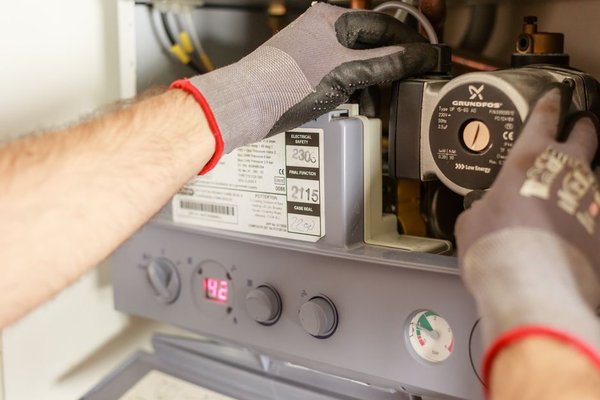
How do I check a central heating circulation pump with poor flow?
If a central heating circulation pump appears to run but radiators remain cold, first check the heating controls, radiator valves and boiler pressure display without opening any covers. Uneven warmth can result from trapped air, closed valves, sludge or poor balancing, not necessarily a failed pump. Persistent faults need a heating engineer.
A humming pump does not prove that hot water is moving properly around every radiator. Start with what you can observe safely, then give an engineer a clear account of which rooms, pipes and controls behave differently.
Definition: A circulation pump is the electrically powered device that moves heated water through a home’s closed central-heating circuit and back towards the boiler. It does not create heat. In some boilers it is built in; in others it is a separate unit near the pipework.
The electricity figure above is an illustration for a pump drawing a steady 40 W, not a claim about every model. The calculation is 40 ÷ 1,000 × 1 hour × 26.11p/kWh = 1.044p, rounded to 1.04p an hour. For the annual figure, assume 8 running hours a day for 180 days: 40 ÷ 1,000 × 1,440 hours × £0.2611/kWh = £15.04. Ofgem’s 26.11p/kWh figure was the average single-rate electricity price for Direct Debit customers in England, Scotland and Wales during the July–September 2026 cap; your region, tariff and pump’s changing power draw may differ.
How can you tell if a central heating circulation pump has low flow?
Slow-warming radiators, a persistent difference between nearby rooms and a boiler that stops heating before distant radiators warm can point to restricted circulation. They are clues, not proof: thermostatic valves, balancing and boiler controls can produce similar symptoms. A pump display or audible motor alone cannot confirm adequate water flow.
Safe checks to make in order
- Confirm there is a demand for heat: Check the programmer, room thermostat and any visible zone settings; wait for the system to respond before drawing conclusions.
- Check radiator controls: Make sure the affected radiator’s thermostatic valve is set to request heat, without forcing a stuck spindle or dismantling the valve.
- Read the boiler display: Note any fault code and the pressure shown, then compare it with the boiler manual rather than guessing the correct reading.
- Map the cold radiators: Record which rooms heat first, which stay cold and whether the issue started after maintenance or a long period without heating.
- Listen from a safe distance: Note unusual grinding, rattling or repeated stopping, but do not remove electrical covers or loosen a vent screw on the pump.
- Pass the findings to an engineer: If basic controls check out and flow is still poor, arrange diagnosis instead of repeatedly resetting the boiler or increasing pump speed blindly.
For the broader role of the central heating pump, understanding what it does helps prevent a replacement being ordered simply because a bedroom radiator stays cold.
Why do some radiators stay cold when the pump is running?
Water follows available routes, so a radiator with a closed valve or a poorly balanced branch can remain cool while other rooms warm. Air trapped high in a radiator can also stop part of it heating. A cold radiator therefore does not identify the pump as the failed component.
Check whether its thermostatic valve has been turned down and whether the whole radiator or only part of it is cold. A cold top can suggest trapped air; a persistently cool bottom can be associated with deposits, although these patterns are not a definitive diagnosis. If several radiators in one part of the home are affected together, tell the engineer: zoning, valve position and pipework layout may matter more than the pump itself. Pump-side work described under bleeding central heating pump is not the same as an ordinary radiator check.
Can a dirty system restrict circulation through the pump?
Yes. Magnetite, sludge and other deposits can accumulate in radiators, filters and narrow parts of a heating circuit, limiting the route available for water. The pump may still turn while the water flow remains inadequate. A dirty filter or obstructed component needs proper diagnosis, not just a higher speed setting.
Do not open a magnetic filter, drain water, add inhibitor or attempt a flush merely because a search result mentions sludge. Central-heating water can be hot and pressurised, and the system may need specialist isolation and refilling. A dirty system can also damage a replacement unit if the underlying cause is left unresolved. A professional should assess the system before recommending cleaning.
How do pump speed settings change circulation?
Speed or control-mode settings affect how the pump responds to the heating circuit’s resistance and demand. A setting that is unsuitable for the system may leave some radiators short of flow or create unwanted noise. Raising the setting is not a reliable test of whether the motor or pipework is healthy.
Modern variable-speed circulators may adjust their operation automatically, whereas older installations can have fixed speed positions. The appropriate configuration depends on radiator valves, zoning, the design flow and the pump model. Grundfos, for example, describes control modes intended to respond to changing heating demand, but its instructions are model-specific. See central heating pump speed for context; the highest setting is not automatically appropriate.
Which circulation faults need a heating engineer?
Call a heating engineer when several radiators remain cold despite correct heating demand, when fault codes recur or when the pump makes persistent abnormal noise. Leaks, repeated pressure loss and suspected blockages also warrant professional attention. Gas-boiler work involving gas fittings, combustion or the boiler itself must be carried out by a Gas Safe registered engineer.
An engineer can establish whether the pump is receiving the correct electrical supply, whether a valve is operating, whether filters are obstructed and whether the system was balanced properly. That assessment matters because central heating pump problems often resemble faults elsewhere in the circuit. If the pump is integrated into the boiler, do not remove its casing or try an electrical test yourself. If there is water near wiring, avoid touching the equipment and obtain urgent qualified help.
When will these basic checks not solve the circulation problem?
These checks cannot fix a seized pump, a failed motor, defective wiring, a blocked heat exchanger or pipework that was badly designed. A reassuring photo of a pump display tells you almost nothing about the flow reaching an upstairs radiator. Nor will turning a thermostat higher clear sludge or repair a stuck motorised valve. If the same radiators stay cold after the controls are checked, stop treating repeated resets as a repair.
In a rented home, the pump and boiler are not normally yours to dismantle or alter. Report the fault, record the rooms affected and let the landlord or managing agent arrange a suitable professional. Never break a seal, change wiring or authorise work that conflicts with tenancy obligations. If an installer warranty applies, unsolicited adjustments can complicate a claim.
Even an owner-occupier may lack safe access to an integrated pump or the knowledge to interpret a fault code. Basic observation is useful evidence, not a substitute for measuring flow or inspecting the circuit. Sometimes the honest answer is that the cause cannot be established without a visit.
Frequently asked questions
Should a heating pump be warm when it is operating?
A circulation pump may feel warm because hot heating water passes through it and the motor draws electricity. Surface temperature alone cannot show whether its impeller is moving water correctly, and you should not touch exposed hot components to test it.
Does a quiet pump mean it has stopped working?
No. Some modern circulators are designed to run quietly and adjust their output as heating demand changes. Check the heating results and any displayed fault indication rather than diagnosing a failure by sound alone.
Can a programmer fault look like poor circulation?
Yes. If the controls are not calling for heat, the pump or heating zone may not be meant to operate. Check the scheduled times and thermostat settings before assuming there is a hydraulic problem.
Is it safe to loosen the centre screw on a pump?
Do not loosen a pump screw as a casual homeowner check: some designs have no such provision, and hot water or electrical hazards may be present. Follow the manufacturer’s guidance and leave pump-side venting or servicing to an appropriate professional.
Will a new pump always fix uneven radiator temperatures?
No. Closed valves, air, sludge, balancing faults and controls can leave radiators cold even with a sound pump. An engineer should identify the actual restriction or failed component before recommending replacement.
Start with the heating demand, radiator controls and the pattern of cold rooms; those observations often narrow the problem without taking anything apart. If circulation is still poor, leave internal pump and boiler checks to the right professional and make sure the diagnosis explains the symptoms you have recorded.