
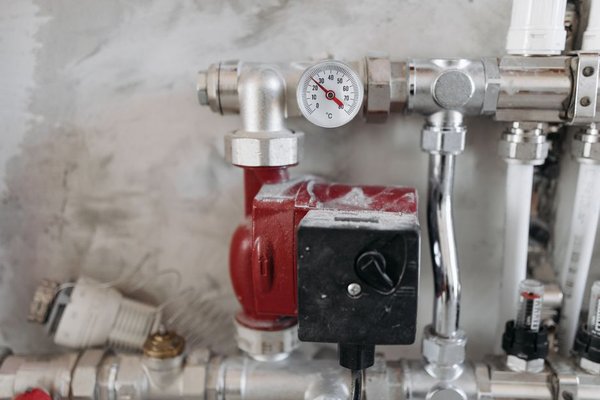
Which central heating pump speed should I use?
Choose the lowest suitable central heating pump speed that circulates hot water to every radiator without unwanted noise. On a modern pump, use the manufacturer’s recommended automatic or pressure-control mode rather than guessing a fixed number. Do not change settings on a sealed boiler, unfamiliar installation or rented system without permission and qualified advice.
The circulator moves heated water around your radiators; its setting affects flow, comfort and noise. The correct choice depends on the pump model, pipework and radiator valves, not simply the number of rooms.
What do the speed settings on a central heating pump mean?
On older circulators, I, II and III usually select progressively higher fixed motor speeds. On modern pumps, automatic or pressure-control modes may change the output as the heating system demands it.
A central heating pump pushes water through the boiler circuit and radiators against pipe resistance. A higher speed generally offers more available pressure and flow; it does not set the boiler’s water temperature. Heating controls and radiator valves still determine which rooms need heat.
Understand the symbols before touching a setting
Proportional-pressure control reduces pump pressure as radiator valves close. Constant-pressure control maintains a selected pressure more steadily. Wilo describes proportional pressure as suitable for many radiator circuits and constant pressure as a common choice for underfloor heating. The exact manual and system design take priority.
Some pumps are controlled entirely by a boiler and have no household adjustment. A numbered dial or unfamiliar service menu is not automatic permission to change it. For context, see central heating pumps explained.
What happens if a heating pump is set too fast?
Excessive flow can make thermostatic radiator valves hiss and create rushing sounds in pipework. A higher fixed speed may also draw more electricity, although the change depends on the pump model.
A radiator heating quickly does not prove that maximum speed is needed. Once rooms reach their requested temperatures reliably, additional pump pressure may bring no useful improvement. Whistling that appears as radiator valves close can suggest excess pressure, but loose fittings and incorrect valve settings may produce similar symptoms.
If the noise began immediately after an engineer’s visit, tell them what changed. Do not compensate for a possible balancing fault by turning several controls at once.
What happens if the pump speed is too low?
Insufficient flow can leave distant radiators slow to warm even while the boiler is firing. In serious cases, poor circulation can contribute to boiler faults that need professional diagnosis.
Check the symptoms before blaming the setting. A radiator cold at the top may contain air; an isolated cold radiator can indicate a stuck valve, restricted pipe or balancing issue. Raising speed cannot reliably remove sludge or fix defective components.
Central heating pump sizing concerns the flow and pressure head required by the whole circuit. An installer should assess pipe resistance, design requirements and the manufacturer’s permitted range, rather than choosing a setting from the number of bedrooms.
Can changing pump speed reduce radiator or pipe noise?
Yes, an appropriately lower fixed setting or correct pressure-control mode can sometimes reduce valve hiss and water-rushing sounds. It will not cure every noise, so note where and when it occurs.
Listen during a normal heating cycle. Hissing as thermostatic radiator valves close can indicate pressure at the valves; gurgling suggests a different issue, while ticking pipes may expand as they warm. A loose pipe clip will not be repaired by changing pump output.
Treat central heating pump noise as a symptom, not a diagnosis. Our guide to a noisy central heating pump covers sounds arising at the circulator itself. Grinding, leaking or unusual overheating requires an inspection rather than experimentation.
How should you assess the setting without guesswork?
Identify the equipment, record its current mode and read its instructions first. Only consider a change if the setting is clearly intended for users, you have permission and the manufacturer explains how to use it.
- Identify the model: Read the visible nameplate and manual without opening a boiler casing or electrical cover. Standalone units can behave differently from boiler-managed pumps.
- Record the starting point: Note the selected mode, any displayed watts, the rooms affected and when noises occur. This gives an engineer useful evidence.
- Check the demand: Confirm the thermostat calls for heat and radiator valves are not turned down. A cool radiator in an already warm room is not evidence of weak circulation.
- Follow documented controls: If user adjustment is allowed, use only the manufacturer’s specified mode for your circuit. Avoid hidden service menus, wiring and pump screws.
- Watch a normal heating cycle: Allow distant radiators to warm and thermostatic valves to respond. Judge room comfort, unusual sounds and fault messages together.
- Stop if performance worsens: Revert only if the manual says users can do so safely; otherwise ask a qualified heating professional to assess the system.
A single change is easier to evaluate than several. Persistent uneven heating may involve balancing or blocked valves as well as central heating pump problems.
How much electricity does the pump use?
Electricity consumption depends on its actual wattage and operating hours, not simply the speed number. The 20 W above is an illustrative operating load, not a universal figure for a particular setting.
At Ofgem’s average 26.32p/kWh electricity rate for the October–December 2026 price-cap period, 20 W divided by 1,000 equals 0.020 kW. Multiply 0.020 kW by one hour and 26.32p/kWh: that is 0.5264p, or 0.53p per hour. At eight hours of operation a day for 365 days, 0.020 × 2,920 hours × 26.32p equals 1,537.09p, or £15.37 a year.
These figures cover the pump’s electricity, not gas use or standing charges. The rate is an average for Great Britain standard variable tariffs paid by Direct Debit; actual tariffs and regions differ. Use the watts measured or specified for your unit, your own tariff and the hours it truly runs. Automatic models may change wattage throughout a cycle.
How do you know when not to change the pump setting yourself?
Leave it alone if the pump is inside a sealed boiler, the manual reserves adjustments for installers or the controls are unfamiliar. Leaks, electrical faults, repeated lockouts and ongoing loss of heating need a professional assessment.
Correct pump speed cannot make up for air, debris, a closed valve or badly balanced radiators. Random increases can hide the original symptoms. Do not remove a boiler cover, disturb live electrical components or undo hot fittings. Regulated work on gas appliances must be done by a Gas Safe registered engineer.
In rented accommodation, report heating faults to the landlord or managing agent. Do not alter equipment contrary to tenancy terms, manufacturer instructions or warranty conditions.
When will changing the pump setting not solve cold rooms?
A speed adjustment is not a general cure for poor heating. If a radiator is blocked, a valve is shut or the circuit is badly balanced, more pump pressure can leave the underlying restriction untouched. Nor will a setting repair draughts, inadequate insulation or a boiler unable to meet the property’s demand. A photograph of a dial set to “III” tells you nothing about whether that house has adequate circulation.
Some installations have no user-adjustable pump at all. Modern boilers may control circulation internally, and entering service settings can trigger faults or affect a warranty. In rented accommodation, even an accessible control may be the landlord’s responsibility. Permission and professional advice matter more than finding a knob you can turn.
There is no guaranteed reduction in electricity spending from selecting a lower number, either. Without the measured change in watts and operating hours, a bill claim is speculation. If the home stays cold, record which radiators fail to heat and any error messages. Ask for diagnosis, not simply a faster pump.
Frequently asked questions
Is speed III always best for a cold radiator?
No. Maximum fixed speed may increase available flow, but a cold radiator can result from air, a shut valve, debris or poor balancing. Identify the cause before changing the circulator.
Should a modern pump stay on automatic mode?
Often that is the intended starting point, but it depends on the pump and circuit. Use the manufacturer’s specified setting rather than assuming every automatic programme works alike.
Does pump speed set the boiler flow temperature?
No. The circulator controls how water moves through the heating circuit, not the boiler’s target water temperature. The boiler and heating controls determine that target.
Can a pump display its electricity use?
Some electronic pumps display instantaneous electrical input in watts. Because the reading can change as valves operate, a single measurement does not necessarily represent the whole day.
How long should I observe a permitted adjustment?
Check at least one normal heating cycle and follow any longer guidance in the manual. Stop immediately if circulation worsens or fault messages appear.
Use the setting specified for your pump and heating circuit, aiming for reliable heat distribution without needless noise. Keep a record of any authorised adjustment, calculate electricity use from actual watts and seek a proper diagnosis when the symptoms persist.