
How long should a central heating pump last?
If you are wondering how long should a central heating pump last, around 10 to 15 years is a useful planning guide, not a guaranteed expiry date. A correctly sized pump in clean, well-maintained heating water may last longer. Persistent noise, repeated stopping or poor circulation deserve investigation, regardless of age.
A pump that has worked through ten winters is not automatically due for replacement. Its condition depends on water quality, controls and whether the rest of the heating system puts it under strain.
What does a central heating pump actually do?
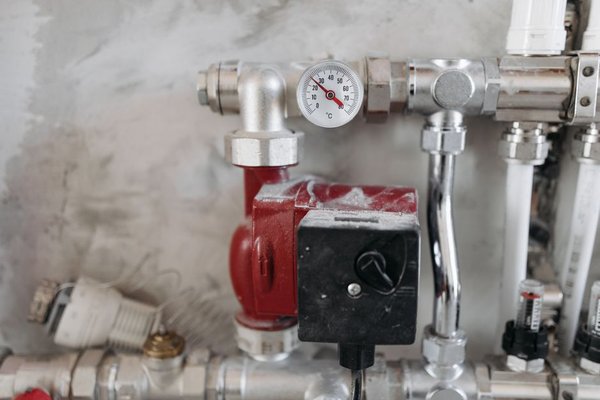
Definition: A central heating pump, also called a circulator, moves heated water from the boiler through radiators or other heating circuits and back again. It does not generate heat; it distributes it. The central heating pump may be visible beside the boiler or fitted inside its casing. Work involving a gas boiler’s sealed casing belongs with a Gas Safe registered engineer.
Checking the electricity figure
The figure above uses an illustrative pump drawing 40 W for eight hours a day on 180 heating days a year. It is not a measurement of your pump. At Ofgem’s average electricity rate of 26.11p/kWh for July to September 2026, 40 W ÷ 1,000 = 0.04 kW; 0.04 × 1 hour × 26.11p = 1.0444p an hour, rounded to 1.04p.
For the annual estimate, 0.04 kW × 8 hours × 180 days × 26.11p/kWh = 1,503.936p, or £15.04 a year. The electricity standing charge is excluded. Actual consumption depends on the pump’s wattage, operating hours and automatic settings; check its label and substitute your figures.
Does pump quality affect how long a central heating pump should last?
Yes, build quality and suitability affect reliability, but a well-known brand cannot guarantee a longer life. Even a durable pump fitted to the wrong heating circuit can struggle. Installation, water condition and settings matter alongside manufacturing quality.
Manufacturers such as Grundfos and Wilo publish performance and compatibility information. The replacement needs the correct flow, pressure capability and connections, not simply the highest advertised power. An oversized circulator may cause flow noise; an undersized one may leave radiators struggling to warm. The installer should establish what the circuit needs.
Keep the model details and installation date with your heating records. If an older pump runs quietly and circulates water correctly, age alone is not sufficient evidence for replacement.
Can running a pump continuously shorten its life?
Continuous operation increases total hours of mechanical use and can contribute to wear. However, some heating designs require long circulation periods or a short pump-overrun period after firing stops. Running for longer than expected is not automatically a defect.
Modern variable-speed circulators can reduce electrical input when demand falls. Older fixed-speed models may keep moving water if their controls call for it. Check the programmer and thermostat settings, but do not force the pump off or alter electrical wiring independently of the boiler’s controls.
If it appears to run day and night, ask a professional to check the timer, overrun function and central heating pump speed setting. Replacing the pump without correcting a control problem may leave its unusual operating pattern unchanged.
How does dirty heating water affect pump wear?
Dirty water can shorten pump life. Corrosion particles, magnetite and other debris can lodge in moving passages, interfere with the rotor or restrict circulation. A replacement fitted into the same contaminated circuit can encounter the same trouble.
Cold patches on radiators, repeated blockages and discoloured water noted during servicing may suggest a wider heating-water problem. They do not prove the pump itself is damaged. Ask the engineer to assess water quality, any magnetic filter, corrosion inhibitor and whether cleaning is appropriate.
A filter may capture magnetic debris but cannot repair worn bearings. Frequent topping-up of a system can introduce fresh oxygen, encouraging corrosion, so recurring pressure loss also deserves investigation. Cleaning and treatment should follow the boiler and product makers’ instructions rather than an improvised chemical dose.
Good maintenance is about protecting the complete heating circuit. A clean pump in blocked pipework will still fail to provide the circulation your rooms need.
Is a pump near the end of its life if it starts making noise?
Not necessarily. Gurgling can indicate air, while grinding, rattling or pronounced humming may relate to vibration, debris, unsuitable flow or mechanical wear. The sound alone does not tell you how much life remains.
Pay attention to a change in sound, especially when it appears alongside poor heating, fault codes or intermittent starting. A faint steady hum is not equivalent to repeated knocking or scraping. Note when the noise occurs and whether particular radiators stay cold.
The guide to a noisy central heating pump explores possible causes. For now, avoid undoing bleed screws, removing hot casings or opening electrical covers. Water can be pressurised and hot, and pump connections carry mains voltage. Leaks close to electrics require urgent professional attention.
When is replacement more sensible than another repair?
Replacement makes sense when a correctly diagnosed pump repeatedly seizes, refuses to start or has internal damage that cannot be reliably repaired. A single circulation complaint is not enough evidence. The fault could sit elsewhere in the system.
An engineer should check controls, airlocks, water condition and possible blockages before condemning the circulator. If parts for an obsolete model are unavailable or previous repairs repeatedly fail, an appropriate replacement may be the practical route. The chosen model must suit the system, not just fit the existing pipe space.
Ask for a quotation identifying the pump model, labour and any required system cleaning. There is no reliable universal price without knowing whether the unit is external or integrated into a particular boiler. The replacing central heating pump guide covers what to ask before agreeing to work. Gas-related boiler work requires a Gas Safe registered engineer; electrical work needs a suitably competent professional.
What helps a working pump reach a reasonable lifespan?
There is no maintenance trick that guarantees another decade. What helps is keeping the surrounding system in good condition and recording faults while they are intermittent, rather than waiting for the heating to stop altogether.
- Retain service records, pump model details and dates of recurring symptoms.
- Report unexplained pressure loss, cold radiators and repeated need to top up.
- Ask whether a fitted magnetic filter and heating-water treatment have been checked.
- Use the programmer as intended and have unexplained continuous operation investigated.
- Follow the pump and boiler manuals rather than making electrical or mechanical adjustments yourself.
Searches for how long does a central heating pump last often produce one age range, yet service history tells a richer story. The same is true of central heating pump problems: the symptoms and water quality matter. A proposed central heating pump change should follow a diagnosis, not a birthday.
When does replacing an old pump not solve the problem?
Replacing the circulator will not fix a blocked radiator circuit, faulty control, persistent leak or contaminated system. A fresh pump may seem to help temporarily and then struggle because the underlying fault remains. Photographs of a shiny new unit beside a boiler reveal nothing about the water quality or pipework behind it.
If you rent, report the problem to your landlord or managing agent instead of authorising work on their heating equipment. Do not open a boiler, disturb the pump wiring or dismantle pipework to speed things up. Record the symptoms and when you lost heating or hot water, and follow the appropriate repair process.
Age alone is also a poor reason to replace a quiet pump that still circulates correctly. Equally, fitting another unit into sludge-filled water without investigating corrosion may repeat the failure. An engineer recommending replacement should explain the observed fault and why a blockage, control issue or water-quality problem does not better explain it.
Frequently asked questions
Can a central heating pump last more than 15 years?
Yes, some circulators continue working beyond 15 years, especially in well-maintained systems. There is no fixed expiry date, so judge its condition and performance rather than the installation year alone.
Should a pump be changed when the boiler is replaced?
Not automatically. The new boiler’s design and the compatibility of existing components determine what can stay; the installer should explain any necessary changes.
Do cold radiators mean the pump has failed?
No. Air, blocked pipework, balancing issues and faulty controls can also affect radiator temperatures. Have the full circuit checked before approving a new pump.
Is a hot pump casing a warning sign?
Not on its own, because hot heating water warms the casing. Leaks, an unusual smell, electrical fault symptoms or repeated shutdowns warrant professional inspection.
Can I choose a replacement using wattage alone?
No. Electrical input does not establish whether the pump provides the right flow and pressure. The installer must also check connections, controls and manufacturer specifications.
Ten to fifteen years is a guide for paying attention, not an instruction to replace a working pump. When circulation deteriorates, a diagnosis covering controls, water quality and pump condition is more useful than guessing from age.