
How do you size a 12v solar panel kit?
Size a 12v solar panel kit from the watt-hours your loads need each day, then match the battery, panel capacity, charge controller and cable runs to that demand. Start with energy use rather than the kit label, and check every voltage and current limit against the actual component specifications.
A small 12 V solar system is easiest to size as an energy budget. Write down each load, how many watts it uses, how many hours it runs and how long the battery must keep it going when useful solar input is low.
How do you size a 12V solar panel kit?
Start with daily watt-hours, because panel watts alone do not tell you how long a battery will last. Once you know the energy used in a normal day, size storage first and then the solar input needed to put that energy back.
For each device, multiply wattage by daily hours. A 20 W router used for 8 hours needs 160 Wh, a 10 W light used for 5 hours needs 50 Wh, and a 60 W laptop charger used for 3 hours needs 180 Wh, giving 390 Wh a day before system losses or reserve capacity.
You can also put a grid-electricity figure beside a load for a checkable cost reference. For the 60 W laptop charger, the working is 60 W divided by 1,000, multiplied by 3 hours, multiplied by 24.5p/kWh: 4.41p a day, or £16.10 a year at 24.5p/kWh (July 2026 cap), assuming 3 hours every day for 365 days.
Use the daily total to judge whether a solar panel kit is suitable. If storage is included, the same calculation starts a solar panel and battery kit.
Work through the sizing in this order
- Total the daily loads: multiply each device’s watts by its daily hours, then add the watt-hours together.
- Allow for real operation: note which loads run together, whether an inverter is involved and whether anything has a high start-up demand.
- Choose usable battery capacity: convert required watt-hours into amp-hours, then apply the usable-depth limit stated by the battery manufacturer.
- Choose enough panel capacity: allow for season, orientation, shading, controller losses and poor weather.
- Check the controller limits: confirm battery voltage, charge-current rating, permitted array power and maximum PV input voltage.
- Check every cable run: use current, run length, installation method, connector rating and acceptable voltage drop.
A 100w solar panel kit may suit modest intermittent loads, but the 100 W label does not tell you battery run time or recovery time after dull weather. A 12v solar panel kit with battery still needs the same calculation; bundled parts do not prove that the bundle matches your loads.
How many amps does a 12V solar panel produce?
Use the panel datasheet rather than dividing its rated watts by exactly 12 V and treating the result as panel current. A panel intended for a nominal 12 V battery system operates above 12 V, so its maximum-power current and short-circuit current are the useful figures.
For an illustration, if a 100 W panel’s datasheet showed 18 V at maximum power, 100 W divided by 18 V would be about 5.6 A at that operating point. That is only an example; the real current must come from the panel you have.
Series connections raise array voltage, while parallel connections raise array current. Check both sets of controller limits before connecting panels.
What battery size matches a 12V solar kit?
Convert the daily watt-hour requirement into amp-hours, then adjust for the portion of the battery that the manufacturer allows you to use. The arithmetic gives a starting capacity; reserve for dull weather, ageing and unusual loads comes afterwards.
Using the 390 Wh example, 390 Wh divided by 12 V is 32.5 Ah. If the battery manufacturer permits 80% usable depth of discharge, 32.5 Ah divided by 0.8 gives about 40.6 Ah as a one-day arithmetic minimum before extra reserve is added.
A solar panel kit with battery is properly matched only when the panel can replace the energy the battery supplies within the conditions you expect. If you need two days without useful solar input, start the calculation with two days of energy demand.
How do you choose the correct charge controller rating?
Check system battery voltage, permitted solar-array power, charge-current rating and maximum PV input voltage together. A controller is suitable only when the planned panel arrangement stays inside all of those limits.
A rough battery-side sense-check is array watts divided by nominal battery voltage. A 200 W array divided by 12 V is about 16.7 A, so a controller below that current would not pass even this first check; a larger rating still needs its PV wattage and voltage limits verified.
Open-circuit voltage matters with panels in series. The array’s total open-circuit voltage must remain within the manufacturer’s maximum PV input figure under the conditions it specifies, including any temperature allowance required by its documentation.
What cable size should be checked for a 12V solar setup?
Check each cable run from the current it carries, its one-way length in metres, installation method and acceptable voltage drop. A 12 V system can carry substantial current, so a cable that looks thick may still be unsuitable for a long or heavily loaded run.
The panel-to-controller, controller-to-battery and battery-to-load or inverter runs can have different current requirements. As a scale check, 600 W divided by 12 V is 50 A before losses, showing why the battery side deserves careful cable and protection choices.
- Use cable guidance from the panel, controller, battery and inverter documentation.
- Check connector current ratings as well as conductor size.
- Use suitable DC-rated overcurrent protection where the equipment instructions require it.
- Keep high-current battery runs as short as the installation reasonably allows.
Do not copy a cable size from a photograph or another installation. If the project connects to fixed 230 V wiring, a consumer unit or another part of the building’s mains installation, use a competent electrician for that work.
When does a 12V solar setup not work well?
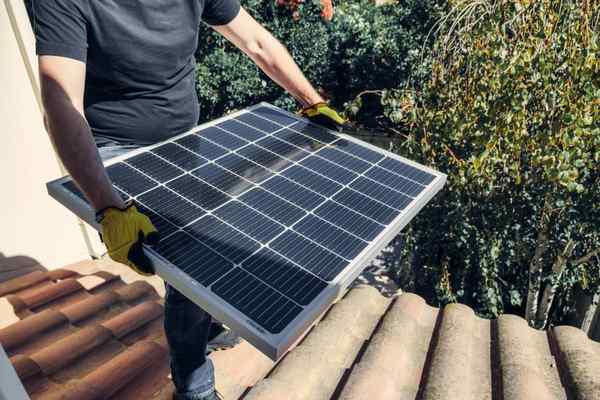
It does not work well when the purchase starts with a panel size and the loads are guessed afterwards. A neat panel, controller and battery can look convincing in a photograph yet still be badly matched if the panel is shaded, the battery cannot cover the required hours, or the controller is close to one of its voltage or current limits.
It is also a poor choice for large, continuous or essential loads when there is no realistic backup for several dull days. Long 12 V cable runs are another warning sign because current can be high and voltage drop becomes harder to control. A design that only works when every component reaches its headline rating for hours at a time is not a robust design.
In rented property, do not drill roofs, alter fixed wiring or make permanent changes without the landlord’s permission. In a vehicle, shed, boat or home, a generic wiring picture is not a substitute for the battery, controller, fuse, cable and connector manufacturers’ instructions.
Frequently asked questions
Can I connect a solar panel straight to a 12 V battery?
Normally the panel should charge the battery through a suitable solar charge controller rather than being connected directly. The controller manages charging and must operate within the battery manufacturer’s stated voltage and current limits.
Do I need an inverter in a 12 V solar system?
You need an inverter only for equipment that requires AC power and cannot run from the DC system directly. Include its demand and conversion losses in the daily watt-hour calculation because they increase the energy the battery must supply.
Can I add another panel later?
Possibly, but the revised array must stay within the controller’s permitted solar power, PV input voltage and current-related limits. Recheck controller and cable ratings before adding panels.
Should I size the system for summer or winter?
Size it for the period when you need dependable energy. If winter operation matters, use cautious solar-input assumptions and keep enough battery reserve or another practical backup for extended dull weather.
Can a 12 V solar setup run a high-power appliance?
It can if every component is sized for the power and current involved, but high wattage quickly produces high current on the 12 V battery side. Check the inverter, battery discharge limit, cables, connectors and protective devices before treating the load as practical.
A reliable 12 V design follows one chain: loads determine daily watt-hours, daily watt-hours determine usable battery capacity, and battery demand determines the panel and controller capacity needed to restore that energy. Put the numbers on paper before buying parts, then check every voltage, current, cable and protection limit against the relevant manufacturer documentation.