
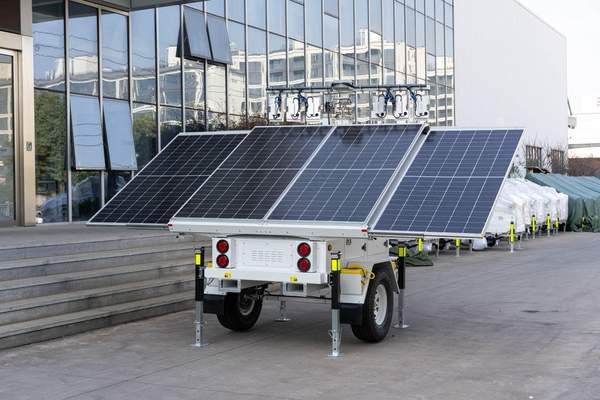
What can a 200w solar panel kit run?
A 200w solar panel kit is best for small, efficient loads such as LED lights, phone charging, a router and some laptop use. With a suitable battery and inverter it can also support selected fridges, but its daily energy budget is limited and high-wattage heating appliances are not a realistic match.
A 200W panel is a small source of electricity, not a miniature full-home array. The useful question is how many watt-hours your equipment needs each day and whether the panel and battery can cover that demand.
Definition: A 200W solar panel kit is a photovoltaic setup with panels rated at 200 watts in total, normally paired with a charge controller and often a battery. If you need to power 230V AC equipment, the system also needs a suitably rated inverter; the panel rating alone does not tell you what the whole setup can run.
The wider solar panel kit guide explains the role of each part. A 100w solar panel kit uses the same basic logic with half the panel rating, while a 12v solar panel kit describes the system voltage rather than the amount of solar energy available.
How much energy can a 200W solar panel kit make per day?
Daily energy depends on usable sunlight, shade, panel angle and system losses, so 200W is a maximum power rating rather than a promise of 200W all day. The clean way to plan is to convert the rating into kilowatts and multiply it by the equivalent full-sun hours available.
Start with 200W divided by 1,000, which is 0.2kW. If the day gives the equivalent of four full-sun hours, 0.2kW multiplied by 4 hours equals 0.8kWh before controller, wiring, battery and inverter losses; at two equivalent hours, the same calculation gives 0.4kWh before losses.
If you want to put a grid value on an electrical load, the checking formula is the same one used across this site: wattage divided by 1,000, multiplied by hours used, multiplied by the unit rate. For example, a 60W laptop used for four hours is 60 divided by 1,000 multiplied by 4 multiplied by 24.5p/kWh, which is 5.88p for that four-hour use at the July 2026 cap.
What appliances can a 200W solar kit run?
Small electronics and efficient low-voltage equipment are the natural fit. Appliances that turn electricity into heat demand far more power than the panel can provide directly, so the right test is both the appliance’s instantaneous wattage and its total daily energy use.
| Appliance or load | Example electrical demand | How it fits a 200W system |
|---|---|---|
| LED lighting | 10 to 30W total | Well suited for several hours with stored energy |
| Wi-Fi router | About 8 to 15W while on | Usually a modest continuous load |
| Laptop | About 40 to 90W while charging or working | Practical for limited daily use |
| 12V compressor fridge | Intermittent compressor load | Possible if measured daily energy fits the budget |
| Household fridge-freezer | Higher daily use plus start-up demand | Can be difficult without more panel and battery capacity |
| Kettle or electric heater | Roughly 2,000 to 3,000W while on | Poor match for a system this small |
Use watt-hours to test a combination. A 60W laptop for four hours needs 0.24kWh, while four 8W LED lamps for five hours need 0.16kWh; together that is 0.40kWh before losses. That can fit inside a good-day solar budget, but it leaves less energy for other loads or for a duller day.
Direct 12V equipment can avoid an AC conversion stage. For that use, see the 12v solar panel kit article.
What battery size works with a 200W solar panel?
Size the battery from the energy you need after sunset and during weak solar periods, not from panel wattage alone. Comparing batteries in watt-hours makes the relationship clearer because it puts stored energy in the same unit as daily consumption.
If a battery is labelled 12V and 50Ah, its energy is 12 multiplied by 50, or 600Wh, equal to 0.60kWh. At 12V and 100Ah, the calculation gives 1,200Wh, or 1.20kWh nominally; the usable amount depends on battery chemistry and the permitted depth of discharge.
A larger battery gives more reserve, but it does not make the panel refill faster. After dull days, storage and generation still need to be balanced.
For an all-in-one solar panel kit with battery, check panel wattage, battery watt-hours, charge-controller limits and inverter continuous power together. The solar panel kit with battery guide is the better fit when those parts are being chosen as one package.
Can a 200W solar kit run a fridge?
It can run some efficient fridges, especially 12V compressor models, but the answer comes from measured daily energy use rather than compressor wattage alone. A fridge cycles on and off, needs power overnight and may have a start-up surge, so the battery and inverter are part of the decision.
If a fridge uses 0.4kWh over a day and the system can reliably deliver more than that after losses, the numbers can work. If the fridge needs around 1.0kWh a day, a 200W array has far less margin and will be difficult to rely on through weak UK solar conditions.
For a mains fridge, the inverter must handle normal operation and the compressor surge. In a camper, van or shed, an efficient 12V compressor fridge is usually a more natural match.
How much does winter reduce output from a 200W panel?
Winter reduces the daily energy available because days are shorter, the sun is lower and weak-light periods are more common. There is no single percentage that applies to every UK roof or portable setup, so use a range of sun-hour scenarios rather than one annual average.
The arithmetic shows why the season matters. Four equivalent full-sun hours gives 0.2kW multiplied by 4 hours, or 0.8kWh before losses; one equivalent hour gives only 0.2kWh, so the same loads that are comfortable on a brighter day can consume the entire budget on a poor one.
Adding storage does not solve a generation shortage on its own. If winter reliability matters, reducing daily demand or adding panel capacity is usually more useful than simply making the battery larger.
How should you size the rest of the system?
Work backwards from the loads. Add the watt-hours needed each day, allow for conversion losses, decide how much overnight reserve is required, then check that the controller, battery, cable and inverter ratings can safely handle the resulting voltage and current.
If you are connecting solar generation, a battery or an inverter to a home’s fixed wiring, use appropriate equipment and a competent electrician rather than treating an off-grid kit as a shortcut into a mains circuit.
When does a 200W solar kit not work well?
A small solar kit does not work well where the load is large, the panel sits in regular shade or the user expects household-level power from one compact panel. Product photographs showing a neat panel beside a kettle, fan heater or hair dryer may look convincing, but those ideas only work in a photograph if the electrical demand is several times the panel rating. A large battery and inverter can deliver a short burst, yet the panel still has to replace that energy afterwards.
It is also a poor plan where there is nowhere secure and unshaded to mount the panel. In a rented home, fixing equipment to a roof, wall or balcony without the landlord’s permission can breach the tenancy. In a flat, safe cable routing and usable outdoor space may be the real limit. Persistent shade from nearby buildings, trees or fences cannot be corrected by buying a larger battery. If the system must power essential equipment every day through winter, 200W leaves very little room for bad weather or unexpected demand.
Frequently asked questions
Do I need a charge controller with a 200W panel?
Yes, if the panel is charging a battery, use a charge controller that suits the panel voltage, battery voltage and maximum current. Check the controller’s electrical limits rather than choosing it only from the headline panel wattage.
Is MPPT better than PWM for a small kit?
An MPPT controller can make better use of a panel whose operating voltage is above the battery charging voltage. The practical benefit depends on the panel, battery and controller combination, so compare the specifications of those parts together.
What size inverter should I pair with the kit?
Size the inverter for the appliances connected to it, including any start-up surge, not for the panel’s 200W rating. Small electronics may need only a modest inverter, while compressor loads can require more short-term headroom.
Is a 200W setup suitable for a garden shed?
It can suit efficient lighting, charging, a router, security equipment and occasional laptop use if the panel receives useful sunlight and the battery is sized appropriately. It is a poor basis for regular electric heating or other high-energy equipment.
A 200w solar panel kit works best when you treat it as a daily energy budget rather than a list of appliances it will automatically run. Add the watt-hours your loads actually need, allow for losses, and size the battery, controller and inverter around those figures.
For lights, electronics and selected efficient 12V equipment, the system can be useful and predictable. For winter reliability, large household appliances or regular heating loads, more generation capacity matters more than simply adding storage.