
Which uk energy bill hidden wasters should I check first?
The main uk energy bill hidden wasters are small standby loads left on all day, devices using instant-on modes, electric heaters or towel rails still scheduled, and heating or hot-water controls running when nobody needs them. Measure first, then calculate the annual cost from the actual watts and your tariff rather than guessing.
A hidden load does not need to be large to appear on your energy bill uk. The examples below use Ofgem’s average Direct Debit electricity rate of 26.11p/kWh for Great Britain from 1 July to 30 September 2026; fixed tariffs, other payment methods and Northern Ireland can have different rates.
That £22.87 figure assumes a measured 10 W load running continuously for 24 hours a day, 365 days a year. The working is 10 W ÷ 1,000 = 0.01 kW; 0.01 × 24 × 365 = 87.6 kWh; 87.6 × £0.2611 = £22.87 when annualised at the July–September 2026 rate.
Which appliances keep drawing power when they look switched off?
Anything with a display, remote control, network connection, timer or instant-start function may draw electricity while it appears inactive. Do not assume that every appliance is wasting power, though: measure the load and check whether switching it off would disable something you actually need.
- TV and entertainment equipment: Check the whole group rather than blaming one device. A television, streaming box, games console and sound system can each have different standby modes. If a plug-in meter shows the group drawing 10 W continuously, that is 87.6 kWh a year and £22.87 a year at 26.11p/kWh (July–September 2026 cap), assuming 24 hours a day for 365 days.
- Home-office equipment: Monitors, printers, docks and desktop accessories can remain powered after the working day. If the measured combined standby load is 5 W for 24 hours a day, the calculation is 5 ÷ 1,000 × 24 × 365 = 43.8 kWh, costing £11.44 a year at 26.11p/kWh (July–September 2026 cap).
- Kitchen appliances left on standby: Some microwaves, washing machines, dishwashers and countertop appliances remain powered for clocks, displays or controls. If the appliances you can safely switch off measure 3 W combined for 24 hours a day, that is 26.28 kWh and £6.86 a year at 26.11p/kWh (July–September 2026 cap). Fridge-freezers are different: they need to remain powered.
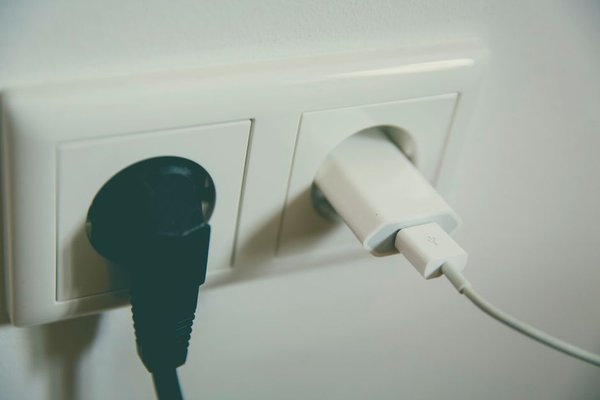
- Chargers and power supplies: An empty charger may have a very small load, while several adapters together can be more noticeable. If your meter finds 2 W continuously across adapters that serve no purpose while idle, 2 ÷ 1,000 × 24 × 365 = 17.52 kWh, or £4.57 a year at 26.11p/kWh (July–September 2026 cap).
- Electric towel rails and small electric heaters: The costly mistake is often a timer that still runs after routines change. If a device rated at 500 W runs for two unnecessary hours each day, 500 ÷ 1,000 × 2 × 365 = 365 kWh, which annualises to £95.30 at 26.11p/kWh (July–September 2026 cap). Check the rating plate rather than assuming yours is 500 W.
- Immersion heaters: A forgotten immersion-heater period can matter far more than a tiny standby light. If an element is rated at 3,000 W and remains on for one unnecessary hour a day, the maximum input calculation is 3,000 ÷ 1,000 × 1 × 365 = 1,095 kWh, or £285.90 at 26.11p/kWh (July–September 2026 cap), assuming it actually draws its full rated power for that whole hour. An immersion heater is normally hard-wired, so do not connect it to a plug-in meter; investigate its controls and use a qualified electrician where electrical work is required.
- Heating controls that no longer match your routine: A programmer can still heat an empty home because an old weekday schedule was never changed. The cost cannot honestly be given from the timer setting alone because boiler output, weather, insulation, thermostat settings and heat loss all affect consumption. Compare metered kWh under similar conditions rather than attaching a made-up annual figure.
These checks are more useful than applying a generic list of uk energy bills saving tips, because the meter tells you what your own home is actually drawing. It also prevents spending time crawling behind furniture to eliminate a load worth only pennies while overlooking a timed electric heater.
How can you measure a hidden electricity load at the socket?
For a normal plug-in appliance, a plug-in electricity monitor can show watts while the device is active and while it appears switched off. For the whole property, a smart meter’s in-home display can help you see changes in electricity demand, although individual appliances are easier to isolate with a socket monitor.
- Plug the monitor into a normal wall socket and connect only an appliance suitable for that monitor.
- Let devices with cycling behaviour run long enough to capture representative use rather than reading one instant.
- Record watts in the state you are investigating: active, idle or standby.
- Use the tariff unit rate from your own bill if it differs from the example rate here.
- Do not use a plug-in monitor for hard-wired equipment such as an immersion heater, electric shower, cooker circuit or fixed heating installation.
The basic electricity calculation is watts ÷ 1,000 × hours used × unit rate. If, for example, you measure 7 W continuously, 7 ÷ 1,000 × 24 × 365 = 61.32 kWh a year; 61.32 × £0.2611 = £16.01 a year at 26.11p/kWh (July–September 2026 cap), assuming that 7 W remains present for all 8,760 hours of the year.
A smart meter display is particularly useful for finding a whole-home baseline. Switch off only items that can safely be switched off, note whether the displayed electricity demand falls, and then investigate the sockets responsible. Refrigeration, medical equipment, security systems, broadband equipment and heating controls may need to remain powered.
If you want to run your own figures at another tariff rate, a energy bill calculator uk approach is straightforward: keep the measured kWh the same and replace 26.11p with the unit rate printed on your bill.
Which heating habits can add unnoticed energy use?
With boiler heating, the hidden waste is usually time or temperature rather than electrical standby. A schedule that heats the property before anyone is home, a thermostat set above the temperature you actually need, or high TRV settings in unused rooms can all increase the energy delivered by the heating system.
Energy Saving Trust advises setting a room thermostat to the lowest comfortable temperature, typically within 18°C to 21°C, and using programmers and thermostatic radiator valves so rooms are heated when required. Turning a thermostat higher does not make a boiler-heated home reach the target temperature faster; it changes the temperature at which the thermostat tells the system to stop calling for heat.
The £ impact must come from actual consumption. Suppose two comparable periods show that a changed heating schedule accounts for an extra 2.5 kWh of gas a day. At Ofgem’s Great Britain average Direct Debit gas rate of 7.33p/kWh for July–September 2026, the working is 2.5 × £0.0733 = £0.183 a day; annualised over 365 identical days, that would be £66.89 at 7.33p/kWh (July–September 2026 cap). The 2.5 kWh is an example measured difference, not a claim that every home wastes that amount.
Boiler heating and heat pumps should not be treated as identical systems. Heat pumps are commonly operated with longer, steadier heating periods, so copying boiler switch-on and switch-off habits can be inappropriate. Follow the controls and settings recommended for the system installed in your home.
How do you decide whether a small standby load is worth changing?
Calculate its annual cost, then consider what you lose by switching it off. A tiny load with a useful purpose may be worth leaving alone, while the same measured load on equipment that does nothing overnight may be easy to remove.
A useful benchmark is a continuous 1 W load. The working is 1 ÷ 1,000 × 24 × 365 = 8.76 kWh a year, which costs £2.29 a year at 26.11p/kWh (July–September 2026 cap), assuming it stays at 1 W every hour of the year. You can multiply that figure by your measured watts for a quick estimate, provided the load really is continuous.
That also puts a typical energy bill uk comparison in perspective: the household total does not tell you which socket deserves attention. Work from measured watts and actual hours instead.
Do not switch equipment off merely because it uses some electricity. A broadband router may support phones, alarms or connected controls; a smart thermostat needs power to control heating; a fridge-freezer must operate continuously; and medical equipment should be used according to its instructions. The objective is avoidable consumption, not the lowest possible overnight reading.
When does hunting for hidden energy use not really work?
Chasing every fraction of a watt is not useful if the accessible loads are already tiny or if switching them off removes a service you need. A perfectly dead entertainment cabinet may look good in a photograph, but it is a poor result if it disables recordings, broadband-dependent equipment, security devices or heating controls.
Renters should also avoid altering fixed wiring, heating systems or landlord-owned equipment without permission. Hard-wired immersion heaters, fixed electric heating and suspect electrical controls are not socket-monitor experiments; faults or alterations may require a qualified electrician, while gas-appliance work must be carried out by a Gas Safe registered engineer. On a prepayment meter, fixed tariff or Northern Ireland supply, the 26.11p/kWh Great Britain Direct Debit example used here may not match your price, so use the rate shown on your own tariff. Finally, a 1 W load annualised at £2.29 at 26.11p/kWh (July–September 2026 cap), assuming continuous operation, may simply not justify repeatedly reaching an awkward socket. Measure the large timed loads first.
Frequently asked questions
Does switching appliances off reduce the standing charge?
No. Switching an appliance off reduces chargeable kWh only; it does not remove the electricity standing charge. Ofgem’s Great Britain average Direct Debit electricity standing charge was 57.19p a day for 1 July to 30 September 2026, although the amount varies by region and tariff.
Can a smart meter show exactly which appliance is using electricity?
An in-home display shows household electricity demand rather than naming the individual appliance responsible. It can reveal a change when equipment is switched on or off, while a suitable plug-in monitor is more direct for measuring an individual plug-connected device.
Should I turn my broadband router off every night?
Not automatically. A router can support connected phones, security equipment, smart-home devices and overnight updates, so check your provider’s or manufacturer’s guidance before changing its routine. Measure its consumption first and decide whether the function is worth the measured cost.
Do phone chargers matter if no phone is connected?
An unloaded charger can draw a small amount of electricity, but the amount varies and should be measured rather than assumed. If all your unused adapters together measured 2 W continuously, the annualised cost would be £4.57 at 26.11p/kWh (July–September 2026 cap), assuming 24 hours a day for 365 days.
Does everyone under the price cap pay 26.11p per kWh?
No. The 26.11p/kWh figure is the Great Britain average Direct Debit electricity rate for the Ofgem cap period from 1 July to 30 September 2026. Regional rates, payment methods, fixed tariffs and Northern Ireland arrangements can differ, so calculations for your home should use the rate on your own bill.
The useful uk energy bill hidden wasters are the ones you can prove with a meter, a timer or your own consumption data. Start with devices running for long periods, show the watts and hours in the calculation, then decide whether removing that load is worth the inconvenience rather than treating every glowing standby light as a major problem.