
What does zero energy bill housing UK actually mean?
Zero energy bill housing UK means a home is designed and supplied under a model where efficient fabric, solar panels, battery storage, a heat pump and a qualifying tariff can reduce the household energy charge to £0 for the guarantee period, provided the property and its occupants remain within the tariff’s eligibility and fair-use rules.
“Zero bills” is a tariff-and-building model, not a claim that the home never uses grid electricity. The property can import power in winter or at night and export solar electricity at other times, while smart controls, storage and the tariff determine whether the covered household charge remains at £0.
Definition: A zero-energy-bill home is a qualifying property where the building fabric, low-carbon equipment and energy tariff work together so that covered household energy charges are £0 during the stated guarantee, subject to the supplier’s usage and equipment conditions.
For context, Ofgem’s average Direct Debit cap rates from 1 October to 31 December 2026 are 26.32p/kWh for electricity and 7.97p/kWh for gas, with standing charges of 54.83p and 29.68p a day. Using Ofgem’s medium assumptions of 2,500 kWh electricity and 9,500 kWh gas a year gives about £1,723.61 a year if those rates were held for 12 months: £658.00 electricity usage + £200.13 electricity standing charge + £757.15 gas usage + £108.33 gas standing charge. That benchmark is useful when reading an energy bill uk guide, but it is not a ceiling on anyone’s bill.
How can a home be marketed as having zero energy bills?
A home can be marketed this way when the property has been built or upgraded to a specification accepted by a supplier offering a zero-bill tariff, and the tariff then covers qualifying household energy for a fixed period. The promise depends on both the hardware and the contract, so it should be read as a tariff guarantee rather than a statement that the property is physically off-grid.
One current UK example is Octopus Energy’s Zero Bills model, offered on approved homes for 5 or 10 years. Its published requirements include an approved heat pump, solar PV, battery storage, a working import-and-export smart meter, connected equipment and no active gas meter unless it is removed as part of eligibility.
The home can still exchange electricity with the grid. Solar generation covers part of demand, the battery shifts some electricity into later hours, and the supplier can optimise the system. The heat pump provides heating and hot water, so an eligible all-electric home does not rely on a separate gas supply.
Which energy costs may still remain in a zero-bill home?
Some charges can remain because the guarantee only covers what the tariff says it covers. Excess household usage, electric-vehicle charging and services outside the qualifying tariff can sit outside the £0 promise.
Octopus publishes fair-use conditions for its Zero Bills products. Its current 5-year and 10-year terms include a 4,000 kWh annual net-import threshold for the relevant products; electricity above the threshold is charged at the supplier’s Flexible tariff rate, and EV charging is billed separately on the applicable EV tariff. The exact excess-use p/kWh figure is therefore the live supplier rate on the billing date, not a fixed national figure.
To make extra electricity use checkable, take a 2,000 W resistance heater used for 2 hours a day. The working is 2,000 W ÷ 1,000 = 2 kW; 2 kW × 2 hours = 4 kWh a day; 4 kWh × 26.32p/kWh = 105.28p a day at the 1 October to 31 December 2026 Ofgem average electricity cap rate. Over 365 days at that same 2-hours-a-day use, 1,460 kWh would equal £384.27 at 26.32p/kWh. This is a benchmark calculation, not a quoted Zero Bills excess-use rate.
How much do solar generation and home efficiency matter to the model?
They matter directly because the model works best when the property needs relatively little imported electricity and can produce and store part of its own supply. Solar, battery storage, insulation, airtightness and an efficient heat pump all affect the amount of grid electricity the home needs across the year.
Solar panels do not make a UK home self-sufficient every hour. Energy Saving Trust notes that a heat pump still needs grid electricity when panels are not generating, especially at night and through darker winter periods. A battery can shift daytime surplus into the evening, but it cannot store summer generation for use months later in winter.
The building fabric matters just as much as the roof hardware. A well-insulated home loses heat more slowly, so the heat pump needs fewer kWh to hold the chosen indoor temperature. For your own check, compare actual meter readings with an energy bill calculator uk rather than relying on a panel count or a sales estimate.
Which usage assumptions can change whether the figures work in practice?
The result changes with how many kWh the household uses, when those kWh are used and whether the approved equipment remains connected and operating correctly. Occupancy, heating temperature, hot-water demand, home size, EV charging, extensions and high-power electrical loads can all change net grid import.
From July 2026, Ofgem’s medium conventional-home assumptions are 2,500 kWh of electricity and 9,500 kWh of gas a year. At the 1 October to 31 December 2026 average Direct Debit rates of 26.32p/kWh electricity and 7.97p/kWh gas, plus the stated daily standing charges, those assumptions produce about £1,723.61 a year if the rates were held for 12 months.
A Zero Bills home is normally all-electric and uses solar, a battery and a heat pump, so that conventional benchmark is not a prediction of its consumption. A typical energy bill uk figure or average household energy bill figure cannot prove that a particular property will stay within its allowance. Use the home’s actual annual consumption, generation and net import; until 12 months of normal occupancy exist, any average annual energy bill uk estimate is provisional.
When does the zero-bill idea not work as neatly as the brochure suggests?
It does not work neatly when the property cannot meet the technical conditions, when the household regularly exceeds the tariff allowance, or when the occupier cannot control the equipment and contract. A renter cannot simply add solar, a battery or a heat pump without the landlord’s permission, and a flat may have no usable roof area or private location for external heat-pump equipment. Listed buildings, conservation constraints, solid-wall homes and awkward roof layouts can also make an upgrade materially more difficult.
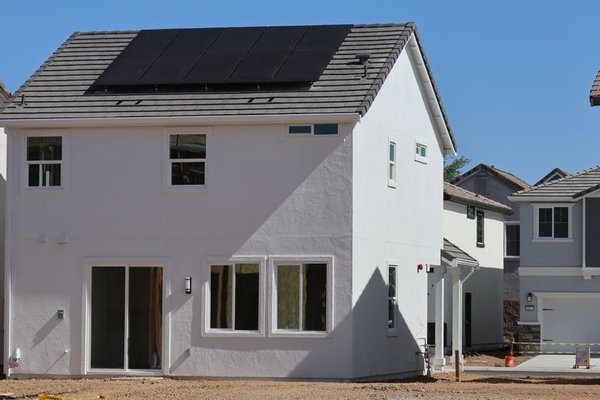
The marketing photograph usually shows the easy case: a modern house, clear roof, outdoor space, battery location and neatly integrated heating system. That picture is not a substitute for a heat-loss calculation, electrical assessment, roof survey or tariff terms. If major electrical work is needed, it should be done by a competent registered electrician; structural work needs the appropriate professional assessment. The tariff can also stop being £0 if fair-use rules are breached or eligibility conditions are no longer met, so the contract matters just as much as the hardware.
Frequently asked questions
Is a zero-bill home the same as a net-zero home?
No. A zero-bill tariff describes what the household is charged under a contract, while net zero is a wider carbon concept. A property can have a £0 covered energy charge and still import grid electricity during the year.
Does a Zero Bills tariff include a standing charge?
For the current Octopus Zero Bills products discussed here, the published terms state no standing charge. By comparison, Ofgem’s average Direct Debit standing charges are 54.83p a day for electricity and 29.68p a day for gas from 1 October to 31 December 2026.
Is electric-car charging included in zero home energy bills?
Not under the current Octopus Zero Bills terms. EV charging is treated separately and billed under the applicable EV tariff, so its p/kWh rate must be checked against the tariff in force on the charging date.
What happens when the 5-year or 10-year guarantee ends?
The household then needs whatever tariff is available at that time unless a new qualifying arrangement is offered. Future p/kWh rates cannot be stated reliably in October 2026, so post-guarantee energy should be assumed to follow the tariff terms then in force.
Zero energy bill housing UK can work because the home, generation, storage, heating and tariff are designed as one system. The useful test is not the phrase “zero bills” on a brochure but the approved specification, the kWh fair-use conditions, what is excluded and the length of the guarantee.