
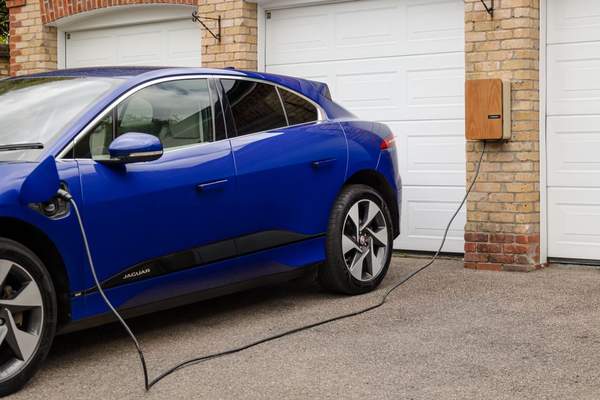
Is a 10m ev charging cable type 2 practical at home?
A 10m ev charging cable type 2 is practical when your chargepoint and car are not always parked close together. Ten metres gives useful flexibility across a driveway, but it also means more cable to lift, coil and keep clear of tyres and walking routes. For compact parking, a shorter cable is usually easier to live with.
The right length depends on where the wallbox sits, where the car’s charge port is, and whether you sometimes reverse into the space.
The cable itself does not consume electricity, so there is no separate electricity figure to assign to its length. For context, a 7.4 kW home charge lasting one hour would use 7.4 kWh: 7,400 W divided by 1,000 = 7.4 kW, multiplied by 1 hour = 7.4 kWh, multiplied by 26.11p/kWh = 193.21p, or about £1.93 for that hour at the Ofgem average Direct Debit electricity unit rate for 1 July to 30 September 2026. A 5 m, 10 m or 15 m correctly rated cable does not change that tariff calculation.
How much driveway reach does a 10 m Type 2 cable give?
Ten metres is enough for many UK driveways where the chargepoint is on the house wall and the car may be parked nose-in or reversed. It gives noticeably more routing freedom than a short lead, but you should measure the actual path the cable must follow rather than measuring in a straight line from wallbox to car.
Allow for corners, the edge of the parking space and the position of the vehicle’s charge port. A cable that looks generous on paper can become tight once the car is parked at an angle.
Use a 10 m piece of rope or garden hose to copy the real route. Do not pull it taut; leave enough slack for the connector to sit naturally without the cable hanging under tension.
If you are still deciding which connector and rating you need, the main guide to a type 2 ev charging cable is the better place to start. If your parking layout regularly puts the car farther away, compare a 15m ev charging cable type 2 rather than assuming 10 m will always reach.
Is a 10 m Type 2 cable harder to handle or store?
Yes, a 10 m cable takes more effort to lift, coil and store than a 5 m or 7.5 m cable. The difference matters most if you unplug every morning, carry the cable in the boot, or have limited wall space beside the chargepoint.
A longer cable also leaves more material on the ground. Keep it away from tyres, doors and regular foot traffic, and store the connector so dirt and water do not collect around the contacts.
The practical question is whether you use the extra length often enough to justify handling it. If the charge port is always only 2 or 3 metres from the wallbox, the spare cable may simply become something you coil and uncoil; if two cars share the point, the extra reach can be useful.
| Driveway situation | 5–7.5 m cable | 10 m cable | 15 m cable |
|---|---|---|---|
| Single car parked beside the wallbox | Usually the easiest length to handle | Works, but may leave unused cable | Often more cable than the layout needs |
| Car may be parked nose-in or reversed | Can be restrictive if the charge port changes sides of the space | Gives useful flexibility for most normal routing | Gives extra margin where the wallbox is poorly placed |
| Two parking positions share one chargepoint | May only suit the nearest position | Often reaches both if spaces are close together | Better where the second position is clearly farther away |
| Frequent boot storage | Smallest bundle and simplest to carry | Larger and heavier to pack regularly | Bulkiest option to carry and coil |
| Tight garage or narrow side passage | Less spare cable on the floor | Needs deliberate storage | Can become awkward unless the extra reach is genuinely needed |
Does a 10 m cable reduce EV charging speed?
Not simply because it is 10 m long. Charging speed is primarily limited by the chargepoint, the cable’s electrical rating and the car’s onboard AC charger, so the important job is buying a cable rated for the charging setup you actually use.
Type 2 cables come in different current and phase ratings. UK suppliers offer single-phase 32 A cables for up to about 7.4 kW and three-phase 32 A versions for up to 22 kW where the chargepoint and vehicle support it. A lower-rated cable can cap the available charging power.
Treat length and power rating as separate decisions. Match the connector and electrical rating to the car and chargepoint, then choose the shortest length that comfortably reaches. For an ev charging cable type 2 10m, check current and phase rather than assuming every 10 m lead has the same capability.
When is a shorter Type 2 cable the better choice?
A shorter cable is better when the car parks close to the chargepoint every time and there is no realistic need to reach another bay or a differently positioned charge port. In that situation, less spare cable means less coiling, less floor clutter and a smaller bundle to store.
Choose by your worst normal parking position, not an unlikely emergency. If 7.5 m reaches with comfortable slack in the positions you actually use, moving to 10 m may add handling without useful reach.
- Choose around 5 m if the chargepoint and charge port are consistently close and the cable route is direct.
- Choose around 7.5 m if you need moderate flexibility but still want a manageable cable for daily use.
- Choose 10 m if you regularly change parking direction, share a point between nearby spaces or have to route around the edge of a driveway.
- Consider 15 m only where your measured route genuinely needs the extra distance and you have a sensible way to store it.
When is a 10 m Type 2 cable a bad idea?
A 10 m cable is a poor fit when the extra length solves no real parking problem. In a small garage, a narrow driveway or a space where the car always stops beside the wallbox, the spare cable can spend every charge coiled on a hook or lying on the ground. That is not added flexibility; it is extra bulk to manage.
It also does not turn an unsuitable parking arrangement into a safe one. If reaching the car means trailing a cable across a public pavement, a shared access route or another person’s parking space, the photograph of a long cable “reaching anywhere” is not the same as a workable daily setup. Local rules, trip risk and access still matter. In a rented home or block of flats, the cable length also does not override the need for permission for the chargepoint or any change to shared areas. If 7.5 m reaches your measured route with comfortable slack, 10 m is not automatically the smarter purchase.
Before ordering, measure the route in every parking position you actually use. If 10 m covers them without being stretched tight, it is a sensible middle ground; if not, a 15m ev charging cable type 2 may be more realistic.
Frequently asked questions
Can I use a 10 m Type 2 cable at a public chargepoint?
Yes, where the public AC chargepoint is untethered and uses a Type 2 socket, provided the cable is compatible with your car and rated for the charging current. Rapid DC chargers normally have their own attached cable, so your portable Type 2 AC lead is not used there.
Should I buy a single-phase or three-phase 10 m cable?
Buy the cable rating that matches the highest AC charging setup you reasonably expect to use and that your vehicle can accept. A typical UK home supply is often single phase, but a higher-rated three-phase cable can be relevant if the car will use compatible workplace or public AC charging.
Can I leave a Type 2 cable outside?
Use a cable designed for outdoor EV charging and follow the manufacturer’s storage instructions. Keep connectors protected from dirt and standing water when they are not plugged in, and do not leave loose cable where it is repeatedly driven over or becomes a trip hazard.
Can I leave a 10 m cable tightly coiled while charging?
Follow the cable manufacturer’s instructions, because products differ. As a practical rule, lay out enough cable to avoid a tight loaded coil and keep the route free from sharp bends, crushing and unnecessary heat build-up.
Is 10 m enough for a two-car driveway?
It can be, but only a measurement will tell you. Measure from the chargepoint to each car’s charge port along the route the cable will actually take, then allow slack so the connector is not under tension.
A 10m ev charging cable type 2 is most useful where parking position changes and a standard short lead feels restrictive. Measure the real route first, match the cable’s electrical rating to the car and chargepoint, and choose 10 m only when that extra reach will be used often enough to justify the added cable you have to handle.