
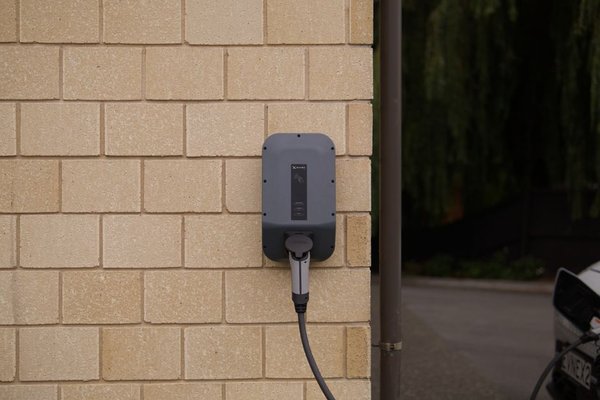
7kw vs 22kw ev charger: which should you choose?
For most UK households, a 7kw vs 22kw ev charger comparison favours 7kW: it suits typical overnight charging and is commonly paired with a single-phase home supply. A 22kW unit only reaches its full speed with a suitable three-phase supply and an electric car whose onboard AC charger can accept 22kW.
The wallbox rating is only one part of charging speed. Your home supply and the car’s onboard AC charger can both cap the rate, so the best choice is the one that matches the property, vehicle and time normally available for charging.
7kW and 22kW home chargers compared
| What to compare | 7kW home charger | 22kW home charger |
|---|---|---|
| Home supply | Usually suited to a single-phase domestic supply | Needs a suitable three-phase supply to deliver its full rated power |
| Maximum AC power | About 7kW | Up to 22kW |
| Relative charging speed | Baseline for comparison | A little over three times the power in theory |
| Best fit | Overnight home charging for most day-to-day use | Homes with three-phase power, compatible cars and a genuine need for shorter charging windows |
| Vehicle limitation | The car may still draw less than the wallbox can provide | The car must support 22kW AC to use the full output |
| Installation consideration | Still requires a proper site assessment and compliant installation | Supply capacity and network requirements need closer checking before installation |
A 7kw charger is therefore not a poor choice for home use. If the car sits on the drive overnight, there is often enough time to replace the energy used during the day without the highest available AC rate.
If you are still comparing products rather than power levels alone, Best Home EV Chargers in the UK: Power, Cables and Smart Features is the useful next step because charger design, cable setup and smart controls can matter just as much as headline kW.
Is a 22kW home charger worth it?
A 22kW home charger is worth considering when you already have a suitable three phase supply, your EV can accept high-power AC charging and you regularly need to add a large amount of energy in a short parking window. If one of those conditions is missing, much of the extra capability can go unused.
The strongest case is frequent driving, more than one EV, irregular overnight parking or a car that genuinely supports 22kW AC. For a car parked from evening until morning, the advantage can be smaller. Before deciding, compare the result with how to choose home ev charger so power remains only one part of the decision.
How much faster is a 22kW charger than a 7kW charger?
On power alone, 22kW is a little more than three times 7kW, so the theoretical difference is substantial. In real use, the gap can be much smaller because the vehicle controls how much AC power it will actually accept.
Charging time is roughly the energy needed in kWh divided by the power delivered in kW. If the car can take the full rate, a 22kw charger can deliver in one hour roughly the energy a 7kW unit would need a little over three hours to deliver.
Why the wallbox rating is not the same as the car’s charging rate
An AC wallbox supplies power to the car, but the vehicle’s onboard charger converts that AC electricity for the battery and sets its own maximum intake. A car limited to 7kW AC will not suddenly charge at 22kW because it is connected to a 22kW wallbox.
The same principle applies to an 11kW-capable car. A 22kW wallbox may allow it to charge faster than a 7kW wallbox, but it will still stop at the vehicle’s own AC limit rather than using the full 22kW available from the charger.
Can every house have a 22kW EV charger?
No. To deliver 22kW AC, the property needs a suitable three-phase electricity supply, while many homes are set up around single-phase power. Even where three-phase is present, the available capacity and the rest of the home’s electrical demand still need to be checked.
A site assessment should confirm the incoming supply, consumer unit, earthing, cable route, maximum demand and whether load management is needed. The installer can also establish any notification or approval requirements with the local Distribution Network Operator.
EV chargepoint installation involves fixed electrical work. A suitably qualified electrician or registered chargepoint installer should assess and install the equipment, while any network-side supply work must be handled by the appropriate authorised party.
If you are unsure what is already available at your property, start with can my home support an ev charger. For homes considering a higher-power setup, single phase vs three phase ev charging is the more specific comparison to make before choosing the wallbox.
Does my electric car support 22kW AC charging?
Check the manufacturer’s current charging specification for your exact vehicle and battery version. Look specifically for the maximum AC charging rate, because the headline rapid-charging figure advertised for public DC chargers is a different measurement and does not tell you what the car can take from a home wallbox.
If the current specification lists a lower AC limit, the vehicle will stay at that rate even with a 22kW wallbox. Future proofing only makes sense if the home supply is suitable and future vehicles are likely to use the extra capacity.
- Check the car’s maximum AC charging rate, not its DC rapid-charging rate.
- Confirm whether that limit changes by vehicle version or battery configuration.
- Check the home supply before treating 22kW as a practical upgrade.
- Ask the installer how load management would affect the maximum available charging rate.
When is a 22kW home charger not worth it?
It is not worth choosing 22kW simply because it is the larger number. If your car only accepts 7kW or 11kW AC, the charger cannot force more power into it. You may end up with a more capable wallbox while seeing little or no improvement in the charging time that matters to you.
It is also a poor fit where the property has single-phase power and moving to three-phase would add substantial electrical work or delay. If the car is normally parked overnight, a 7kW setup can already have many hours to recharge. Shorter theoretical charging time has limited value when the vehicle is not needed again until morning.
Use 22kW when the supply, the vehicle and your driving pattern all justify it. Otherwise, put the emphasis on a correctly sized wallbox, safe installation, dependable smart controls and a charging schedule that suits when the car is actually at home. Those factors are more likely to affect everyday convenience than unused peak power.
Frequently asked questions
Can an 11kW car use a 22kW home wallbox?
Yes, provided the charger and vehicle are compatible. The car will normally draw only up to its own AC charging limit, so a 22kW wallbox does not make an 11kW-capable onboard charger accept the full 22kW.
Will a 22kW wallbox make a 7kW car charge faster?
No, not if the vehicle’s AC charging limit is around 7kW. The car, not the wallbox, sets the maximum AC intake once the charger can already supply at least that amount.
Do both 7kW and 22kW chargers support smart charging?
Smart functionality is separate from power rating. Either power level can include scheduling and load management, so compare current product features rather than assuming the higher-kW unit is automatically smarter.
Can a 22kW charger be limited to a lower power?
Some installations can use load management or configuration to restrict how much power is drawn, but the exact behaviour depends on the charger and installation design. Ask the installer and manufacturer to confirm the current capability before relying on it.
Should I install 22kW now for a future EV?
Only if the property can support it sensibly and the extra capacity has a realistic future use. Otherwise, future proofing may add complexity without a clear day-to-day benefit.
For most UK homes, the sensible choice is the charger that matches the property and car. A 7kW wallbox is often enough overnight, while 22kW makes sense when three-phase power, vehicle compatibility and a real need for faster AC charging line up.