
Which EV car charging cable do I need?
An EV car charging cable must match the socket on your car, the socket or tethered lead on the charger, and the charging power both sides can accept. For most UK home AC charging, check the connector type first, then the cable’s current, phase rating and length before buying.
The cable is only one part of the charging chain. Your car, home chargepoint and lead all have limits, and the slowest part determines the charging rate you actually get.
The annual figure assumes charging at the full 7.4 kW rate for 2 hours a day, 365 days a year. The working is 7,400 W divided by 1,000 = 7.4 kW; 7.4 × 2 hours × £0.245 per kWh = £3.626 a day, then £3.626 × 365 = £1,323.49 a year at 24.5p/kWh (July 2026 cap). Your own figure changes directly with charging time and unit rate.
What is an EV car charging cable?
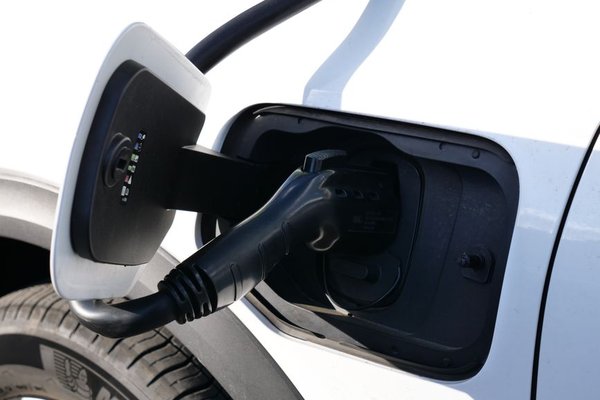
An EV car charging cable is the removable lead that carries electricity between a compatible chargepoint and the vehicle’s charging inlet. It does not make the car charge faster by itself: its connector, current and phase rating must be suitable for the car and the chargepoint, while the lowest supported charging rate sets the practical limit.
How do I know which charging cable fits my electric car?
Start with the charging inlet shown in your vehicle handbook or manufacturer information, then check the socket on the chargepoint you intend to use. The connectors at both ends of the lead must physically and electrically match those two points.
For UK and European AC charging, Type 2 connections are widely used, but check your exact vehicle rather than buying by appearance. Rapid DC charging normally uses the charger’s own tethered lead rather than the removable cable kept in the boot.
Think of ev charging cable selection as a three-part match:
- Car end: confirm the inlet type your vehicle accepts for AC charging.
- Charger end: check whether your home unit has a socket for a removable lead or a permanently attached cable.
- Lead specification: make sure the connector layout, current rating and phase capability suit the car and charger.
If you are buying your first ev charge cable, do not rely on a marketplace title that merely names your car model; match the electrical specification as well.
What power rating should my car charging cable support?
Choose a cable that can safely carry at least the maximum AC current the car and chargepoint may use together. A higher-rated cable does not force extra power into the car; it simply means the lead is not the limiting part of a compatible charging setup.
A typical UK single-phase home wallbox may be described as 7 kW or 7.4 kW. If the charger can supply 7.4 kW but the car’s onboard AC charger accepts less, the car sets the rate. If the car could accept more but the home chargepoint supplies less, the chargepoint sets it instead.
Phase matters too. A three-phase cable can support compatible three-phase charging only where the car, supply and chargepoint allow it; it does not turn a single-phase home supply into three-phase charging. Read the amp and phase specification and compare it with the vehicle and charger documentation. Among common ev charging cable types, connector shape alone is not enough information.
Do I need a different cable for public and home charging?
Not always. If your home chargepoint and the public AC post both use the same socket standard as your car, one correctly specified removable cable can often serve both places.
A socketed home unit expects you to connect your own cable, and many public AC posts work the same way. Rapid DC chargers generally provide a heavy tethered lead because the cable and connector are part of the charger.
Length is where home and public needs can diverge. A lead that easily reaches a wallbox beside your drive may be awkward at a public bay where the charging post sits behind or to the side of the vehicle. If your parking arrangement genuinely needs extra reach, compare a 10m ev charging cable with the route the lead must take before buying; do not choose length only because more metres sound more flexible.
A longer lead should not be crushed by a tyre, trapped under a garage door or stretched across a pedestrian route. Extra length is not automatically useful length.
How often should an EV car charging cable be inspected?
Give the cable a quick visual check before use and examine it more closely at regular intervals, especially if it is used outdoors or carried in the boot. Stop using it if the connector, pins, outer sheath or strain relief appears damaged, loose, cracked, burnt or contaminated in a way that cannot be safely cleaned according to the manufacturer’s instructions.
Do not dismantle the plug or cable to inspect it. Check the full sheath, both connector bodies and the points where the cable enters each plug. Electrical faults inside a connector are not a DIY repair job; replace the lead or have the equipment checked by a competent professional.
Storage affects how easy those checks are. A cable left in a wet, gritty heap is harder to inspect than one kept clean and loosely coiled, and an ev charging cable holder can keep a regularly used home lead off the ground when the charger design allows it.
- Before connecting: look for cuts, crushed sections, damaged pins, moisture or debris.
- While charging: do not continue if the connector is loose, visibly overheating or giving repeated charging errors.
- After use: disconnect as instructed by the vehicle and charger maker, then store the lead without sharp bends or heavy objects on top of it.
When does buying a different charging cable not solve the problem?
A new cable does not fix every charging limitation. If your car accepts less AC power than the wallbox can provide, a higher-rated lead will not raise the vehicle’s onboard charging limit. If the home chargepoint is tethered, buying another removable lead may add nothing at home. In a rented property, changing the fixed chargepoint, cable route or electrical installation can require the landlord’s permission, so a different lead is not a substitute for that decision.
Length can also create false confidence. A photograph of a 10 m or 20 m lead laid neatly across an empty drive can look convenient, but that idea only works in a photograph if the real route crosses a public pavement, sits where vehicles drive over it or creates a trip hazard. Likewise, an extension arrangement is not a cure for a badly located chargepoint. If your cable repeatedly fails to reach without being stretched, the sensible fix may be a properly planned charging position rather than simply adding more lead. Faults in the wallbox, socket or vehicle also need the correct electrical or vehicle diagnosis, not another cable.
What should I check before buying?
Write down the car inlet, charger socket, maximum AC charging rate, phase requirement and the real cable route in your normal parking position. If you are considering a long ev charging cable, add only the length you genuinely need and keep it clear of wheels, doors and walkways.
Frequently asked questions
Can I use a household extension lead to charge an electric car?
A household extension lead is not a substitute for purpose-designed EV charging equipment. Use the charging method approved by the vehicle and equipment manufacturer, and have any fixed home charging installation carried out by a suitably qualified electrician.
Can I leave an EV charging lead outside?
Use and store the lead according to its manufacturer’s environmental rating and instructions. Even where outdoor use is permitted, keep connectors protected from dirt, standing water and avoidable physical damage when the cable is not connected.
Is a longer charging cable slower?
A correctly specified, compatible cable should be chosen for its connector, current and phase rating as well as its length. Do not assume that adding metres changes the charging rate; the car, chargepoint and cable ratings together determine what can be delivered safely.
Should I coil the cable tightly after charging?
Store it without sharp bends, kinks or heavy pressure on the sheath and connectors. A loose coil is easier to inspect and reduces unnecessary mechanical strain compared with forcing the lead into a tight loop.
Can a higher-rated cable make my car charge faster?
Not by itself. If the car or chargepoint already limits AC power below the cable’s rating, fitting a lead with a higher rating does not increase that lower limit.
The right EV car charging cable is the one that matches the vehicle inlet and charger, carries the required current and phase, and reaches without creating a poor cable route. Check those points in that order, then treat storage and inspection as part of normal charging rather than as an afterthought.