
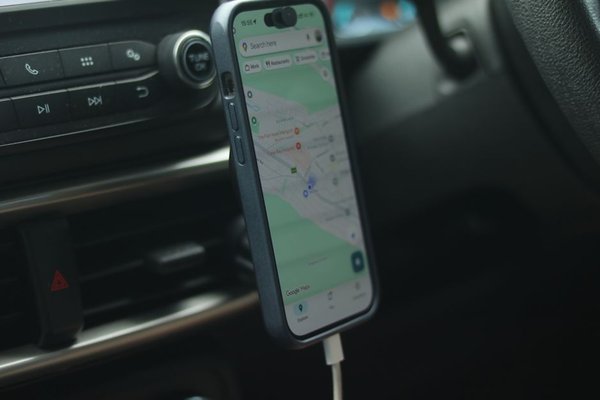
How do I find an ev charging station that suits my stop?
To find an ev charging station, start with your car’s connector, then filter by charging speed, live status, access hours and payment method. Check the operator’s latest information before setting off, and make sure any parking rule fits the time you expect to stay rather than choosing the nearest pin on a map.
A useful charge point is not simply the closest one. It must suit your car, your arrival time and the length of your stop.
That reference figure uses a 7.4 kW charging rate: 7,400 W ÷ 1,000 = 7.4 kW; 7.4 kW × 1 hour × 24.5p/kWh = 181.3p, or about £1.81 for one hour. The £189 annual figure assumes two charging hours a week for 52 weeks: 7.4 kW × 104 hours × 24.5p/kWh = £188.55, rounded to £189. It is an energy-arithmetic reference using the July 2026 domestic cap rate, not a prediction of a public charge point tariff; public sites use the tariff they display.
Which details should I filter when searching for an EV charging station?
Filter first for physical compatibility, then for the practical conditions of the stop. Connector type, advertised power, live availability, opening hours, payment method and parking restrictions matter more than a map pin that happens to be a few streets nearer.
Start with the connector your car accepts. A location is useless if the charger does not match the car, and an adapter should never be assumed unless the vehicle manufacturer supports it. Then use advertised charging power to narrow the results.
A sensible search process is:
- Confirm the connector: Check the vehicle handbook or manufacturer information, then filter the map or network app to show only connectors your car can use.
- Filter for suitable power: Match the charger’s advertised kW rating to your car’s charging capability and the time you expect to stay.
- Check live status: Prefer sites showing a current operational state and available connectors rather than relying only on a static location listing.
- Read the access rules: Check opening hours, barriers, private-site restrictions and whether the charger sits inside a hotel, retail park, workplace or other controlled site.
- Check payment before travelling: Look for contactless payment, app requirements, account requirements or any network-specific method you may need at the charger.
- Read the parking conditions: Make sure the permitted stay is long enough for the charging session you intend to have, and check whether parking conditions are separate from the charging session.
For broader planning, the main ev charging stations guide helps explain site types before you narrow a search. For a short stop, also check ev quick charging stations rather than assuming every location offers the same useful rate.
Combine filters where the search tool allows it. A site can be technically compatible but still fail on access, payment or parking, and ev charging stations can range from motorway stops to destination chargers.
How can I check whether a charge point is working before I arrive?
Use the most recent live-status information available from the network operator or mapping service, then check again shortly before departure if the stop is important. A charger shown on a map is not the same thing as a charger reported as operational and available now.
Look for a status such as available, in use, unavailable or out of service, and note when that status was last updated if the service shows a time. If several connectors are listed at one site, check the connector that matches your car rather than treating the whole location as available.
- Check whether the site has more than one compatible connector, which gives you a fallback if one bay is occupied or one unit is unavailable.
- Read recent operator notices for planned maintenance or temporary access changes.
- Where a site is inside a car park, hotel or retail location, verify that the premises will be open when you arrive.
- If the stop is critical to completing the journey, identify a second compatible site before leaving.
User reports can help, but they should support rather than replace current network information because faults and access arrangements can change.
How do I compare charging speed with the time I plan to stop?
Compare the charger’s advertised kW rating with the maximum rate your vehicle can accept on that connector, then ask how long you will genuinely be parked. Choosing a faster charger than the car can use does not make the car charge above its own limit.
For a short journey break, faster DC charging may suit the stop because the aim is to add useful range while you are already pausing. For a longer meal, overnight stay or day visit, a slower destination charger can still be entirely practical because the car remains parked for longer.
Do not judge the stop from the charger label alone. Battery temperature, state of charge and the vehicle’s charging curve can change the rate during a session, so the advertised maximum is not guaranteed throughout. Plan with some margin.
For overnight travel, hotels with ev charging stations can be useful because the car may have several hours to charge while parked. For a brief motorway stop, ev quick charging stations are more relevant, but the connector and the car’s own DC charging limit still decide whether the advertised power is useful to you.
What should I verify about access, payment and parking rules?
Verify all three before you commit to the stop because they are separate conditions. A working charger can still be unusable if the car park is closed, the payment method is unavailable to you or the parking limit is shorter than the session you need.
Access is the first check. Some chargers sit on publicly accessible land at all hours; others are inside retail, hotel, workplace or gated car parks with opening times. If the site description mentions customers, guests, employees or permit holders, do not assume public access.
Check payment in advance. If the listing shows contactless card payment, an app or a network account, make sure you can use that method before you arrive.
Parking rules deserve a separate read because charging and parking are not the same permission. Check maximum-stay signs, registration requirements and any site-specific validation process when you arrive. If the charger is at a hotel, review hotels with ev charging stations before planning an overnight stop, because guest access and public access are not always the same thing.
When does this search method still fail in the real world?
A careful search reduces avoidable mistakes, but it does not make a public charging stop certain. Live data can lag behind the charger, a unit can fail after you check it, another driver can occupy the only compatible bay, or a car park can apply access conditions that are clearer on site than they were in the listing. A station can look perfect in a photograph and still be useless to you because the connector is wrong, the bay is blocked, the premises are closed or the payment process will not work with what you have available.
The method also fails if you plan with no fallback. On an unfamiliar route, treating one charger as the only acceptable stop leaves no room for a fault, queue or access problem. If the remaining battery level gives you little flexibility, choose a route with another compatible site within practical reach. Do not stretch the plan because an app showed one green availability symbol earlier in the day. The sensible aim is not to predict every problem; it is to remove the ones you can check before you travel.
Frequently asked questions
Should I use one charging app or several?
One app may be enough for a familiar local network, but several sources can be useful on a longer journey because coverage and live-status detail vary. Keep the operator’s own information available for a stop that is important to the route.
Can I rely on contactless payment at every public charger?
No. Check the payment information for the specific charger before travelling because payment methods differ by network and location. If an app or account is required, install or set it up before you depend on that site.
Is the nearest charger usually the best choice?
Not necessarily. A slightly more distant site can be the better stop if it has the right connector, suitable power, reliable access and more than one compatible charging point.
Should I plan a backup charging stop?
Yes when the journey depends on charging away from home. A second compatible site gives you an alternative if the first charger is occupied, unavailable or inaccessible when you arrive.
Do I need to check parking signs even if I am charging?
Yes. Charging a car does not automatically cancel the car park’s access, maximum-stay or registration conditions. Read the on-site signs when you arrive and follow any separate validation process.
To find an ev charging station reliably, narrow the search by compatibility first, then test the stop against live status, time, access, payment and parking. A route with a suitable backup is more useful than a route built around one apparently perfect map pin.
Confirm what the car can use, what the site allows and what has changed before you set off.