
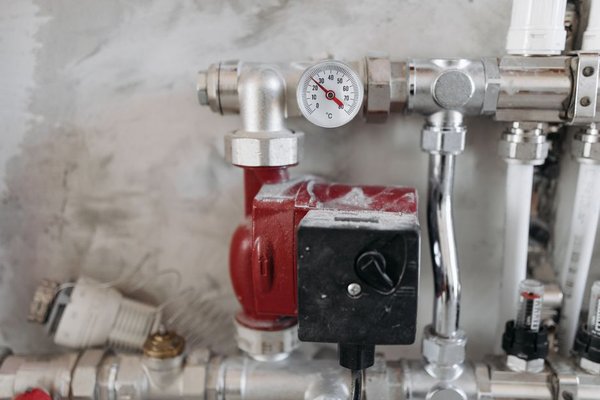
Is bleeding central heating pump air safe to do yourself?
Bleeding central heating pump air is only a suitable household task if the specific pump has a user-accessible manual vent and its instructions permit it. Switch the heating and pump off, let everything cool, and follow those instructions exactly. Never open a boiler casing or loosen an unidentified fitting; ask a heating professional instead.
A rattling or gurgling pump can make a cold house feel like a bigger problem than it is. The useful first question is not how to open the pump, but whether your particular model needs manual venting at all.
Why does air get trapped in a central heating pump?
Air can enter a wet central heating circuit when it is filled, drained, topped up or serviced. Some air also comes out of the water as its temperature changes, and it may collect around the pump or at high points in the pipework.
The central heating pump circulates heated water through radiators and pipework. When air interrupts that flow, the impeller may sound unusually rough and radiators may warm unevenly. However, the pump is only one place where air can collect; releasing air from a radiator or a designated system vent may be the correct remedy instead.
How much electricity does the pump use?
The figures above use an illustrative 40 W pump running for six hours a day on all 365 days of a year. The calculation is 40 W ÷ 1,000 = 0.04 kW; 0.04 kW × 1 hour × 26.32p/kWh = 1.0528p, rounded to 1.05p per hour. For the year, 0.04 × (6 × 365) × 26.32p = 2,305.632p, or £23.06 at the October–December 2026 average electricity cap rate.
Use your own pump’s rating, operating hours and tariff to check the example; some pumps vary their power draw. The cap rate also varies with region and payment method.
What signs suggest a heating pump needs bleeding?
Intermittent gurgling, rushing-water sounds and uneven heat can suggest air in the system, particularly after heating work. They do not prove that a pump has a manual vent or that opening it will solve the problem.
- Gurgling after refilling: water and air may still be moving through the circuit.
- Radiators partly cold: trapped air in a radiator or pipework may be restricting flow.
- Unsteady circulation sounds: a pump may briefly sound rough when bubbles pass through.
- Repeated pressure loss: investigate a possible leak or expansion issue rather than bleeding repeatedly.
A noisy central heating pump might instead have worn bearings, an obstruction or an unsuitable control setting. Note when the sound occurs and whether the heating actually works; those details help a professional separate an air problem from a mechanical or system fault. For related symptoms, see central heating pump noise.
Should the heating be switched off before bleeding the pump?
Yes, switch the heating off and allow the pump and surrounding pipework to cool before any inspection. If the manufacturer explicitly allows manual venting, isolate the pump’s electrical supply as its instructions direct and check that the procedure is appropriate for your installation.
Never work on a hot, pressurised fitting or remove a boiler cover to reach a built-in pump. Water escaping near electrical parts, especially from an unfamiliar screw, is a reason to stop rather than experiment. A landlord or managing agent should arrange any work that falls under their maintenance responsibilities.
Safe checks and conditional manual-vent steps
- Identify the pump: read its brand and model from an accessible label without removing any appliance casing. Find the manufacturer’s instructions for that exact model.
- Check the approved method: look for an explicit manual-vent procedure. If the pump is self-venting, enclosed in a boiler, inaccessible, leaking or not clearly identified, do not attempt to open it.
- Shut down and cool: turn the heating off, allow water and components to cool fully, and use the isolation method stated by the manufacturer. Do not touch wiring or electrical terminals.
- Prepare the area: if the approved vent is safely accessible, place a cloth where the instructions indicate and keep water away from electrics. Stop if there is damaged insulation, corrosion, unusual pressure or no safe access.
- Follow the vent instruction only: on a model that expressly allows this, ease the identified vent screw only as far as its instructions say. Never remove an unknown plug or dismantle the pump. Stop immediately if water sprays, remains hot or flows uncontrollably.
- Close and inspect: secure the vent as instructed once air has escaped and the specified sign of venting appears. Check for drips before restoring the system using the manufacturer’s restart guidance.
- Recheck operation: only after the fitting is dry and secure, run the heating normally and listen for changes. If the noise, pressure problem or leakage continues, switch off and seek help.
Some models of central heating circulation pump use automatic air removal, so the correct action is to leave their housing untouched and have the wider circuit assessed.
How can you tell when the trapped air has been released?
On a model designed for manual venting, the manufacturer’s procedure normally describes the change from escaping air to a controlled sign that water has reached the vent. In everyday use, reduced gurgling and more even radiator warmth can support that conclusion, but neither is proof of a sound pump.
Check the system pressure using the boiler’s normal display or gauge without opening a casing. Compare the reading with the range given in your boiler instructions; do not guess a universal pressure target or keep topping up a system that loses pressure. If you notice fresh drips at the vent or anywhere near electrics, turn the heating off and get it checked.
What should you do if the pump stays noisy after bleeding?
Stop repeating the same procedure. Persistent central heating pump noise may come from incorrect circulation, a blockage, a faulty component or air elsewhere in the system, and another turn of a screw can introduce a leak without addressing the cause.
- Record the pattern: note whether noise happens at start-up, constantly, or only when particular radiators heat.
- Check visible information: read any error code and the pressure display, then use the boiler and pump manuals.
- Look for external symptoms: cold radiators, visible leaks or frequent pressure drops are useful clues, not invitations to dismantle parts.
- Get qualified help: ask a competent heating professional to check hydraulic faults and the pump itself. Any work on gas appliances must be carried out by a Gas Safe registered engineer.
For a structured symptom checklist, see central heating pump problems. Do not change pump settings at random; even when noise changes, circulation can suffer.
When will bleeding the pump not fix the noise?
Bleeding is not a universal cure for a heating system that knocks, hums or leaves radiators cold. It will not repair damaged bearings, restore a failed motor, remove sludge from a blocked circuit or fix a persistent leak. If the pump is self-venting, the idea of finding a convenient screw and releasing air may be wrong from the start.
It is also not a sensible DIY job when the circulator is inside a boiler casing, when access requires electrical work, or when the fitting is hot, corroded or difficult to identify. A neat photograph showing a screwdriver on a pump leaves out the model instructions, the water temperature and the risk of spray near live components. Those omissions matter more than the photograph.
In rented accommodation, report the fault rather than altering equipment your landlord is responsible for maintaining. In an owned home, repeated pressure loss or ongoing leaks require diagnosis, not another bleeding attempt. If you cannot confidently verify that the manufacturer permits the procedure, leave the pump closed and arrange an inspection.
Frequently asked questions
Can every circulation pump be bled using a screw?
No. Some units have a specified manual vent, while modern self-venting models may not need one. Follow the instructions for your exact model rather than a generic photograph.
Can I bleed a pump hidden inside a combi boiler?
Do not remove the boiler casing to reach a pump. Contact the boiler manufacturer or a suitable heating professional; work involving gas appliances must be done by a Gas Safe registered engineer.
Why are my radiators still cold after the pump goes quiet?
Air may remain elsewhere in the pipework, or circulation may be restricted for another reason. Check the appliance’s normal display and seek an assessment rather than assuming the pump needs opening again.
What if water keeps leaking from the pump vent?
Switch off the heating and do not continue operating a leaking fitting, particularly near electricity. Have the seal, vent or pump inspected; repeated tightening without the correct instructions can cause damage.
Will bleeding the pump reduce my electricity bill?
Removing air is a troubleshooting measure, not a quantified electricity-saving upgrade. For perspective, a hypothetical 40 W pump running six hours daily costs £23.06 a year at 26.32p/kWh for the October–December 2026 cap period; your actual use may differ.
If the manual confirms an accessible manual vent, careful shutdown and the exact approved procedure are the starting points. Otherwise, leave the housing closed, record the noise and pressure symptoms, and get the fault assessed before it becomes a leak or an interrupted heating supply.