
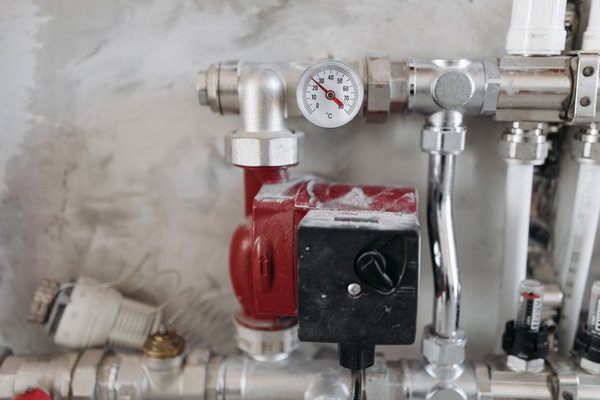
What should my boiler central heating temperature be?
Set the boiler central heating temperature with the radiator or central-heating flow control, not the room thermostat. On a combi boiler, 60°C is a reasonable starting trial if its manual permits it; raise it if rooms remain cold. With a separate hot water cylinder, do not lower a shared boiler flow setting below 65°C.
The flow dial changes how hot the water entering your radiators can become, not the room temperature you request. Identify your boiler type before adjusting it. The calculation below is an illustrative gas-input example, not a prediction of anyone’s heating bill.
Which boiler control adjusts radiator flow temperature?
Look for a radiator symbol or central-heating temperature setting, sometimes inside an on-screen menu. Read your model’s user manual before turning a dial, because controls for tap water and heating can sit next to each other. A wall-mounted room thermostat does not set the water temperature leaving the boiler.
Flow temperature: the temperature of water leaving the boiler for the radiators. Water returns cooler after delivering heat to the rooms, and this return temperature affects condensing-boiler efficiency.
The label central heating boiler temperature usually means radiator flow, but the manual takes precedence.
The example above assumes 10,000 W of gas input continuously, not a manufacturer’s rated output or the boiler’s electrical consumption. The calculation is 10,000 W ÷ 1,000 = 10 kW; 10 kW × 1 hour × 7.97p/kWh = 79.7p for an hour. At one such hour per day for 365 days, 10 × 365 × 7.97p = 29,090.5p, or £290.91 a year, using Ofgem’s October–December 2026 average Direct Debit gas unit rate. Real burners cycle and modulate; this assumption is not a household annual forecast. Standing charges and boiler electricity are excluded.
How do flow temperature and room thermostat settings differ?
The room thermostat asks for an air temperature, such as 19°C; the boiler dial limits the hot water sent towards the radiators. Raising the room thermostat does not directly raise the flow temperature. Radiator thermostatic valves, where fitted, regulate individual rooms rather than that boiler-wide limit.
Readers looking up central heating temperature often encounter these separate settings together. You can keep a comfortable room target while testing whether cooler radiators still reach it. If the room never reaches its target, reducing flow further will not resolve the problem.
A radiator need not feel very hot if the room warms normally. Check that the heating is scheduled to run, the thermostat is calling for heat and relevant radiator valves are open. The ideal central heating temperature depends partly on radiator sizes, insulation, outside weather and the rooms you need to heat.
Can a condensing boiler run with a lower flow setting?
Often yes, especially a combi boiler with an independent central-heating flow adjustment. Cooler water returning from the radiators can help the boiler condense water vapour in its exhaust and recover more heat. However, low flow can leave rooms cold when radiators cannot deliver enough heat.
For a suitable combi, a cautious trial around 60°C is a reasonable starting point when the manual permits it. That is not a rule for every appliance, and it must not be copied onto a shared circuit serving a stored hot water cylinder. The central heating water temperature adequate in mild weather may not be enough during a cold spell.
How to test the flow setting safely
- Confirm the boiler type: check that it is a combi without a separate hot water cylinder and find its approved heating-flow control in the user manual.
- Note the original setting: record the number displayed and the room thermostat’s target before making a change.
- Make a cautious adjustment: if permitted, try about 60°C on the radiator circuit; do not enter installer or service menus.
- Check the rooms: allow a normal heating period, including colder rooms, and see whether they reach their thermostat targets.
- Respond to poor results: increase the approved flow setting in small increments if rooms stay cold, or restore the original setting.
- Record the conditions: write down the setting, outside weather and room comfort so that your next test has context.
What changes when the home has a hot water cylinder?
A regular or system boiler may supply both radiators and a separate hot water cylinder through a shared flow setting. Energy Saving Trust advises keeping that boiler flow at no less than 65°C so the stored water can reach a safe 60°C. A 60°C combi radiator tip should not be applied automatically to this arrangement.
The cylinder thermostat typically targets 60°C stored water, while the boiler must supply hotter water to its cylinder coil. A lower shared boiler setting may stop the cylinder reaching that temperature and increase the risk of harmful bacteria. This is a safety requirement, not an optional comfort preference.
Some installations have independently controlled circuits, but the existence of two displays does not prove that they are independent. If the layout is uncertain, leave the setting alone and ask a competent heating professional. Our guide to central heating water temperature is useful only when you also identify whether the system heats stored domestic water.
Which settings should only an installer adjust?
User-accessible radiator flow controls are different from combustion settings, service menus and safety limits. Leave those to qualified professionals and follow the instructions for your exact boiler. Gas appliance work requiring a registered trade must be carried out by a Gas Safe registered engineer.
- Gas valve and combustion adjustments: these require specialist training and equipment.
- Maximum burner output and internal service parameters: changing them can disturb the commissioned setup or warranty conditions.
- Safety sensors, limits and internal pumps: these are not alternatives to the user flow dial.
- Cylinder safety programmes: do not disable hygiene controls to pursue lower radiator temperatures.
Repeated error codes, unexplained pressure loss or radiators that will not heat properly need investigation. In rented accommodation, ask the landlord or managing agent before altering a locked or restricted control; do not open the boiler casing.
How can you check the cost calculation?
Use the gas input in watts, divide by 1,000, multiply by the assumed hours of operation and multiply by the dated gas unit rate in pence per kWh. For two continuous hours at the illustrative 10,000 W input, 10 × 2 × 7.97p = 159.4p, or £1.594, at the October–December 2026 average gas cap unit rate. This is not an estimate of a real boiler’s two-hour consumption.
Ofgem’s regional prices and your own tariff can differ from that national Direct Debit average. Read the rate on your bill, separate standing charges and remember that a modulating burner will not hold the assumed input constantly. A diary of meter readings, room targets and weather is more useful than comparing one warm evening with one freezing evening.
When does lowering the flow dial not work?
A lower setting is not a remedy for undersized radiators, draughts or an already cold home. In a poorly insulated house, radiators may be unable to deliver enough heat to reach the thermostat target. A photograph of a boiler display showing 50°C does not reveal whether the upstairs bedrooms are warm. If a vulnerable person is cold, comfort and safety take priority over an efficiency experiment.
For a regular or system boiler with a cylinder on a shared circuit, copying a combi’s 60°C setting is the wrong advice. The cylinder must reach 60°C, and Energy Saving Trust advises boiler flow of at least 65°C in that arrangement. A tenant may not be allowed to change locked controls, and a landlord remains responsible for required maintenance; do not bypass restrictions or do gas work yourself.
Weather compensation may already vary the setting automatically. A low temperature also cannot fix faulty controls, trapped air or a heating fault. If you do not know how your hot water is produced, leave the control untouched until the system has been identified.
Frequently asked questions
Is 60°C the right setting for every radiator system?
No. It can be a sensible trial for an appropriate combi boiler, but radiator size and weather affect whether rooms warm adequately. Shared cylinder systems require different safety precautions.
Why do radiators feel warm rather than hot?
A reduced flow setting sends cooler water through them. If the rooms still reach their thermostat target, that may be normal; if they remain cold, review the approved setting and seek advice.
Will changing the radiator setting alter my shower temperature?
Many combi boilers have separate radiator and hot-water controls. With a cylinder heated through a shared boiler circuit, the flow setting can affect whether the store reaches a safe temperature.
Does the boiler pressure gauge show flow temperature?
No. Pressure is generally displayed in bar, whereas the flow setting is a temperature in °C. Consult the boiler’s manual to identify each indicator.
Do I need to adjust the dial whenever the weather changes?
Some homes need a higher user-approved setting in colder conditions. Weather-compensating systems may already change flow automatically, so identify the installed controls first.
Choose the correct radiator control, check whether your system heats a cylinder and assess the result by actual room warmth. A careful combi trial may suit one home, while another needs a higher setting. Keep any bill comparison tied to real meter readings and a dated unit rate.