
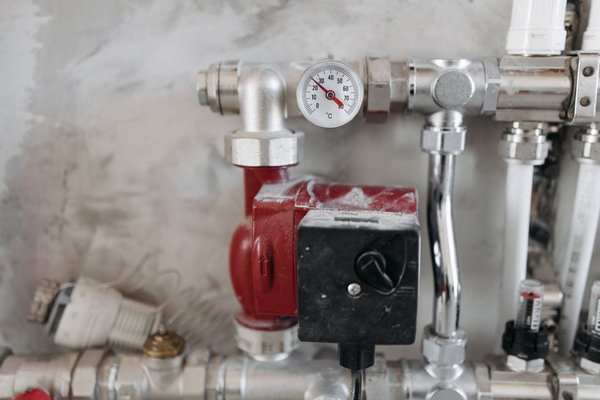
How can I tell if a central heating water pump has low flow?
A central heating water pump may have a flow problem if several radiators warm slowly, distant radiators stay cool, pipe temperatures change sharply around the system, or the boiler runs without heat reaching rooms evenly. Those signs suggest poor circulation, but air, sludge, valves or incorrect settings can cause similar symptoms.
The pump moves heated water around a wet central-heating system, so low flow is often noticed at the radiators first. The useful question is not simply whether the pump makes a noise or feels warm, but whether heat is being distributed as expected.
This example uses a 33 W maximum power input documented for one Wilo Yonos PICO circulator model. The annual figure assumes six hours of operation a day for 365 days: 33 W divided by 1,000 = 0.033 kW; 0.033 kW × 6 hours × 365 days × £0.2611 per kWh = £18.87 a year. Your pump may draw less or more, so use its display, label or manual for your own calculation.
Definition: A central-heating circulation pump is an electrically driven pump that keeps hot water moving from the boiler through radiators or other heat emitters and back again. A modern central heating circulating pump may vary its output automatically rather than running at one fixed speed.
What symptoms suggest a central heating water pump is not circulating properly?
Low circulation usually appears as uneven heat distribution rather than one unmistakable fault. If several symptoms appear together, especially after the system previously heated evenly, the pump or wider circulation circuit deserves attention.
- Radiators close to the boiler become hot while those farther away remain noticeably cooler.
- Upstairs or end-of-run radiators take much longer to warm than the rest of the house.
- The boiler fires, but heat reaches rooms slowly or stops spreading beyond part of the system.
- Pipes near the heat source become hot while return pipes stay much cooler for longer than usual.
- You hear gurgling, rushing or intermittent flow noises at radiators or pipework.
None of these proves the pump itself has failed. Similar central heating pump problems can come from trapped air, closed or sticking valves, poor balancing, debris, sludge or a control issue. Replacing the pump because one radiator is cold is therefore a poor diagnosis.
For the pump’s basic role in the system, see the central heating pump guide. The pattern across several radiators is more informative than one radiator on its own.
Why can radiators be cold even when the pump is running?
A running motor does not prove that enough water is moving through the heating circuit. The pump can be powered and audible while flow is restricted elsewhere, its setting is unsuitable, or its impeller is not producing the circulation required.
One cold radiator points more strongly towards that radiator’s valves, trapped air or a local blockage. Several cool radiators, particularly those farthest from the boiler, can indicate a wider circulation problem. If every radiator is cool, the cause may sit in the boiler, controls or zone valves rather than at the pump alone.
Thermostatic radiator valves also change flow deliberately. When a room reaches its set temperature, its TRV can reduce water passing through that radiator, and a modern pump may reduce output in response. That behaviour can be normal.
Balancing matters too. Nearby radiators can take more flow than distant ones if lockshield valves are badly adjusted, making a healthy pump look weak. If performance changed recently, note what was altered before assuming a component has failed.
Can air in the system reduce pump flow?
Yes. Trapped air can interrupt water movement, create noisy pockets and stop parts of a radiator filling properly with hot water. It can therefore mimic low pump output even when the pump itself is serviceable.
A radiator that is cool at the top and warmer lower down commonly suggests trapped air. Gurgling after a system has been drained and refilled can point the same way. If you know how to bleed a radiator safely, follow the manufacturer’s instructions and check system pressure afterwards where the design requires it.
Do not treat opening or dismantling the pump as the same job as bleeding a radiator. Some modern circulators have a built-in venting programme, while older installations differ. The related bleeding central heating pump guide covers that subject separately.
If air keeps returning, there may be a pressure problem, leak, filling issue or another fault. Repeated venting without finding why the air is entering does not solve the cause.
How can pump settings affect hot-water circulation?
A setting that is too low can leave distant parts of the system short of flow, while one that is unnecessarily high can contribute to rushing water or valve noise. Modern electronic pumps may offer constant-pressure, variable-pressure or fixed-speed modes, so there is no universal “best” setting.
If poor circulation started after somebody changed central heating pump speed, restoring the previous documented setting may help where the manufacturer’s instructions clearly allow it. Otherwise, do not keep increasing output just to make a cold radiator hotter. That can hide balancing, valve or blockage problems.
Systems with thermostatic radiator valves have changing flow demand as valves open and close. Multiple zones, underfloor heating or a hot-water cylinder can add further requirements, so the correct pump mode depends on the installation.
If you cannot identify the pump model or the reason for its current setting, leave the controls alone and have the system checked. A heating engineer can assess actual flow instead of treating the number on the pump as a diagnosis.
When should low-flow symptoms be checked by a heating engineer?
Get professional help when the problem affects several radiators, keeps returning after basic radiator checks, follows boiler or pipework work, or appears with leaks, pressure loss, fault codes or abnormal boiler behaviour. An engineer can separate pump trouble from balancing, valve, blockage and control faults without replacing parts by guesswork.
Arrange an inspection sooner if the boiler repeatedly shuts down, the system cannot maintain heat, the pump is excessively hot, electrical protection trips, or water is leaking near electrical components. Do not remove boiler covers or work on mains electrical connections to investigate circulation.
Where work involves a gas boiler, any task that falls within gas work must be carried out by a Gas Safe registered engineer. Electrical replacement or wiring work should be handled by someone competent for that work and in accordance with the manufacturer’s instructions.
Before the visit, note which radiators heat first, which stay cool, whether hot water is affected, and whether controls or valves were recently changed. That can help distinguish a circulation symptom from proof of pump failure.
When do these symptoms not mean the pump is faulty?
Cold radiators and slow warm-up do not automatically justify a new pump. If only one radiator is affected, a local valve problem, trapped air or blockage is often a more plausible place to investigate. If several radiators changed after the system was drained, air or balancing may be involved. If rooms stop heating because TRVs have closed, the system may simply be responding to temperature controls as designed.
The “turn the pump up and see what happens” fix also works better in a photograph than in a real heating system. A higher setting can make water noise worse and does not remove sludge, open a stuck valve or correct a control fault. In a rented home, do not alter fixed heating equipment beyond normal user controls without the landlord’s permission. If the pump is inside a boiler, behind a boiler casing, leaking, electrically suspect or connected with work that affects a gas appliance, this is not a DIY diagnosis. The useful outcome is identifying the circulation fault, not forcing the pump to take the blame.
Frequently asked questions
Should a central-heating pump run all the time?
Not necessarily. Operation depends on the boiler, controls and system design, and some pumps continue briefly after the burner stops. Check the boiler and pump instructions for the expected behaviour.
Does a warm pump casing prove the pump is working?
No. A pump can feel warm because its motor is energised or because hot system water is passing through it. Temperature alone does not prove that enough water is circulating.
Can sludge make a good pump look weak?
Yes. Debris, sludge or a restricted filter can reduce circulation while the pump motor operates normally. A heating engineer may need to check restrictions as well as the pump.
Can one cold radiator be caused by the circulation pump?
It is possible, but one isolated cold radiator gives less evidence of a whole-system pump fault than several affected radiators. Its valves, trapped air, balancing and local blockage should also be considered.
Is it safe to change a pump setting myself?
Use only normal user controls that the manufacturer identifies for homeowner adjustment. If the pump is inside the boiler, the setting is unclear, or access involves electrical or gas-appliance components, use a competent heating professional.
Low flow is best judged from the pattern of heat around the whole system, not from one noise, one cold radiator or the fact that the pump has power. Rule out simple radiator-level causes, record what the system is doing, and use an engineer where symptoms are widespread or persistent.