
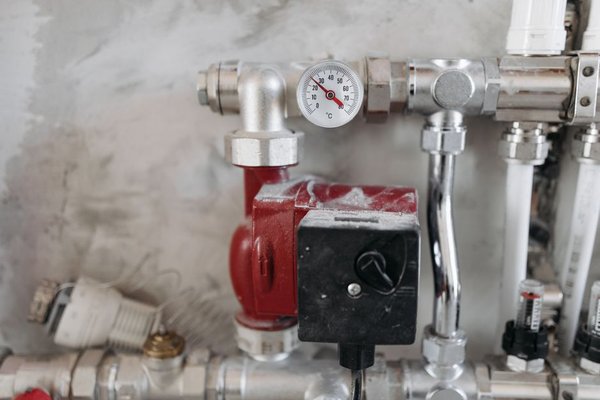
What if circulation pump central heating flow is weak?
If circulation pump central heating flow seems poor, check whether the boiler is calling for heat, which radiators are affected and whether their tops are cold. Trapped air, closed valves and sludge can resemble pump failure. A hot or humming pump does not prove water is circulating. Leave electrical and internal boiler checks to a professional.
Start with the radiator symptoms rather than assuming the pump needs replacing. A few checks without opening equipment can separate a local radiator fault from a problem affecting the whole circuit.
How do you trace a circulation problem around a heating pump?
Trace the fault from the controls towards the radiators, recording where warmth stops. Air, valves, restrictions and pump faults can all produce poor flow, so noise alone is not a diagnosis.
The central heating pump moves water around the wet heating circuit. These numbered checks cover observations and normal user controls, not pump dismantling or boiler repairs.
- Confirm heat demand: Check that the heating programmer is active, the room thermostat calls for warmth and the boiler display shows no obvious fault. A pump may correctly stop when heat is not required.
- Map cold radiators: Note whether one panel, one floor or the whole home remains cold. Check accessible radiator surfaces cautiously; do not touch hot pipework or the pump casing.
- Check user-operated valves: Ensure thermostatic radiator valves are not deliberately turned down. Never force a stuck valve or turn unidentified isolation valves.
- Look for air: A cold radiator top with a warmer bottom suggests trapped air. If permitted, switch heating off, let it cool and follow the radiator manufacturer’s bleeding instructions.
- Read system pressure: Compare the boiler gauge with its own manual’s stated range. Review it again after bleeding; do not repeatedly refill a system losing pressure.
- Observe the next heating cycle: Record which radiators recover and which stay cold. Include whether domestic hot water still works and when the fault began.
- Stop at invasive checks: Persistent house-wide cold radiators, leakage, lockouts or a pump fault display call for professional diagnosis, not removal of screws or covers.
Photograph a readable error message and mention any recent plumbing work. The pattern is useful evidence, but it cannot prove which internal component has failed.
What electricity does the pump use?
The cost block is an illustration based on constant 40 W consumption, the stated maximum input of a Wilo Yonos PICO pump model. Ofgem’s average Direct Debit electricity rate across Great Britain for October–December 2026 is 26.32p/kWh. The working is 40 W ÷ 1,000 = 0.04 kW; 0.04 × 1 hour × 26.32p = 1.0528p, rounded to 1.05p an hour.
Assuming four hours every day for 365 days: 0.04 kW × 4 hours × 365 = 58.4 kWh; 58.4 × 26.32p = 1,537.088p, or £15.37 a year. Your pump’s actual draw, operating hours, tariff and region may differ. This excludes boiler fuel and standing charges.
Can an airlock stop water moving through radiators?
Yes, trapped air can interrupt flow through a radiator or higher pipework. One cold radiator, however, does not establish that the circulator itself is defective.
Air tends to collect at the top of a radiator, leaving that area cool while the bottom warms. A persistent airlock after system maintenance can need professional venting beyond the accessible radiator valve.
To bleed an ordinary radiator safely, turn heating off and let it cool. Where the instructions and your tenancy allow, use the designated radiator bleed valve with a cloth beneath it, opening slightly and closing when water runs steadily. Do not remove the screw or work on hot components.
Check the boiler’s pressure guidance afterwards. Repeated air, recurring low pressure or a leak needs investigation, not endless topping up.
The search term bleeding central heating pump describes a different task from bleeding a radiator. Model-specific procedures in bleeding central heating pump guidance are not an invitation to loosen an unfamiliar pump screw.
Why might the pump be hot but circulation still poor?
A warm casing confirms neither adequate flow nor a working impeller. Heat can reach the pump through surrounding pipework even when a restriction or internal fault limits circulation.
Some pumps display power, settings or error codes that can be read without opening anything. A hum may indicate an energised motor, but does not prove water reaches the farthest radiator. Never touch the casing to test its temperature.
Possible causes include air, debris, a partly shut valve or an unsuitable setting. Changes to central heating pump speed can alter distribution, but experimenting may create noise without solving the blockage. Leave such adjustments to someone assessing the complete circuit.
If one radiator stays cold while others heat, look first at that radiator’s controls and symptoms. If all radiators struggle, a shared flow or boiler-control issue becomes more plausible; neither pattern is definitive.
How can sludge affect a central heating circulation pump?
Corrosion debris can restrict passages through the heating circuit and impede the circulator. A radiator warm at the top but cold at the bottom suggests settled sludge, though the pattern alone cannot confirm it.
A central heating circulation pump must push water through radiator valves, filters and pipework. A working motor cannot overcome every obstruction; replacing the pump without finding a restriction may leave the symptom unchanged.
Worcester Bosch identifies bottom cold spots as a possible sludge sign. Ask a heating engineer to inspect water quality, filters and valves before approving cleaning or parts. A flush is not a universal remedy for central heating pump problems.
Do not drain the circuit or open filter housings yourself. Hot pressurised water can escape, and unauthorised work may affect a warranty.
What checks should be left to a heating professional?
Electrical testing, pump access, draining, balancing and checks inside a boiler casing require competent trade assessment. Gas work must be carried out by a Gas Safe registered engineer qualified for that appliance.
A professional can establish whether the pump receives the correct signal, whether its motor and impeller operate, and whether a valve, filter or pipe restricts flow. If central heating pump valves are mentioned, ask which are service components rather than user controls.
Describe recurring noise and its timing; noisy central heating pump symptoms can help explain what you heard, but not what needs replacing. Ask for the finding behind each proposed repair.
- Request the fault explanation and an itemised quotation before work.
- Ask whether the repair follows manufacturer instructions and preserves any warranty.
- Report leaks, repeated lockouts or electrical smells promptly.
There is no defensible fixed repair-price figure without an assessment of access, parts and the actual fault. The illustrative electricity figure above is not a repair estimate.
When does home troubleshooting not work in a rented property?
In a rented home, recording the symptoms and contacting the landlord or managing agent may be the correct limit of your involvement. Adjusting an ordinary room thermostat is not the same as having permission to bleed radiators, refill a sealed heating circuit or arrange boiler repairs. Check the tenancy and appliance instructions before doing even a familiar job. A photograph of a cold radiator or fault display shows what happened; it does not prove the pump is broken.
In a flat with communal heating, the problem may be in shared plant or a heat interface unit outside your control. Someone with a new boiler may also put warranty cover at risk by opening covers or changing service settings. Generic online repair videos rarely show those restrictions.
Temperature patterns are clues, not tests of internal flow. Bleeding will not remove sludge at the bottom of a radiator, and replacing a sound pump will not open a stuck valve. If the proposed fix depends on electrical access, pressurised pipework or guessing from a noise, stop and refer it to the responsible professional.
Frequently asked questions
Should all radiators warm at precisely the same time?
No. Radiator size, valve settings, pipe routes and balancing affect warm-up speed. A consistently cold radiator warrants a closer look, but a small difference in timing does not prove pump failure.
Can listening tell me whether a circulator works?
Not reliably. Quiet operation can be normal, while a humming motor may still move too little water. Check the full symptom pattern and any visible error code.
Is repeatedly bleeding one radiator normal?
Recurring trapped air deserves investigation, especially if boiler pressure also drops. Do not keep releasing air and adding water without establishing why the problem returns.
Can a thermostatic valve mimic pump failure?
Yes. A turned-down or stuck radiator valve may leave one panel cold while the other radiators heat. You can check its ordinary setting but should not force or dismantle it.
Is the pump always visible next to the boiler?
No. Some boilers have an internal circulator behind the casing; other systems have an external unit. Never remove an appliance cover just to find it.
Work from heating demand to radiator symptoms before assuming the pump is faulty. Where safe user checks cannot explain the poor circulation, accurate notes let a heating professional investigate without guesswork.