
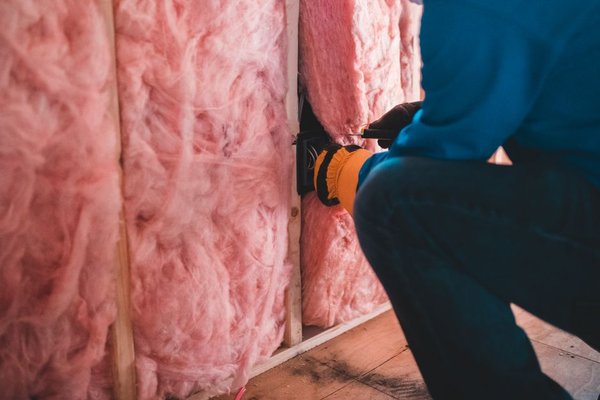
Which upgrades can grants for insulating your home cover?
Grants for insulating your home can potentially fund loft, cavity-wall, solid-wall, floor and roof insulation, but the exact measure depends on the property, the scheme and the survey. Funding is not automatic: construction type, existing insulation, tenure and technical suitability usually decide what can actually be installed.
The useful question is not simply whether insulation funding exists, but whether your house has a measure that a live scheme is allowed to fund. A home insulation grant can therefore lead to different work in two neighbouring homes even when the households appear similar.
Can grants pay for loft insulation?
Yes, loft insulation is one of the measures that can be funded where the property has an accessible loft and the existing insulation is missing or below the required standard. A survey still matters because damp, unsafe access, roof defects or an already well-insulated loft can change the recommendation.
For a conventional cold loft, the work normally means insulating at ceiling level. A room-in-roof, converted loft or flat roof is a different construction and may need a different specification rather than simply laying mineral wool between and over joists.
Energy Saving Trust figures updated in 2026 put professional installation from 0 mm to 270 mm at about £750 for a typical Great Britain home. Using an annual reduction worth £190 at the Ofgem average gas unit rate of 7.33p/kWh for the July to September 2026 cap period implies about 2,592 kWh of avoided gas use a year; that annual figure assumes an otherwise comparable gas-heated home and an uninsulated loft taken to 270 mm.
Can insulation grants cover cavity walls?
They can, provided the walls actually have a suitable cavity and an installer considers that cavity safe to fill. A grant cannot turn a solid wall into a cavity wall, and it should not override moisture, exposure or construction problems identified during assessment.
Cavity-wall work fills the gap between the two leaves of an external wall. Many properties built from the 1920s onward have cavity construction, but age is only a clue; extensions, mixed wall types and previous work can make the same house more complicated.
Do not accept a funding offer as proof that the measure is technically right. Existing damp or defects should be understood before insulation is installed, and a house with previously filled cavities may need a different measure.
People searching for home insulation grants uk should remember that “UK” does not mean one identical application route. Rules, delivery bodies and available measures can vary by nation and by the programme operating at the time.
Is solid-wall insulation included in home insulation funding?
Solid-wall insulation can be included in some funding routes, but it is more property-specific than a straightforward loft top-up. The home may need internal wall insulation, external wall insulation or no wall treatment until damp, ventilation or heritage constraints are resolved.
Older brick, stone and traditional buildings need particular care because the wall may manage moisture differently from a modern cavity wall. Listed status, a conservation area, decorative façades, narrow rooms and existing services can all affect whether an internal or external system is practical.
The funded measure should follow the building, not the other way round. A photograph of a neat external render system does not prove that the same approach belongs on a solid-stone terrace or a listed façade.
Regional guidance is worth checking separately. A reader comparing home insulation grants scotland or grants for home insulation ni should not assume that an England or Wales route has the same eligibility or measure list.
Can grants cover floor or roof insulation?
Yes, floor and roof measures can be covered in some programmes where they are suitable and included in the scheme’s scope. The exact method depends on whether the floor is suspended timber or solid, and whether the roof space is an ordinary loft, a room-in-roof or another construction.
Suspended timber floors may be insulated below the floorboards where access and ventilation can be maintained. Solid floors are a different job, often tied to major floor work, and adding insulation without considering floor levels, moisture and thresholds can create problems.
Roof insulation needs the same distinction. Insulating at loft-floor level, insulating sloping rafters in a room-in-roof and treating a flat roof are not interchangeable jobs.
How does your property’s construction affect which insulation is funded?
Construction is often the deciding factor because grants fund an appropriate measure, not a keyword on an application form. Wall build-up, roof type, floor type, access, moisture condition and existing insulation can all change what an assessor recommends.
A survey may find several construction types in one property: an original solid-wall house, a later cavity-wall extension, a suspended timber front room and a solid concrete kitchen floor. Funding may therefore apply to one part of the home but not another.
- Wall type: cavity and solid walls need different systems and checks.
- Roof form: an open loft, converted loft and flat roof require different approaches.
- Floor build-up: suspended timber and solid floors cannot be treated as the same job.
- Moisture condition: leaks, penetrating damp and ventilation issues may need attention before insulation.
- Tenure and permissions: tenants should not authorise work that belongs to a landlord, freeholder or building owner.
If you are looking for grants to insulate your home, start with the building’s real construction rather than choosing a preferred measure first.
Which insulation upgrades can a grant potentially cover?
The main possibilities are below. This is a list of measures that can appear in insulation programmes, not a guarantee that every scheme funds every item or that every property is suitable.
- Loft insulation: suitable where an accessible loft needs first-time insulation or a qualifying top-up, subject to roof condition, damp and safe access.
- Cavity-wall insulation: possible where the external walls contain a fillable cavity and the building passes suitability checks.
- Internal solid-wall insulation: an option for some solid-wall homes where reducing internal floor area and moving fittings can be accommodated.
- External solid-wall insulation: possible where the façade, boundaries, detailing, permissions and moisture behaviour allow an external system.
- Suspended-floor insulation: potentially fundable where there is a timber floor with workable access and underfloor ventilation can remain effective.
- Roof or room-in-roof insulation: used where the thermal boundary follows the roof slopes or a converted roof space rather than an open cold loft.
That calculation is £750 divided by £190 = 3.95 years. The £190 annual figure assumes an uninsulated Great Britain loft taken from 0 mm to 270 mm and is equivalent to about 2,592 kWh of avoided gas use a year at 7.33p/kWh in the July to September 2026 Ofgem cap period; a grant that pays some or all of the installation changes the homeowner’s own recovery period.
When might an insulation grant not work for your home?
A grant is not useful if it funds the wrong measure, cannot legally be authorised, or leaves the building with an unresolved moisture problem. A tenant may need the landlord’s agreement. A leasehold flat may have no private loft or external wall that the occupier can alter. A listed building or traditional solid-wall property may need a more careful design than the scheme’s standard package allows.
Some ideas work better in a brochure photograph than in the actual building. External wall insulation can look simple on a blank elevation, but pipes, eaves, windows, boundaries, vents and architectural details all have to be dealt with. Floor insulation can look straightforward until boards cannot be lifted without damage or underfloor ventilation is poor. Loft insulation is a poor first move if the roof is leaking. Funding is not evidence that a measure is suitable. If the survey is vague, ask for clarification first.
Frequently asked questions
Do I have to own my home to qualify for insulation funding?
Not always, because some programmes include rented homes, but the person applying may not have authority to approve building work. Tenants should use the scheme’s required landlord or property-owner process rather than arranging structural changes independently.
Does a grant always cover the whole insulation bill?
No. Some routes can cover the full eligible measure while others may require a contribution or fund only specified work. Check the written offer for the exact measure, contribution and exclusions before agreeing to installation.
Can I choose any insulation installer if I receive funding?
Not necessarily. Many funding routes use approved, registered or scheme-appointed installers and require work to follow programme standards. Using an installer outside that route can mean the work is not eligible for the funding.
What should I do if my home has damp before insulation?
Find the cause before treating insulation as the cure. Leaks, penetrating damp, defective rainwater goods, inadequate ventilation or ground moisture can need separate attention, and covering the symptom can make diagnosis harder.
Can I apply for more than one insulation measure?
Potentially, if the scheme allows multiple measures and the assessment shows they are suitable. The final package may still prioritise certain parts of the building or exclude work that is already adequate.
Identify the construction, let the scheme assess what is genuinely missing, and read the written offer by measure rather than assuming the word “grant” covers the whole house. Good funding matches the upgrade to the building; it does not force a standard insulation package onto every property.