
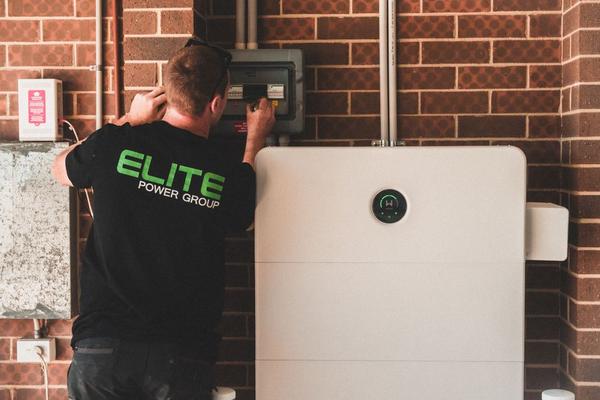
What size battery should a solar panel kit with battery have?
For most homes, the right solar panel kit with battery is sized around the electricity you actually use after sunset, not simply the maximum output of the panels. A battery around 5 kWh may suit lighter evening demand, while 10 kWh or more can make sense where overnight use, electric heating or future demand is higher.
A battery only helps if there is useful energy to put into it and a reason to use that energy later. Start with your evening and overnight consumption, then check whether your panels regularly produce enough surplus to refill the storage.
How much battery storage should a solar panel kit have?
Size the battery around the amount of electricity you want to shift from daytime into the evening and night. Comparing a 5 kWh and 10 kWh usable-capacity target is more useful than simply choosing the biggest battery offered.
Look at half-hourly smart-meter data if you have it. Add the electricity used from sunset until generation begins again, then separate flexible loads such as an EV or dishwasher from loads you genuinely want the battery to cover.
A 5 kWh battery does not necessarily deliver 5 kWh to the house. Manufacturers distinguish between nominal capacity and usable capacity, and the inverter and battery also have conversion losses. Use the usable figure on the specification sheet when comparing a solar panel and battery kit, and ask what reserve level the system maintains.
For an arithmetic example, suppose a 5 kWh system costs £4,600 installed and can displace an average 500 W of grid demand for eight hours every night. The energy is 500 W ÷ 1,000 × 8 hours = 4 kWh a night. At 24.5p/kWh, that is 4 × £0.245 = 98p a night, or £357.70 a year assuming the same 4 kWh shift on all 365 days. This gross grid-offset example does not deduct battery losses or the value of electricity you might otherwise export.
| Household pattern | 5 kWh battery | 10 kWh battery |
|---|---|---|
| Light evening demand | Often enough to cover lighting, refrigeration, broadband and modest appliance use | May leave unused capacity on many days |
| Higher overnight demand | Can empty before morning | Provides more room for longer evening use |
| Solar surplus available | Easier to refill from a modest daytime surplus | Needs more surplus energy to reach full charge |
| Electric heating or heat pump | May be small relative to winter demand | More useful, but can still be insufficient during cold periods |
| Future EV or extra electrical loads | Less headroom for growth | More headroom, provided the array and inverter can support it |
For a home-scale solar panel kit, oversizing storage can be as unhelpful as undersizing it. A large battery that rarely reaches a useful state of charge may not shift more solar electricity.
How do panel watts relate to battery capacity?
Panel watts measure power at a moment in time; battery kilowatt-hours measure stored energy. A 4 kW array and a 5 kWh battery therefore describe different things, and there is no one-to-one rule saying a particular array size must have a particular battery size.
For example, ten 400 W panels have a combined rated output of 4,000 W, or 4 kW. If the array happened to average 2 kW of surplus output for three hours after the house had taken what it needed, that would leave about 6 kWh available before system losses and battery limits are considered.
Real generation changes with season, roof direction, shading and weather. That is why solar panel kits for home should be sized from measured or modelled generation alongside the household load profile, not from panel wattage alone.
What battery chemistry is commonly used in solar kits?
Lithium-ion batteries dominate modern home storage, with lithium iron phosphate, usually shortened to LFP, common in newer stationary systems. Other lithium-ion chemistries are also used, while lead-acid remains more familiar in smaller off-grid and leisure applications.
The chemistry affects usable depth of discharge, cycle life, temperature limits and warranty conditions. Do not compare two batteries only by the large kWh number on the front page; compare usable capacity, continuous output, warranty terms and the conditions attached to that warranty.
A 12v solar panel kit with battery differs from a mains-connected home battery system. It can make sense for a shed, caravan or small off-grid load, but a 12 V leisure setup should not be treated as a shortcut to powering normal household circuits.
Can a solar panel kit with battery power a home overnight?
Yes, if the usable battery capacity and inverter output are large enough for the loads you actually run. The answer depends as much on what you switch on as it does on the kWh printed on the battery.
Take a simple overnight target of 500 W average demand for eight hours. That is 500 W ÷ 1,000 × 8 hours = 4 kWh, so a battery able to deliver at least 4 kWh after reserves and losses could cover that assumed load. Add a 3 kW kettle, electric oven, immersion heater, heat pump or EV charger and the battery can empty much faster, even if its total capacity looks generous.
Also check power, not only energy. A battery may hold enough kWh for the night but still have a continuous output limit below the combined demand of several high-power appliances. If overnight self-consumption is your priority, compare both usable kWh and inverter kW across solar panel kits with batteries.
What happens when the battery is full?
Once the battery reaches its allowed charge limit, new solar generation must go somewhere else. The home normally uses solar first, and any remaining surplus can be exported to the grid if the system and export arrangement allow it.
If export is unavailable or limited, the inverter can reduce solar output rather than continuing to force energy into a full battery. A larger battery delays that point, but only if you have enough later demand to empty it again.
Adding storage does not automatically make every generated kWh useful to you. A well-matched system cycles energy through the battery when that shift is valuable; it does not simply aim to keep the battery full.
When does a solar panel kit with battery not make sense?
It does not make sense just because a brochure shows a full battery at sunset and a house running neatly through the night. That picture can be unrealistic in winter, on a shaded roof, or in a home whose daytime generation is too small to refill the battery after household use.
A rented home is also a poor fit unless the landlord agrees to the roof, electrical and metering work. Flats can be difficult where you do not control the roof or incoming supply. If you expect to move before the battery has delivered enough value to justify its installed cost, the arithmetic may not work for your timescale. A high export rate can also make storing every spare kWh less attractive than exporting some of it.
Do not assume a battery will run the house in a power cut either. Backup operation usually needs compatible equipment and correct circuit design. Electrical work around a home battery and mains-connected solar system should be designed and installed by a competent professional, and an MCS-certified installer should be used where certification is required.
If you are comparing solar panel kits uk packages, ask for these figures: expected annual generation, expected usable battery capacity and the estimated amount of solar electricity that will actually be shifted into later household use. Those numbers expose whether the battery has been sized for your home or simply bundled into a package.
Frequently asked questions
Is a 5 kWh battery enough for a 4 kW solar array?
It can be, but array size alone does not decide battery size. Compare your typical daytime solar surplus with your evening and overnight electricity use, then choose usable storage that can absorb a useful share of that surplus.
Do home batteries work during a power cut?
Not automatically. The battery, inverter and consumer-unit arrangement must support backup operation, and the protected circuits may be limited to selected loads rather than the whole house.
Can I add a battery to existing solar panels later?
Often yes, using a compatible AC-coupled or hybrid arrangement. Compatibility, inverter limits, warranties and metering should be checked before choosing the battery.
What does usable battery capacity mean?
Usable capacity is the amount of stored energy the manufacturer allows you to draw in normal operation. It can be lower than nominal capacity because the battery management system keeps a reserve to protect the cells and meet warranty conditions.
Is a 12 V solar battery suitable for a whole UK home?
Usually not as a direct substitute for a mains-connected home battery. A small 12 V system is better suited to modest off-grid loads, while household circuits require appropriately designed inverters, protection and professional electrical installation.
The useful battery is the one that matches your real after-sunset demand and the surplus your panels can actually produce, not the largest kWh figure in the package. Compare usable capacity, inverter output and your own half-hourly consumption before deciding whether more storage will genuinely be used.