
What are the best uk energy bills saving tips?
The most useful uk energy bills saving tips start with measured kWh, not guesses: cut time on high-wattage heating and hot water first, check heating schedules, calculate appliance cost from wattage and your tariff, then compare meter readings before and after each change so you can see the result.
For the worked examples below, electricity is costed at 26.11p/kWh and gas at 7.33p/kWh, the Ofgem average Direct Debit rates for England, Scotland and Wales from 1 July to 30 September 2026. Northern Ireland has a different energy market, so use the rate on your own bill.
For the wider rules behind unit rates, standing charges and capped tariffs, see energy bill uk. Find the kWh you can remove, put a £ figure on it, then check the meter.
Which energy-saving changes usually cut the most kWh at home?
Start with equipment that combines high wattage with long use: electric space heating, immersion heating and showers can move the meter much faster than a small standby load. These are worked examples at 26.11p/kWh for the July to September 2026 cap period, not promises.
- Shorten an electric shower: An 8.5kW shower used for two fewer minutes once a day removes about 103.4kWh a year. The working is 8.5kW × 2/60 hours × 365 = 103.4kWh; 103.4kWh × 26.11p/kWh = about £27.00 a year at the July to September 2026 cap rate, assuming one shower every day.
- Cut unnecessary portable-heater time: A 2kW heater used for one hour less on 120 cold days removes 240kWh. The working is 2kW × 1 hour × 120 = 240kWh; 240kWh × 26.11p/kWh = £62.66 a year at the July to September 2026 cap rate, assuming that reduction on 120 days.
- Reduce immersion-heater time where your routine allows: A 3kW immersion heater running 30 minutes less on 180 days removes 270kWh. The working is 3kW × 0.5 hours × 180 = 270kWh; 270kWh × 26.11p/kWh = £70.50 a year at the July to September 2026 cap rate, assuming the cylinder still reaches the safe temperature specified by its controls and manufacturer.
- Boil only the water you need: If a 3kW kettle runs for one minute less on four boils a day, the reduction is 73kWh a year. The working is 3kW × 1/60 hour × 4 × 365 = 73kWh; 73kWh × 26.11p/kWh = £19.06 a year at the July to September 2026 cap rate.
- Trim long hours on a heated towel rail: A 150W rail used for four fewer hours on 180 days removes 108kWh. Convert 150W to 0.15kW: 0.15kW × 4 hours × 180 = 108kWh; 108kWh × 26.11p/kWh = £28.20 a year at the July to September 2026 cap rate.
- Chase small always-on loads last: An unnecessary 10W load running continuously uses 87.6kWh a year. The working is 0.01kW × 24 hours × 365 = 87.6kWh; 87.6kWh × 26.11p/kWh = £22.87 a year at the July to September 2026 cap rate, assuming it is safe to switch off and is not supporting heating controls, alarms or medical equipment.
A search for uk energy bill hidden wasters can produce long lists, but your meter decides what matters. In the examples above, cutting a 2kW heater by an hour on 120 days outweighs chasing a tiny load for a few hours.
How can you calculate the cost of an appliance before using it less?
Use the rating plate or a plug-in meter, convert watts to kilowatts, multiply by hours used, then multiply by your electricity unit rate. The formula is watts ÷ 1,000 × hours × pence per kWh; appliances that cycle on and off are better measured because their label wattage may not represent average draw.
A 2,000W heater is 2kW. If it runs for 1.5 hours, 2kW × 1.5 = 3kWh; 3kWh × 26.11p/kWh = 78.33p for that session at the July to September 2026 cap rate. On 90 such days, usage is 270kWh and the cost is £70.50 at 26.11p/kWh for the same cap period, assuming exactly 1.5 hours on each day.
This is the useful part of an energy bill calculator uk approach: change one input at a time. If your tariff is different, use the rate on your statement; for a reusable method, energy bill calculator uk should sit beside your own unit rate rather than an internet average.
Which heating settings are worth checking first?
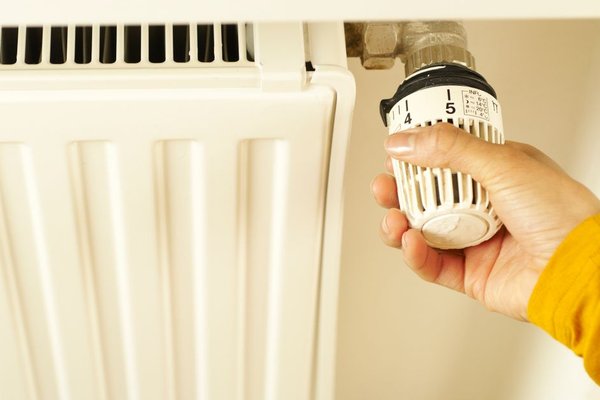
Check the room thermostat, heating schedule and thermostatic radiator valves before changing boiler internals or buying hardware. Energy Saving Trust guidance says the lowest comfortable room setting is commonly 18°C to 21°C, but comfort, health and the building matter, so the useful test is the kWh your home actually uses at a safe setting.
Look for hours when the heating is on but nobody needs that temperature, then make a modest change and record gas use. If a measured change reduces gas use by 5kWh a day across 180 heating days, 5kWh × 180 = 900kWh; 900kWh × 7.33p/kWh = £65.97 a year at the July to September 2026 Ofgem gas rate, assuming the same 5kWh daily reduction for 180 days. That is a measurement example, not a guarantee.
- Do not turn a room thermostat higher because the house feels slow to warm; a higher target does not make the boiler heat the room faster.
- Do not remove boiler covers or alter gas components. Gas work must be carried out by a Gas Safe registered engineer.
- For heat pumps, follow the installer and manufacturer controls rather than copying gas-boiler timing habits.
- If usage looks unusual, check tariff dates and meter readings first. typical energy bill uk gives context, but your own kWh history is the better baseline.
How do you tell whether a saving tip actually changed your bill?
Compare kWh, not just the £ total, because unit rates, standing charges and billing periods can change while consumption falls. Use a before-and-after window long enough to smooth out one unusual day, and compare similar weather and occupancy where possible.
If electricity use falls from 14.2kWh a day to 12.8kWh, the difference is 1.4kWh a day. Over 30 days that is 42kWh; 42kWh × 26.11p/kWh = £10.97 at the July to September 2026 cap rate, assuming the 1.4kWh gap persists for all 30 days. If weather, occupancy or appliance use changed too, do not credit the whole difference to one tip.
The phrase typical energy bill uk gives broad context, but cannot prove your change worked. Record the date, setting, meter kWh and days tested. If a suspected load keeps appearing, uk energy bill hidden wasters is most useful after you have evidence of when that load is active.
When do these energy-saving ideas not work as expected?
Some tips fail because the bill payer does not control the equipment. In a rented home, boiler replacement, fixed wiring, insulation or alterations to controls are not casual DIY jobs; the tenancy, landlord responsibilities and manufacturer instructions come first. In a flat with no loft or accessible cavity, advice about filling those spaces is irrelevant. On prepayment, Economy 7, time-of-use or fixed tariffs, the 26.11p/kWh and 7.33p/kWh examples above may not match your rate.
Some ideas only work in a photograph. Hiding a thermostat behind curtains, boxing in a radiator for a tidy room shot, or placing furniture tightly around a heater can interfere with sensing or heat flow; none is an energy-saving method. Switching off routers, alarms, heating controls or medical equipment simply to remove a small standby load can create a bigger problem than the kWh reduction. If a change needs gas work, fixed electrical work or an alteration your tenancy does not permit, use the appropriate registered trade or get permission.
Frequently asked questions
Does the energy price cap limit my total bill?
No. The Ofgem cap limits unit rates and standing charges on covered default tariffs, not the total pounds you can be billed; using more kWh still raises the total. The examples here use 26.11p/kWh electricity and 7.33p/kWh gas for 1 July to 30 September 2026.
Is 26.11p/kWh the exact electricity rate everywhere in Great Britain?
No. It is an Ofgem average Direct Debit figure for England, Scotland and Wales for 1 July to 30 September 2026, and regional rates vary. Use the rate on your own bill in the formula.
Do standing charges fall if I use less energy?
No, reducing kWh does not remove the daily standing charge while the account remains on a tariff that includes one. Ofgem’s average Direct Debit standing charge is 57.19p a day for electricity and 29.04p a day for gas from 1 July to 30 September 2026, although regional figures differ.
Should I switch off every device at the socket overnight?
No. Only switch off equipment that is safe and practical to disconnect; heating controls, alarms, medical devices, refrigeration and equipment that needs connectivity may need to stay on. Measure the watts first, then calculate the kWh.
The strongest UK energy bills saving tips are the ones you can prove on your own meter: start with high-wattage, long-duration use, calculate the kWh, then test one change at a time. Keep the tariff rate and cap period beside every £ figure so a price change is never mistaken for a consumption change.