
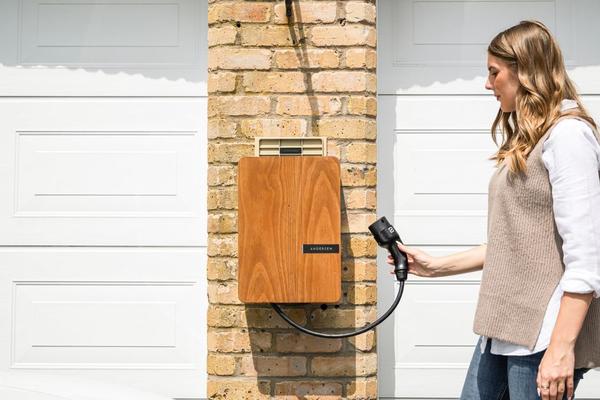
Is a 10m ev charging cable worth the extra reach?
A 10m ev charging cable is worth choosing when your charge point and car socket do not line up reliably with a shorter lead. The extra reach helps with nose-in or reverse-in parking and awkward driveways, but it also means more cable to lift, coil and store after every charge.
Length is useful only when it solves a real parking problem. Before choosing a 10-metre lead, check where the car actually stops, where its charging socket sits, and whether the cable can reach without being pulled tight or routed through a regular walking area.
The working is 7,400 W divided by 1,000 = 7.4 kW, then 7.4 kW × 1 hour × 24.5p/kWh = 181.3p for one hour of charging. The annual figure assumes two charging hours a day for 365 days: 7.4 kW × 2 hours × 365 × £0.245/kWh = £1,323.49 a year at 24.5p/kWh under the July 2026 cap. That is electricity used while the car charges, not an extra charge caused by choosing a longer cable.
What parking layouts suit a 10 m EV charging cable?
A 10-metre cable suits driveways where the car cannot always stop with its charging socket close to the wallbox. It is useful when parking changes between nose-in and reverse-in positions, or when two cars use the same space.
Measure the route the cable must follow, not a straight line between wallbox and car. It may need to drop from the charge point, follow the edge of a drive, curve around the vehicle and reach the socket without being pulled hard at either end.
The main ev charging cable decision is usable reach. A lead that is technically long enough only when stretched tight is not a comfortable everyday fit, but buying several unnecessary metres creates extra cable to handle.
- Nose-in and reverse-in parking: extra reach can let the same charge point serve either orientation.
- Wide or offset driveways: a longer lead can cope with a car that does not always stop directly beside the wallbox.
- Two-car households: useful length depends on which space the EV occupies and where its socket sits.
- Shared walking routes: extra length is not useful if it encourages cable to lie across a doorway, pavement or footpath.
If a 7.5-metre lead reaches cleanly in every normal position, an ev charging cable 10m may add handling without solving a problem. If 7.5 metres forces precise parking, 10 metres gives more margin.
Does a 10 m charging cable have noticeable power loss?
A longer cable has more electrical resistance than an otherwise identical shorter cable, so some additional loss is unavoidable in principle. Whether it is noticeable depends on cable design, conductor size, charging current and manufacturer specification, so a fixed percentage should not be assumed without those details.
The 7,400 W figure above represents the charging load used for the calculation; it does not mean a 10-metre cable itself consumes 7,400 W. Most of that power is being delivered through the charging system to the vehicle.
Compare products that are designed for the charging current you intend to use and have connectors compatible with the car and charge point. A properly specified long ev charging cable is preferable to improvising reach with equipment that is not intended for EV charging.
If a manufacturer publishes rated current, conductor size or loss information, use those figures for a like-for-like comparison. Do not assume all 10-metre leads behave identically simply because their length matches.
How bulky is a 10 m EV cable to coil and store?
A 10-metre lead is more material to handle than a 5-metre or 7.5-metre lead. The practical question is whether you have a dry, convenient place to coil it without sharp bends, tangles or a loop left where someone can trip.
If the wallbox is beside a garage or sheltered side passage, the extra length may be easy to manage. If the cable must be carried into a car boot after each use, the larger coil becomes part of the daily routine.
A dedicated ev charging cable storage box can help where the layout allows one. The cable should still be stored as its manufacturer specifies rather than forced into tight loops just to fit a small container.
- Coil the cable in broad loops rather than sharply folding it.
- Keep connectors protected from dirt and standing water when not in use.
- Do not leave spare length spread across the drive.
- Choose a storage position you can use every time.
If portability matters more than flexibility at home, a shorter lead may be easier to live with. A 15m ev charging cable or 20m ev charging cable pushes the same reach-versus-handling trade-off further, so those lengths make sense only when the parking geometry requires them.
Should I choose 10 m instead of 5 m or 7.5 m?
Choose 10 metres when the shorter options fail in a normal parking position or leave the cable uncomfortably tight. Choose 5 metres or 7.5 metres when they reach reliably, because the shortest cable that comfortably does the job is simpler to handle and store.
The comparison below treats 7.5 metres as the middle ground and 10 metres as the extra-reach option. The correct choice depends on the route from charge point to vehicle.
| Parking situation | 7.5 m cable | 10 m cable |
|---|---|---|
| Car always parks close to the wallbox | Usually enough if it reaches with comfortable slack | Extra length may spend most of its time coiled |
| Nose-in and reverse-in parking both used | Works only if both socket positions are within reach | Gives more flexibility between the two orientations |
| Wallbox is offset from the normal parking bay | May require more exact parking | More forgiving when the car stops farther away |
| Cable stored after every charge | Smaller coil and less material to handle | Larger coil and more storage space needed |
| Route crosses a regular walking area | Shorter length can reduce loose cable | Extra reach does not make a trip route acceptable |
Measure the real route with the car parked as it normally is, then repeat with any alternative position you genuinely use. That tells you whether 10 metres solves a layout problem or merely adds spare cable.
When is a 10 m cable the wrong answer?
A 10-metre lead is the wrong answer when the real problem is an unsuitable charging position, a route across shared access, or a parking arrangement you cannot control. Extra length does not turn a poor cable route into a good one. If the only way to reach the car is to trail the lead across a pavement, doorway or a place people regularly walk, the tidy photograph of a long cable reaching the car is not the same as a workable daily setup.
It can also be a poor choice in a rented property where the landlord decides whether the wallbox can be moved. Do not alter electrical equipment, fixings or the building without the permissions your tenancy requires. If the wallbox position is fundamentally wrong for the space, a longer lead may hide the layout issue rather than solve it.
Do not buy extra length on the assumption that longer is automatically more future-proof. If 5 metres or 7.5 metres already reaches every normal parking position with slack, 10 metres gives you more cable to coil, carry and store without adding useful reach.
Frequently asked questions
Can I leave a 10-metre EV cable connected all the time?
Follow the instructions for your charge point, vehicle and cable rather than assuming every setup is intended to remain connected. Even where connection is permitted, spare cable should not be left where it creates a trip route or is exposed to avoidable damage.
Is a longer EV cable harder to use in winter?
The main practical issue is handling more cable when it is wet, dirty or cold, not a separate energy charge. A storage position close to the charge point reduces the amount of wet cable you need to carry after charging.
Can I use an ordinary extension lead instead of buying a longer EV cable?
Do not substitute improvised extension equipment for a purpose-designed EV charging arrangement. Use charging equipment intended for the vehicle and charging current, and have fixed electrical work carried out by a competent registered electrician where required.
How do I measure the cable length I actually need?
Park the car in each position you normally use and measure the route the cable would physically follow from charge point to vehicle socket. Allow for bends around the car and comfortable slack rather than measuring only a straight line.
Does cable length change the electricity tariff I pay?
No cable length changes the unit rate set by your electricity tariff. At 24.5p/kWh for the July 2026 cap figure used here, one hour at 7.4 kW works out as 7.4 × 24.5p = 181.3p, whether the practical cable choice is 5 metres, 7.5 metres or 10 metres.
A 10m ev charging cable earns its place when it removes awkward parking precision and lets the car connect without a tight route. If a shorter lead already reaches comfortably, keep the simpler length; if it does not, 10 metres is a practical step before considering still longer sizes.