
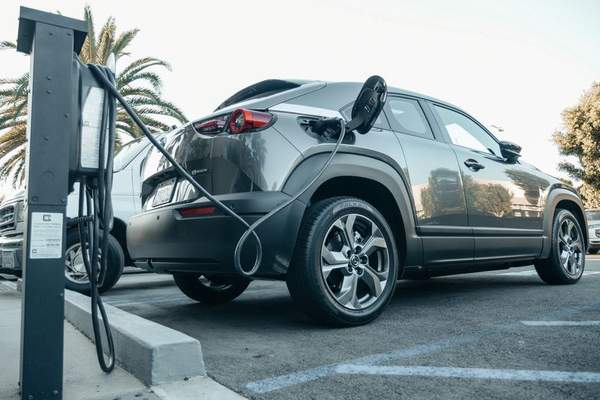
What MG ZS EV charging cable do I need?
An MG ZS EV charging cable for normal AC charging should be Type 2, with a 32 A cable matching the car’s roughly 7 kW AC capability. Choose a length that reaches without being stretched, and use the same lead at untethered Type 2 public AC points as well as compatible home wallboxes.
The choice comes down to connector, current rating and length. The MG ZS EV uses Type 2 for AC charging; rapid DC charging uses the CCS part of the vehicle inlet and the charger’s attached cable.
Definition: a Type 2 charging cable is the detachable AC lead between an untethered wallbox or public AC charge point and the Type 2 section of the car’s inlet. It carries AC power to the vehicle’s on-board charger; a higher cable rating does not make the car accept more power than that charger allows.
The figure above uses a 7.4 kW wallbox and Ofgem’s average Direct Debit electricity rate of 26.11p/kWh for July to September 2026. The working is 7,400 W ÷ 1,000 = 7.4 kW; 7.4 × 1 hour × 26.11p = 193.2p. The £706 annual figure assumes one hour every day: 7.4 × 365 × £0.2611 = £705.73, rounded to £706.
Which connector does an MG ZS use for AC charging?
The MG ZS EV uses a Type 2 connector for AC charging. MG lists the ZS EV with a combined Type 2 and CCS inlet: Type 2 is the AC section, while CCS is used for DC rapid charging.
For an untethered home charger, that normally means a Type 2-to-Type 2 ev charging cable. One end goes into the wallbox socket and the other into the vehicle. MG’s UK accessories range lists a 32 A Type 2 cable for the ZS EV, confirming the connector and practical current rating for normal AC use.
A type 2 ev charging cable is not the same thing as a portable three-pin charger. A portable charger includes control equipment and connects to a domestic socket; a standard Type 2 cable is the detachable lead between the car and a compatible AC charge point.
What does the CCS section change?
Nothing about the cable you carry for ordinary AC charging. At a rapid DC charger, the station normally supplies its own CCS cable, so your Type 2 lead stays in the boot.
What cable rating is suitable for home charging an MG ZS?
A 32 A Type 2 cable is the sensible match for a typical 7 kW single-phase home wallbox and the MG ZS EV’s roughly 7 kW on-board AC charger. A cable with a higher maximum rating does not force extra power into the car; charging is limited by the lowest-rated part of the chain.
MG’s published specification for the 2021–2025 ZS EV gives a 7 kW on-board AC charger, and its accessory range includes a 32 A, 5 metre Type 2 cable. On a UK single-phase supply, that is a straightforward pairing for this car.
- 32 A single-phase cable: a practical fit for a 7 kW class home charger and the ZS EV’s AC limit.
- Higher-rated Type 2 cable: it can be compatible, but the car still controls what it accepts.
- Lower-rated cable: it can become the limiting part of the charging chain, so check the current marking before buying.
If you are replacing a lost lead, compare the original cable label and the car handbook before ordering. Looking at broader ev charging cable types can help, but the essential points here are Type 2 for AC, enough current capacity and a suitable length.
How long should an MG ZS charging cable be for a driveway?
Choose the shortest cable that reaches the charging port comfortably in every parking position you actually use. A 5 metre lead suits many simple driveways, while 7 metre or 10 metre lengths can make sense when the wallbox and charge port are farther apart or you sometimes reverse in.
MG’s UK accessory range lists a 5 metre, 32 A Type 2 cable, which is a useful baseline rather than a rule for every home. Measure the real route from charger socket to vehicle inlet with the car parked normally, then allow enough slack to avoid pulling the cable taut around corners.
A longer lead is heavier, takes more storage space and creates more cable to keep away from tyres, doors and feet. If your measured route genuinely needs extra reach, a 10m ev charging cable is more sensible than an improvised extension arrangement.
Measure the parking layout, not only the straight-line gap
Consider where the car stops when another vehicle is on the drive, whether you park nose-in or reverse, and whether the cable would cross a busy path. Do not run a loose lead across a public pavement simply because a longer cable can reach; local rules, trip hazards and liability still matter.
Can the same MG ZS cable be used at public AC charge points?
Yes, the same Type 2 cable can be used at public AC charge points with an untethered Type 2 socket. You do not use it at a tethered rapid DC charger, because that charger supplies its own CCS lead.
This is why carrying an ev car charging cable in the boot can still be useful when your home wallbox has a fixed lead. Untethered destination chargers at workplaces, car parks or hotels expect the driver to supply the cable.
Check the charge point instructions and inspect the connector and lead before use. Do not use equipment with exposed conductors, cracked plugs, distorted pins or damage that could let water into the connector body; report a damaged public unit to its operator.
A public AC post may advertise more power than the ZS EV can accept, but the car’s on-board charger remains the limit. A higher-power socket therefore does not automatically shorten the session.
When is the obvious MG ZS cable choice not a good solution?
A longer, thicker or higher-rated cable does not solve every charging problem. If your wallbox is tethered, buying another Type 2 lead does nothing for home charging because the charger already has its own cable. If your usual public charging is DC rapid, the station’s attached CCS lead is what you use, so a premium portable Type 2 cable may spend most of its life in the boot.
Driveway geometry matters as much as the specification. A 10 metre lead that reaches only by crossing a public pavement is not a good plan just because it looks neat in a product photograph. A cable that lies where a vehicle can drive over it, a door can crush it or people routinely walk is also the wrong answer; change the charge-point position or get professional advice on a safer layout instead. Renters should not alter electrical equipment or mounting positions without the landlord’s permission. And if the existing cable or connector is damaged, replacing it with a higher-rated lead does not diagnose a fault in the wallbox or car. Stop using damaged equipment and have the relevant equipment checked.
Frequently asked questions
Will a 22 kW Type 2 cable make an MG ZS charge faster?
No. The vehicle’s on-board AC charger and the charge point set the actual rate, even if the cable is rated for more. MG publishes an on-board AC limit of about 7 kW for the 2021–2025 ZS EV.
Can I use an extension lead with an MG ZS charging cable?
Do not treat a general-purpose extension lead as a way to extend a Type 2 charging cable. Use a correctly specified cable of the required length and follow the charger and vehicle manufacturers’ instructions.
Should I keep a spare Type 2 cable in the boot?
A spare can be useful if you regularly use untethered public AC posts. If you rarely use them, a second lead may add bulk without solving a regular need.
Can the charging cable be used in wet weather?
EV charging equipment is designed for outdoor use when intact and used as instructed. Do not use a damaged connector or leave the plug lying in standing water.
How should I store the cable between charges?
Coil it loosely, protect the connector ends from dirt and impact, and avoid repeated tight bends. A boot bag or wall-mounted holder keeps the lead contained and easier to inspect.
For an MG ZS EV, the practical choice is a correctly specified Type 2 AC cable with enough current capacity for a 7 kW class charge and enough length for the way the car is genuinely parked. Measure first, avoid unnecessary excess length, and remember that the car’s on-board charger sets the AC ceiling.
If you are comparing a long ev charging cable with a standard-length option, treat reach, safe routing and storage as the decision points rather than assuming longer is automatically better.