
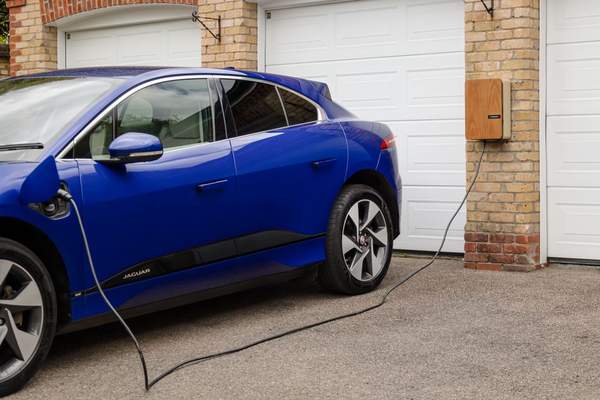
Is an extension cable for EV charging safe to use?
An extension cable for EV charging is not automatically safe just because it is rated for a high current. Ordinary household leads can overheat, suffer damaged connections or expose plugs to weather during long charging sessions. The safer choice is usually a properly installed chargepoint or a longer EV cable specifically approved for the charging equipment.
EV charging is a long-duration electrical load, so a setup that seems fine for a lawnmower or pressure washer can behave very differently when it carries current for hours. The key question is not simply cable thickness; it is whether the whole connection, socket, protection and route are suitable for sustained charging.
Why are ordinary household extension leads a concern for EV charging?
Ordinary extension leads are a concern because EV charging can place a steady load on plugs, sockets and cable connections for many hours at a time. A loose contact, ageing socket, coiled reel or weather-exposed join can create heat in a place that is difficult to notice until the plug, socket or insulation is already damaged.
For a 3-pin charging setup at 2,300 W, the electricity calculation at the July 2026 cap rate is 2.3 kW × 1 hour × 24.5p/kWh = 56.35p, rounded to 56.4p an hour. The £234 annual figure above assumes eight charging hours a week: 2.3 kW × 8 hours × 52 weeks × £0.245/kWh = £234.42 a year.
The wall socket is part of the charging path too. A loose contact or a reel left wound up can create heat, so a 13 A label alone does not make an everyday extension lead a suitable permanent EV charging solution.
If your charging arrangement depends on a 3-pin plug, check the vehicle and charger manufacturer’s instructions first. A qualified electrician can assess the socket, circuit and protective devices if there is any doubt. That is more useful than buying a heavy duty extension cable for ev charging and assuming the thicker-looking cable removes every other risk.
What protections matter on an EV charging extension setup?
The important protections are those that deal with sustained current, electric shock risk, damaged insulation and outdoor exposure. They must apply to the complete charging path, not merely to the cable between the house and the car.
Useful points to check include:
- Manufacturer approval: the vehicle, portable charger and any extension arrangement should be used only as their instructions permit.
- RCD protection: the circuit needs appropriate residual-current protection, and fixed EV chargepoints may require additional protection specified by the current wiring rules and the equipment manufacturer.
- Sound socket condition: a loose, cracked, scorched or repeatedly warm socket needs professional attention rather than another lead.
- Fully unwound cable: a cable reel should never be left coiled while carrying a long-duration charging load.
- No daisy-chaining: do not join multiple extension leads or stack adaptors to reach the vehicle.
- Weather suitability: plugs, couplers and cable entries must be protected to the level the manufacturer specifies for outdoor use.
It also helps to separate the two meanings people use for an ev charging cable extension. Extending the mains side of a portable 3-pin charger is not the same as using a longer vehicle charging lead designed for the charger-to-car connection. For a broader guide to connector choices and charging arrangements, see ev charging cable and ev charging cable types.
Can an extension cable be used in rain or across a driveway?
An indoor extension lead should not be placed outside in rain, and a weather-resistant cable does not make an ordinary plug-and-socket joint safe to leave in standing water. Across a driveway, the problem is also mechanical: tyres, doors, sharp edges and repeated foot traffic can damage insulation or pull on connections.
A covered box or cable ramp may reduce one exposure, but it does not turn an unsuitable electrical arrangement into an approved EV charging installation. The plug, socket, coupler, charger and cable still need to be used within their stated conditions.
Shared paths add another issue. A cable stretched from a house or flat to a parked car can become a trip hazard and may cross land that you do not control. In a rented property or block of flats, landlord, freeholder or managing-agent approval may be needed before any fixed work or cable route is created.
If distance is the only problem, a long ev charging cable or 10m ev charging cable that is compatible with the chargepoint and vehicle is often a cleaner route than putting an extra mains connection outdoors. Compatibility and the manufacturer’s maximum supported arrangement still matter.
When is a longer purpose-made EV cable the better solution?
A longer purpose-made EV cable is usually the better option when the chargepoint is correctly installed but the standard vehicle lead simply does not reach the parking position. It avoids introducing an extra household plug-and-socket connection into a sustained charging load, provided the cable type, current rating and connector match the equipment.
A longer cable is not automatically suitable. The chargepoint manual, vehicle handbook and cable specification need to agree on connector type and current rating, and the lead should not be trapped under a garage door or driven over.
| Safety consideration | Household extension lead | Longer purpose-made EV cable |
|---|---|---|
| Intended use | General portable appliances; not automatically approved for sustained EV charging | Designed for the EV charging connection when compatible with the vehicle and chargepoint |
| Extra connection points | Adds a mains plug-and-socket joint that can loosen, heat or get wet | Avoids adding a domestic extension joint on the mains side |
| Outdoor exposure | Ordinary indoor products are unsuitable for rain or standing water | Use only within the cable and chargepoint manufacturer’s outdoor-use rating |
| Heat management | Reels must be fully unwound and plugs and sockets need close attention | Still needs correct current rating and unimpeded cable routing |
| Driveway use | Vulnerable to crushing, snagging and trip hazards | Also needs protection from vehicles, doors, sharp edges and pedestrians |
| Best role | Not a good default or permanent workaround unless the equipment manufacturer explicitly allows the arrangement | Better where a correctly installed chargepoint is sound but additional vehicle-side reach is needed |
A purpose-made cable still needs a safe route. An ev charging extension cable repeatedly twisted around corners or left across access routes can be damaged even if its electrical rating is correct.
When does extending the cable fail to solve the real problem?
An extension is the wrong answer when the real weakness is the property, the socket or the parking arrangement. If a 3-pin socket gets warm, looks scorched, feels loose or sits on a circuit that is already heavily loaded, adding a longer cable does not improve the supply. It just moves the car farther away from the same weak point.
In a rented home, the landlord decides whether fixed electrical work can be added. In a flat, a cable through a window, across a communal path or over a pavement may be impractical even if it looks tidy for one photograph. Shared access, fire routes, security doors and trip hazards exist every day, not just while the car is parked neatly for a picture.
If charging routinely requires an outdoor mains joint, multiple adaptors, a cable under a door or a lead that vehicles cross, stop treating it as a cable-length problem. A qualified electrician should assess a safer charging point and route. Sometimes the workable answer is changing where the car charges, not extending the existing setup.
Frequently asked questions
Can I use a 13 A extension lead with a granny charger?
Do not assume that a 13 A label makes it suitable for EV charging. Check the portable charger’s instructions first, and if an extension is not expressly permitted, use a suitable fixed socket or charging point instead.
Is a thicker extension cable automatically safer for EV charging?
No. Conductor size matters, but plug condition, socket condition, connection quality, weather exposure, protection devices and the charger’s instructions matter as well. A thick cable cannot correct a loose socket or a wet connection.
Can I leave an EV extension lead permanently outdoors?
Only equipment specifically intended for the relevant outdoor conditions should be used outside, and every connection has to meet the manufacturer’s requirements. A weather-resistant cable jacket alone does not make a domestic plug-and-socket joint suitable for permanent outdoor charging.
Should an extension reel be unwound for EV charging?
Yes, a cable reel carrying a long-duration load should be fully unwound so heat is not trapped in the coil. If the charger’s manufacturer does not permit an extension lead at all, unwinding it does not make the arrangement acceptable.
What should I do if the plug or socket becomes hot while charging?
Stop using the setup and have the socket, plug and circuit checked by a qualified electrician. Do not keep charging by changing to another extension lead, because the heat may be coming from the fixed socket or circuit rather than the cable.
The safest answer is usually the one with fewer improvised connections: a sound, correctly installed charging point and a compatible cable that reaches the vehicle without being stretched, crushed or exposed to unsuitable conditions. If your current setup needs an extension every time you charge, treat that as a reason to review the installation rather than a permanent workaround.