
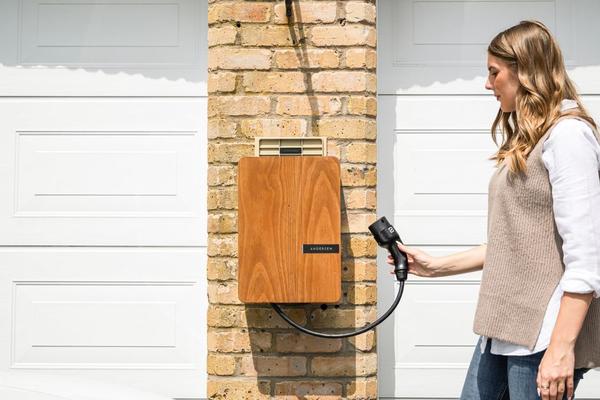
What is the best ev charge cable holder for home use?
An ev charge cable holder should keep the lead off the ground, support the cable without tight bends and give the plug a secure place to rest. A broad wall hook with a separate connector dock is usually the simplest choice, provided the fixings suit the wall and the holder is rated for the cable’s weight.
A charging lead is easier to manage when it has one obvious place to go after every session. Sensible storage also keeps the connector away from puddles, grit and car tyres.
The holder itself does not consume electricity; that figure represents charging through a 7.4 kW home wallbox. The working is 7,400 W divided by 1,000 = 7.4 kW, then 7.4 × 1 hour × 24.5p/kWh = 181.3p. The annual figure assumes one hour daily for 365 days: 7.4 × 365 hours × £0.245/kWh = £661.75, rounded to £662 a year at 24.5p/kWh for the July 2026 cap period.
What type of holder is best for an EV charge cable?
The best holder supports the coil across a broad surface, keeps the connector protected and is easy to use every day. For most driveways, a sturdy wall hook or purpose-made cradle beside the charge point is simpler than a box opened and closed each time.
A tethered lead normally stays beside the wallbox, while a removable ev charging cable may move between the house, garage and car. If you handle a long ev charging cable, allow room for a larger, looser coil.
- Wide wall hook: A broad, rounded hook is the simplest everyday choice if it is deep enough to hold the full coil without pinching the outer turns.
- Hook with a connector dock: Supporting the plug separately keeps its weight off the cable loops and gives the connector a consistent place to sit.
- Purpose-made wall cradle: A curved cradle spreads the cable across a wider area and suits a lead that is lifted on and off frequently.
- Enclosed storage box: An ev charging cable storage box can keep the coil tidy and away from dirt, but it needs enough space to avoid sharp bends.
- Portable storage bag: An ev charging cable bag suits a removable lead carried in the boot. Put the cable away clean and dry rather than sealing mud or water inside.
- Freestanding cable stand: This avoids drilling where wall fixing is unsuitable, but the stand must remain stable and clear of parking and walking routes.
A tiny decorative hook can look neat in a photograph yet still be wrong for a thick EV lead. The useful test is whether the cable sits naturally without kinks every time you put it away.
How high should a charging cable holder be mounted?
Mount it where you can lift the coil on and off without reaching above shoulder height or bending to ground level. The exact position should follow the wallbox, cable length and parking layout rather than a fixed height.
Stand where you normally finish unplugging the car. You should be able to turn, make a loose coil and place it on the holder without stretching the lead across a walkway. Leave enough clearance for the lowest loop to stay off paving, gravel or a wet garage floor.
If the charge point is beside a gate, bin route or narrow path, keep the stored coil out of that route. For a 10m ev charging cable, check the real size of the hanging coil before drilling because the extra length needs more space.
Before fixing anything, hold the coiled cable at the proposed position and place the connector where its dock would sit. If the lead twists or pulls sideways, change the coil size or location rather than forcing it.
Should the connector have its own dock or holster?
Yes, a separate dock or holster is usually useful because the connector is the part you handle most and do not want lying on the ground. It should support the plug without making the cable bend sharply behind the connector.
For a tethered wallbox, unplug the car, hang the cable, then seat the connector. Dropping the plug through the middle of the coil leaves its weight pulling on one loop and can leave it facing upwards where dirt or water may collect.
If a removable lead stays outdoors, follow the cable and charge-point storage instructions and keep the connector protected as intended. If it travels in the car, use a clean, dry bag and avoid placing heavy luggage on the plug.
How much cable can a wall holder support safely?
Use the holder’s stated load rating and the real weight of the complete cable, including its connector, rather than guessing from length alone. The wall fixing must also suit the surface: a strong holder attached with unsuitable fixings is still weak.
Cable weight varies with conductor size, construction, length and connector hardware, so there is no useful universal kilogram figure for every EV lead. A longer or heavier cable needs more support and usually a larger coil. Stay within the manufacturer’s load and fixing instructions.
Masonry, timber, insulated render and plasterboard need different fixing methods. If you are unsure whether the wall can take repeated loading as the cable is lifted and replaced, ask a competent tradesperson to assess the fixing point rather than choosing larger screws by guesswork.
- Support the cable on a broad, smooth surface rather than a sharp edge.
- Keep the plug weight off the lowest loop where a separate dock is available.
- Leave a relaxed bend where the cable enters the connector and wallbox.
- Keep the stored coil clear of tyres, doors, gates and walking routes.
- Move the holder if the cable has to be stretched to reach it.
A good ev charging cable holder makes the lead look relaxed rather than tightly wound. If each loop has to be pulled hard to fit, the storage point is too small or too far from where the cable falls naturally.
When does a wall-mounted cable holder not work well?
A wall-mounted ev charge cable holder is not automatically the right answer in a rented home, on a fragile finished wall or where the cable crosses a shared route. If drilling is not permitted, do not treat the tenancy as a minor inconvenience and fix through render or brick anyway; use removable storage or ask the landlord for written approval. A freestanding solution can avoid holes, but only if it is stable and does not become another obstacle beside the car.
Some tidy ideas work only in a photograph. A tiny hook that forces a heavy lead into tight loops, a box with barely enough room to close, or a fabric bag left outside in the wet all create more handling, not less. A perfectly symmetrical coil is not the goal. The cable needs broad support, a natural bend, a protected connector and a position you can use every day without dragging the lead across paving. If the wall location fails those tests, choose a different storage point rather than forcing the cable to fit the furniture.
Look at the route from charge point to car and where your hands end up when you disconnect. The useful storage point is close enough to reach without stretching, high enough to keep loops off the ground and large enough for the cable to hang without pressure.
Frequently asked questions
Can I leave an EV charging cable tightly coiled while the car is charging?
Do not make a tight storage coil while the cable is carrying charging current unless the manufacturer says that arrangement is acceptable. Lay the lead out as instructed, free from sharp bends, trapped sections and vehicle tyres.
Can an EV charging cable be stored outside all year?
That depends on the cable, connector and storage equipment ratings, so follow the manufacturer’s outdoor-storage instructions. Keep the connector protected as intended and away from dirt or standing water.
Can a cable holder damage the outer sheath?
It can if the support edge is sharp, too narrow or makes one small section take the whole weight. A broad, smooth support and relaxed coil reduce concentrated pressure.
Is a storage box better than an open wall hook?
A box can hide the coil and reduce exposure to dirt, but only if the cable fits without compression and the box suits the location. An open hook is quicker to use and makes twists easier to see.
Can I keep a removable charging cable in a bag in the boot?
Yes, a suitable bag is a practical way to keep a removable lead together in the car. Put it away clean and dry, with the connector protected from heavy luggage.
The test for any holder is simple: does it make the cable easier to put away without tight bends, dragging or strain on the connector? Choose the support around the lead you own, and keep the charging-cost calculation separate from the storage hardware so each decision remains easy to check.