
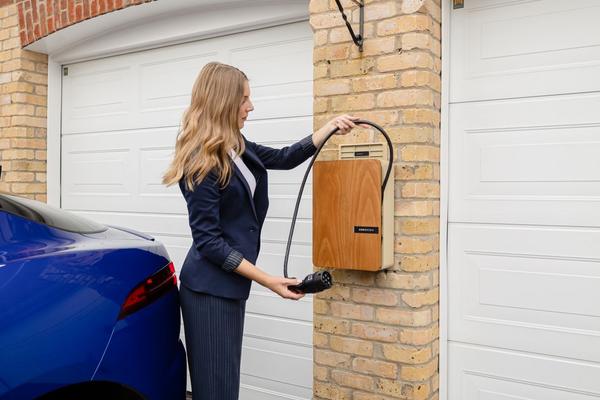
Should I choose a tethered or untethered ev charging station cable?
A tethered ev charging station cable is usually simplest if you want to park, plug in and leave the cable on the wallbox. An untethered unit suits drivers who prefer a cleaner wall, want to choose their own cable length, or expect the cable itself to be easier to replace later.
The cable choice does not change how a compatible home charger delivers energy to the car, but it changes the daily routine. Think about wallbox position, the car’s inlet, how you park and whether you want a cable permanently hanging outside.
Using the stated 7.4 kW wallbox assumption, 7,400 W divided by 1,000, multiplied by 1 hour, multiplied by 24.5p/kWh is 7.4 × 1 × 24.5p = 181.3p, or £1.81 for one hour. At one hour every day, 7.4 kWh × 365 × £0.245 = £661.75, rounded to £662 a year at 24.5p/kWh (July 2026 cap). The cable itself does not add a separate 7.4 kW load; that is the charging power passing to the car.
What is a tethered EV charging station cable?
A tethered charger has the charging lead permanently attached to the wallbox, so the driver only has to unwind it and connect it to the car. The wallbox and lead work as one everyday setup rather than a socket plus a separate cable.
That is convenient if the same vehicle normally uses the same parking position. The lead is already outside, matched to the wallbox and cannot be left in the boot after a trip.
The trade-off is fixed reach. Some home chargers are supplied with leads of several metres; myenergi, for example, lists a 6.5 m tethered cable on one UK home charger. Measure from the planned wallbox position to the car’s inlet in every normal parking orientation before choosing.
If you are still comparing connectors and ratings, start with the main ev charging cable guide. The different ev charging cable types matter because the vehicle plug must match the car, while the wallbox design decides whether the lead is permanent or removable.
What are the advantages of an untethered charging station?
An untethered charger has a socket on the wallbox and no permanently attached vehicle lead. You connect a separate compatible cable to the wallbox and car for each charging session, then remove it afterwards.
The main advantage is flexibility. You can choose a cable length for the driveway, and a damaged or unsuitable removable lead can normally be exchanged without treating the whole wallbox as the cable.
- Cleaner wall: remove the lead and the wallbox is left without a long cable hanging beside it.
- Choice of reach: choose a compatible lead length for awkward parking.
- Easier cable-only change: replace the separate lead if it wears out or no longer suits the vehicle.
- More handling: connect both ends, disconnect them and store the cable after use.
If a normal lead will not reach, a purpose-made 10m ev charging cable may suit the driveway better than an improvised extension. An ev charging cable storage box can also give a removable lead one dry, consistent storage place.
| Daily consideration | Tethered charger | Untethered charger |
|---|---|---|
| Plugging in | Lead is already attached | Separate lead connects to wallbox and car |
| Cable reach | Limited to the supplied attached length | Choose a compatible lead length |
| After charging | Coil or hang the lead beside the charger | Remove and store the lead separately |
| Cable replacement | May require manufacturer or installer attention | Usually a cable-only change if the socket is sound |
| Appearance | Cable remains visible at the chargepoint | Wallbox can be left without a hanging lead |
| Best fit | Consistent parking and quick daily use | Changing parking positions or cable-length needs |
How long should a home charging station cable be?
The right length is the shortest cable that reaches comfortably in the parking positions you genuinely use, without being stretched tight or routed where people will trip over it. Measure the real route from wallbox to inlet rather than a straight line through the air.
Park nose-in and, if you sometimes reverse in, measure again. Allow enough slack to reach around a corner of the vehicle without pulling sideways on the connector. If two EVs may use the charger, measure to both inlet positions.
Too short makes every charge awkward; much longer than necessary means more cable to coil, lift and keep clear of tyres. If extra reach is genuinely needed, a long ev charging cable is a better planning choice than assuming general-purpose mains equipment can extend the charging lead.
Do not treat an EV cable like a garden extension lead. Charger manufacturers can prohibit adapters, extension cables or conversion leads. If a suitable dedicated lead cannot reach, ask a qualified EV chargepoint installer whether the charger position or installation design should change.
Is it easier to replace a tethered or untethered cable?
An untethered cable is usually easier to replace because it is a separate removable component. With a tethered charger, the attached lead forms part of the wallbox assembly, so the replacement route depends on the manufacturer’s design and service procedure.
That matters if a connector is damaged, insulation is cut or the cable has been trapped under a tyre. With an untethered unit, you can stop using the suspect lead and replace it while leaving the charger socket in place, provided the wallbox itself is undamaged.
With a tethered charger, do not open the unit or attempt to change a fixed lead yourself. A home wallbox is electrical equipment on a dedicated circuit, so work inside the charger should follow the manufacturer’s instructions and be handled by an appropriately qualified person.
For an ev smart charging station, remember that smart scheduling and load management sit in the charger, while tethered versus untethered describes the cable connection. Changing a removable cable does not mean changing those charger features.
When does the tethered-versus-untethered choice not solve the real problem?
If you rent, live in a flat, have no off-street parking, or cannot put the wallbox close to the car, cable style may be the least important decision. A neat charger with a perfectly coiled lead can look convincing in a photograph, but that picture means nothing if the cable would need to cross a public pavement, pass through a communal route, or be installed without the property owner’s permission.
In a rented home, get the landlord’s consent before arranging installation and check whether the building or parking space has restrictions. In a flat, the electrical supply route, parking ownership and communal-area permissions can decide whether a private chargepoint is practical at all. If you park on-street, do not assume a longer cable makes home charging acceptable; local rules and safe cable routing still apply.
The other weak point is choosing cable length around one perfect parking position. If drivers regularly swap spaces, reverse in some days, or own cars with inlets on different corners, measure those real situations first. Otherwise the tidy setup shown on the product page may not match daily life.
Frequently asked questions
Can I leave an untethered EV cable plugged into the wallbox?
Follow the wallbox and cable manufacturer’s instructions. An untethered setup is designed so the lead can be removed, and taking it away after charging keeps the area clearer and lets you store the cable away from tyres and foot traffic.
Does a tethered cable charge the car faster?
No. Tethered versus untethered does not by itself determine charging speed; the rate depends on the wallbox output, electrical supply and the maximum AC rate the vehicle can accept.
Can I use an extension lead with a home EV charger?
Do not assume that you can. Manufacturers may prohibit extension, adapter or conversion arrangements, so use a dedicated compatible charging lead and follow the charger’s instructions rather than improvising extra reach.
Is Type 2 the same as tethered?
No. Type 2 describes a connector standard, while tethered describes whether the lead is permanently attached to the wallbox. A Type 2 home charger can therefore be tethered or untethered.
Should I keep a spare cable for an untethered charger?
A spare is a convenience choice, not a requirement. If one removable lead is used both at home and away, a second compatible cable can avoid repeated unpacking, but it still needs to match the vehicle and chargepoint specifications.
Choose tethered if you value the quickest daily plug-in routine and the supplied lead reaches every normal parking position. Choose untethered if cable-length flexibility, a cleaner wall and simpler cable-only replacement matter more than handling and storing a separate lead.
Whichever layout you choose, measure first. The wallbox needs a suitable electrical installation, while the lead needs the correct connector, rating, condition and reach.